Skip to the tool
Imaginalis

Free, with no sign-up

Draw one tarot card

One card from the deck Pamela Colman Smith drew in 1909, with Waite’s words and a way to look at it. Below it waits the card of the day.

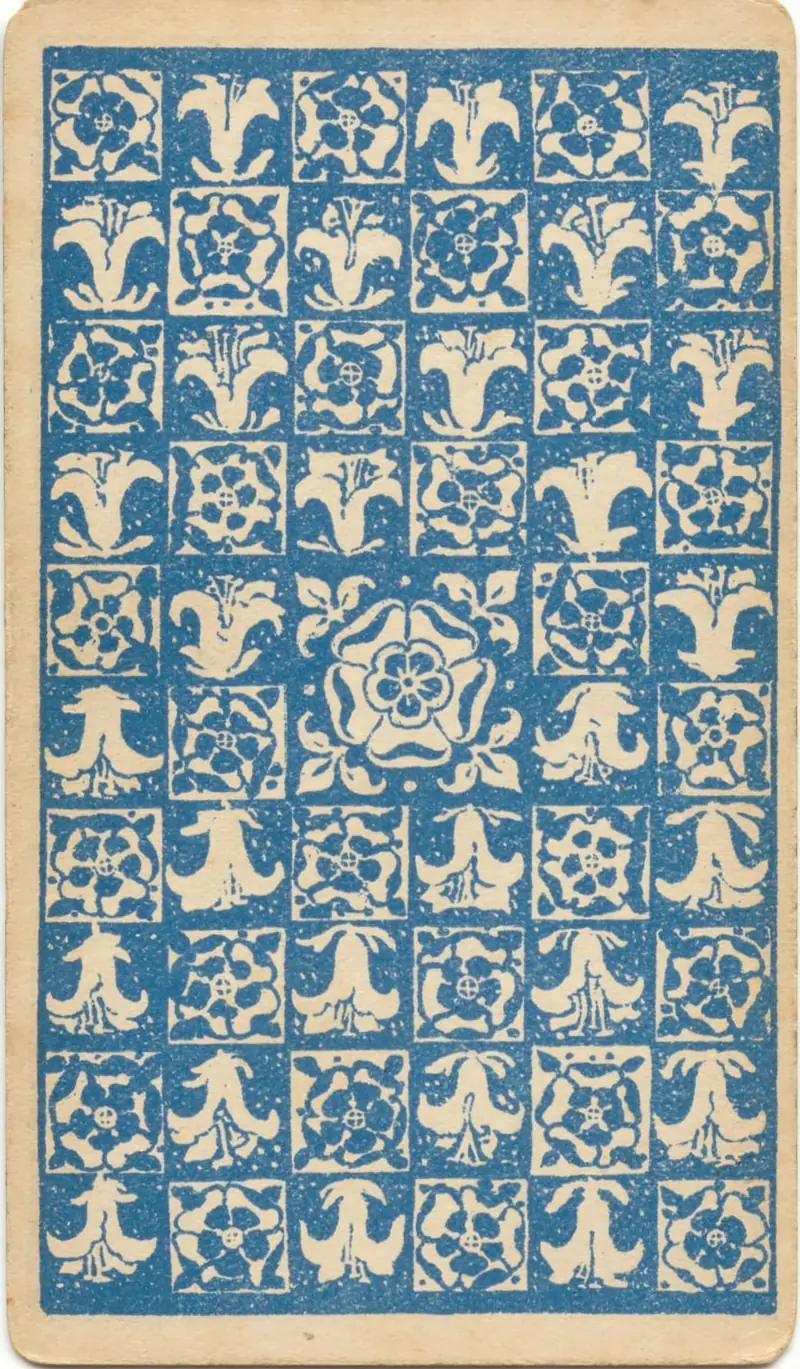
The back of the 1909 cards: a blue and cream grid of roses and lilies around a large central rose.

Your card

A card of your own

Think of a question, or of nothing in particular. Then turn a card over.

What Waite wrote (1910)

Upright

Reversed

Arthur Edward Waite, The Pictorial Key to the Tarot, .

More on this card: what is in the picture, and what the older books said.

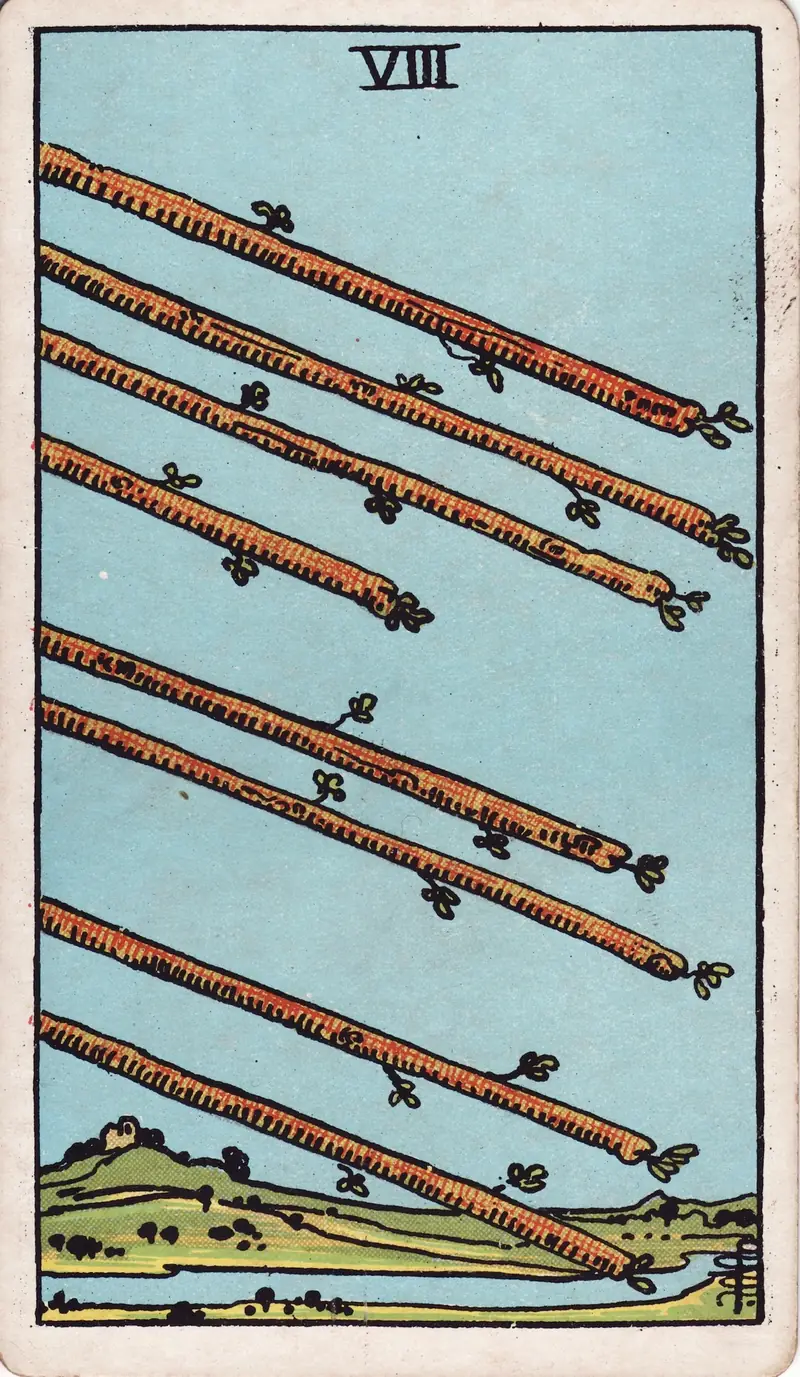
Eight of Wands: eight sprouting wands fly in a slanting row through a clear sky over a river and a green hill.

Card of the day, Friday 13 November

Eight of Wands Upright

This copy of the page came without its card. With JavaScript on it is dealt here; without it, our server deals it. Meanwhile, the 78 cards are all on one page.

What Waite wrote (1910)

Upright

Activity in undertakings, the path of such activity, swiftness, as that of an express messenger; great haste, great hope, speed towards an end which promises assured felicity; generally, that which is on the move; also the arrows of love.

Reversed

Arrows of jealousy, internal dispute, stingings of conscience, quarrels; and domestic disputes for persons who are married.

Arthur Edward Waite, The Pictorial Key to the Tarot, p. 182.

More on Eight of Wands: what is in the picture, and what the older books said.

How is the card of the day chosen?

The card of the day is dealt, not drawn at random. Once every 78 days the site shuffles the deck. Then it lays out one card a day, in that order. Over those 78 days every card comes up once, the Fool no more often than the Ten of Swords.

Everyone who opens this page on the same date sees the same card, by their own calendar. In Tokyo the next card turns up hours before it does in New York.

How is a card of your own drawn?

Your own card is left to chance. Your browser picks it with the same kind of random numbers it uses for passwords, and nothing about you goes into the choice. You can draw as often as you like. Still, one card looked at for a while tends to show more than ten looked at in passing.

Waite felt much the same about methods. He left the long, involved ones out of his book, because those who knew such things believed that “the way of simplicity is the way of truth”. The first method he offers is a short one of ten cards, known today as the Celtic Cross.

Every card you draw has an address of its own. Share it, and whoever opens it sees the same card, the same way up.

Why do some cards come up reversed?

Waite gave each of the 78 cards two sets of words. The first are for the card as it falls. The second, under “Reversed”, are for a card that lands upside down. In one of his methods you shuffle so that some cards will land that way: “turn some of the cards round, so as to invert their tops”.

Not every reader uses reversals. Untick the box and every card you draw comes up the right way round. Either way the page quotes both of Waite’s lists, and marks the side that came up.

Where do the words come from?

Waite’s meanings are short lists, and many of their words go back to older fortune-telling books. They belong to 1910: “dark young man”, “bad news”, “journey by water”. We quote them as history, with the page they come from, and we don’t add a meaning of our own. They first came out in 1910, in the small book sold with the deck. The page numbers are those of its longer edition, The Pictorial Key to the Tarot (London, 1911).

The prompt above Waite’s words does something else. It asks you to look: at a hand, a colour, something at the edge of the scene. Pamela Colman Smith drew a whole scene on every card, the small ones too, and most of what there is to see is in the picture. Each card's own page goes further, and all 78 cards are on one page.

In the Imaginalis app you draw a card each morning and keep what you see in it in a journal. After a month, you can look back at the cards that keep returning.

Download on the App Store

For iPhone, with no account. Your journal stays on your phone and in your own iCloud.