Minor Arcana, the Cups
Ace of Cups
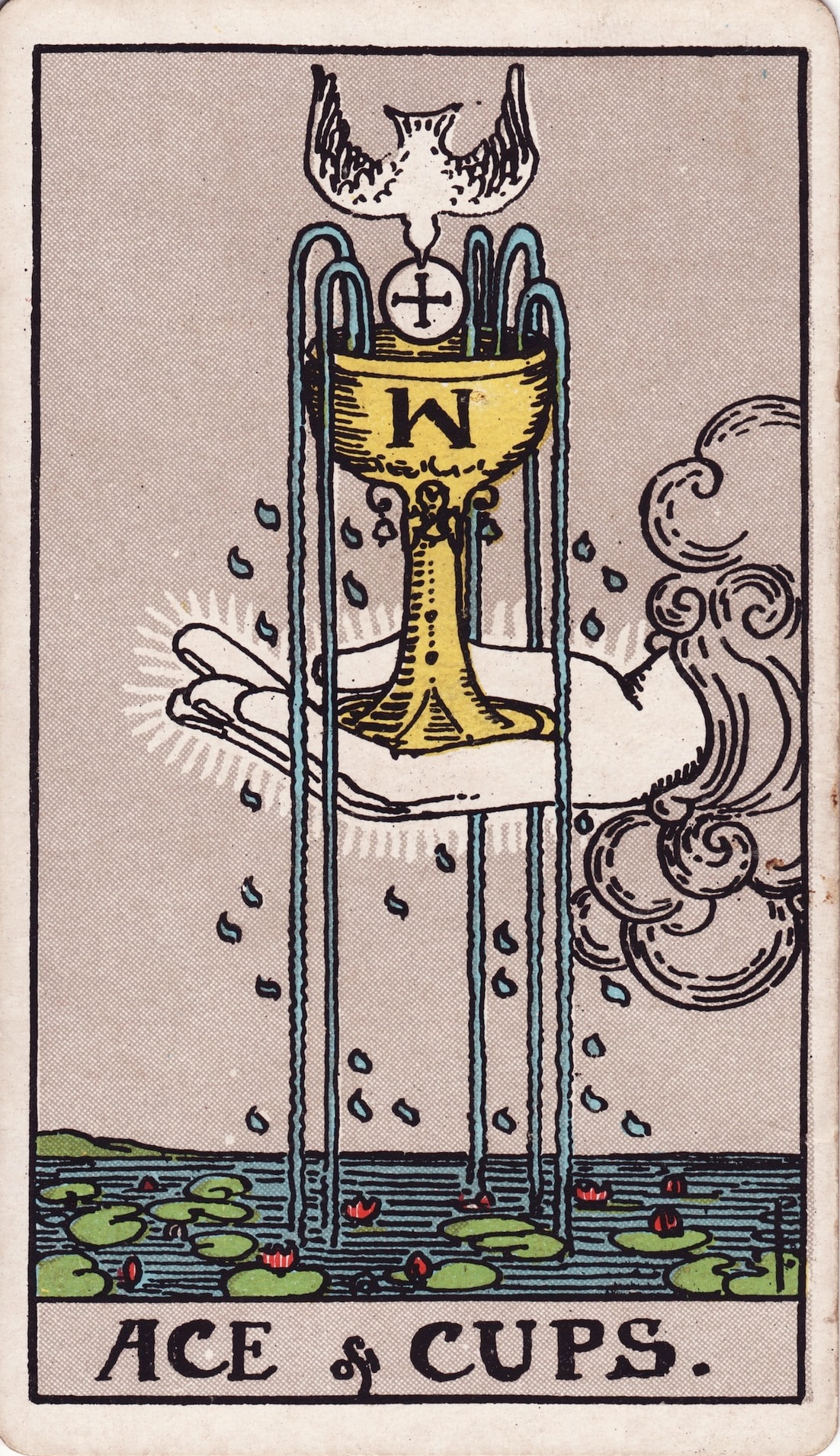
The Ace of Cups is the first card of the suit of cups in the deck Pamela Colman Smith drew in 1909. A hand comes out of a cloud holding a gold cup on its open palm, while water pours from the cup in streams, a white dove dives toward it with a wafer, and water lilies float on the pond below.
What Waite wrote it means (1910)
- Divinatory meanings
House of the true heart, joy, content, abode, nourishment, abundance, fertility; Holy Table, felicity hereof.
- Reversed
House of the false heart, mutation, instability, revolution.
Arthur Edward Waite, The Pictorial Key to the Tarot (London, 1911), p. 224. Read it in the chapter
The waters are beneath, and thereon are water-lilies; the hand issues from the cloud, holding in its palm the cup, from which four streams are pouring; a dove, bearing in its bill a cross-marked Host, descends to place the Wafer in the Cup; the dew of water is falling on all sides. It is an intimation of that which may lie behind the Lesser Arcana.
What's in the picture
- The dove. A white dove comes straight down from the top of the card, head first, its wings raised behind it.
- The wafer. In its beak the dove holds a small white disc marked with a cross, just over the mouth of the cup. Waite calls it "a cross-marked Host", the bread of the Mass.
- The letter on the cup. On the bowl of the gold cup is a single black letter. It reads as a W, or as an M turned upside down. Waite does not mention it.
- The streams. Water rises out of the cup in arching streams and falls all the way down to the pond: two on the left and three on the right. Waite wrote that "four streams are pouring"; the picture has five.
- The drops. Dozens of single drops, shaped like small flames or commas, hang in the air on both sides. Waite called them "the dew of water" falling "on all sides".
- The open hand. The cup stands on the flat of a large white palm, and the fingers stay open. Short white rays shine out around the hand.
- The cloud. The arm comes out of a grey cloud at the right edge, drawn with heavy curls and dashed lines, much like the cloud on the Ace of Wands.
- The water lilies. At the bottom lies a dark blue pond covered with flat green pads and small red flowers. A green bank slopes down into it at the far left.
The card in brief
- In the deck
- Card 37 of 78
- Arcana
- Minor Arcana, Cups
- Number
- Ace
- Element (Golden Dawn)
- Water
- Title in Book T
- Root of the Powers of Water
- Drawn by
- Pamela Colman Smith
- Planned by
- Arthur Edward Waite
- Published
- London, William Rider & Son, 1909
- Scan
- Pam-A printing, c. 1910, Wikimedia Commons
In the old books
Book T (1912)
A White Radiant Angelic Hand, issuing from clouds, and supporting on the palm thereof a cup, resembling that of the Stolistes.
From it rises a fountain of clear and glistening water: and sprays falling on all sides into clear calm water below, in which grow Lotuses and Water-lilies. The great Letter of the Supernal Mother is traced in the spray of the Fountain.
It symbolizes Fertility—productiveness, beauty, pleasure, happiness, etc.
Book T, “A Description of the Cards of the Tarot”, The Equinox I.8 (London, 1912), p. 154. See the source Papus (1892)
Commencement of a love affair.
Papus, The Tarot of the Bohemians, tr. A. P. Morton (London, 1892), p. 312. See the source
Before 1909
The older cards and pictures behind this one will be shown here once their licences are checked.
The film
No film for this card yet.
Around this card
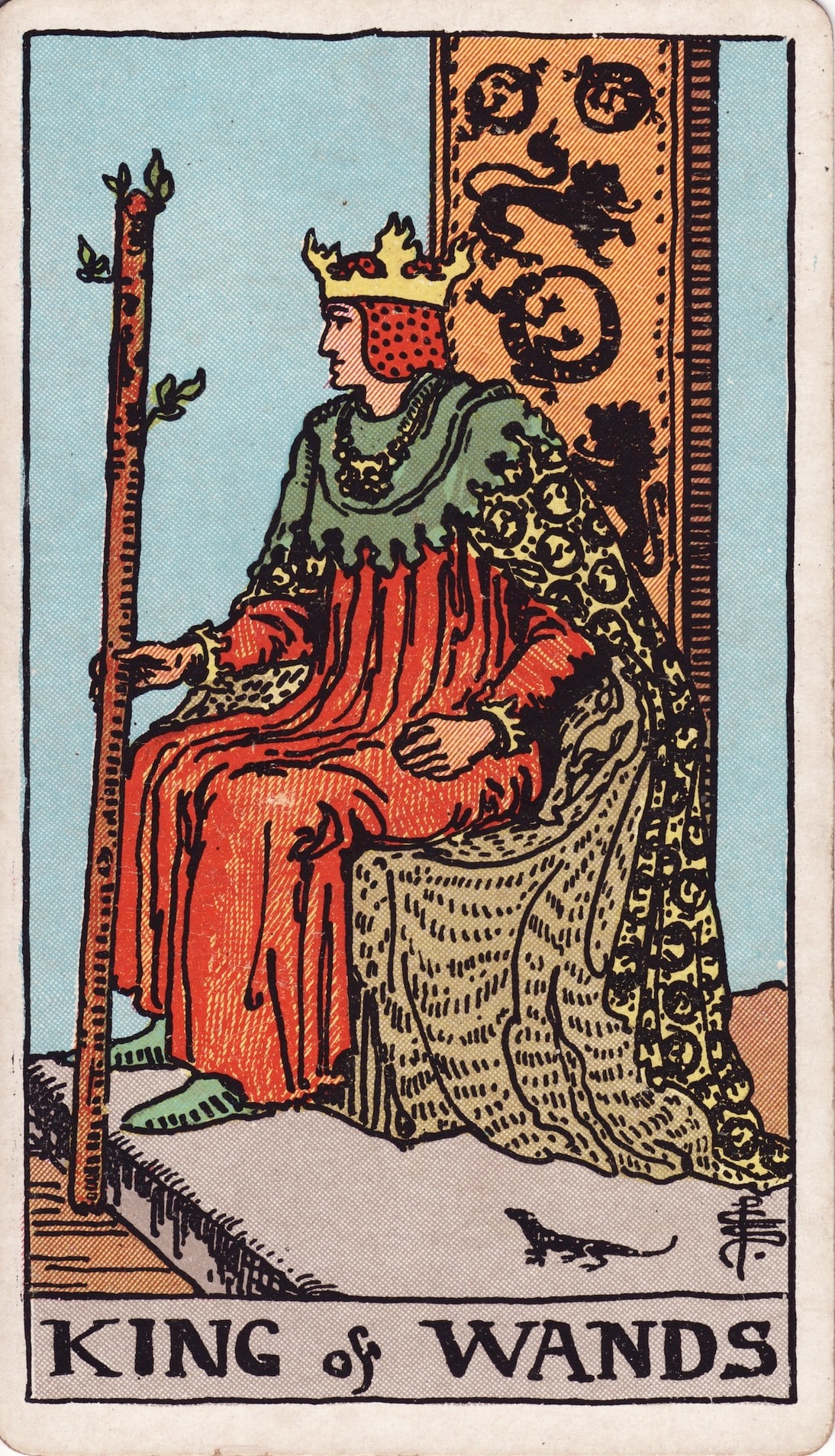
Before and after it in the deck
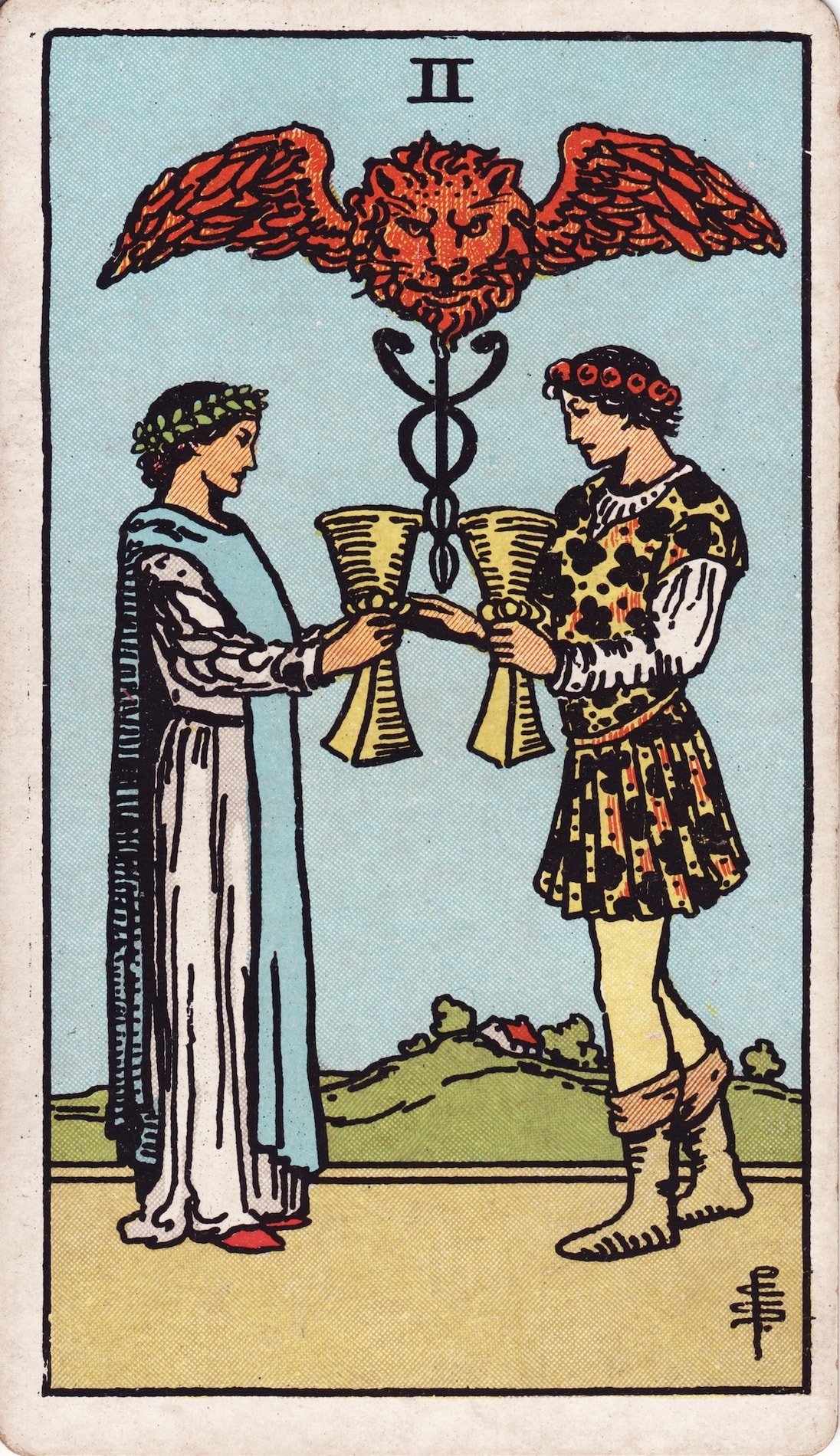
The same number in the other suits
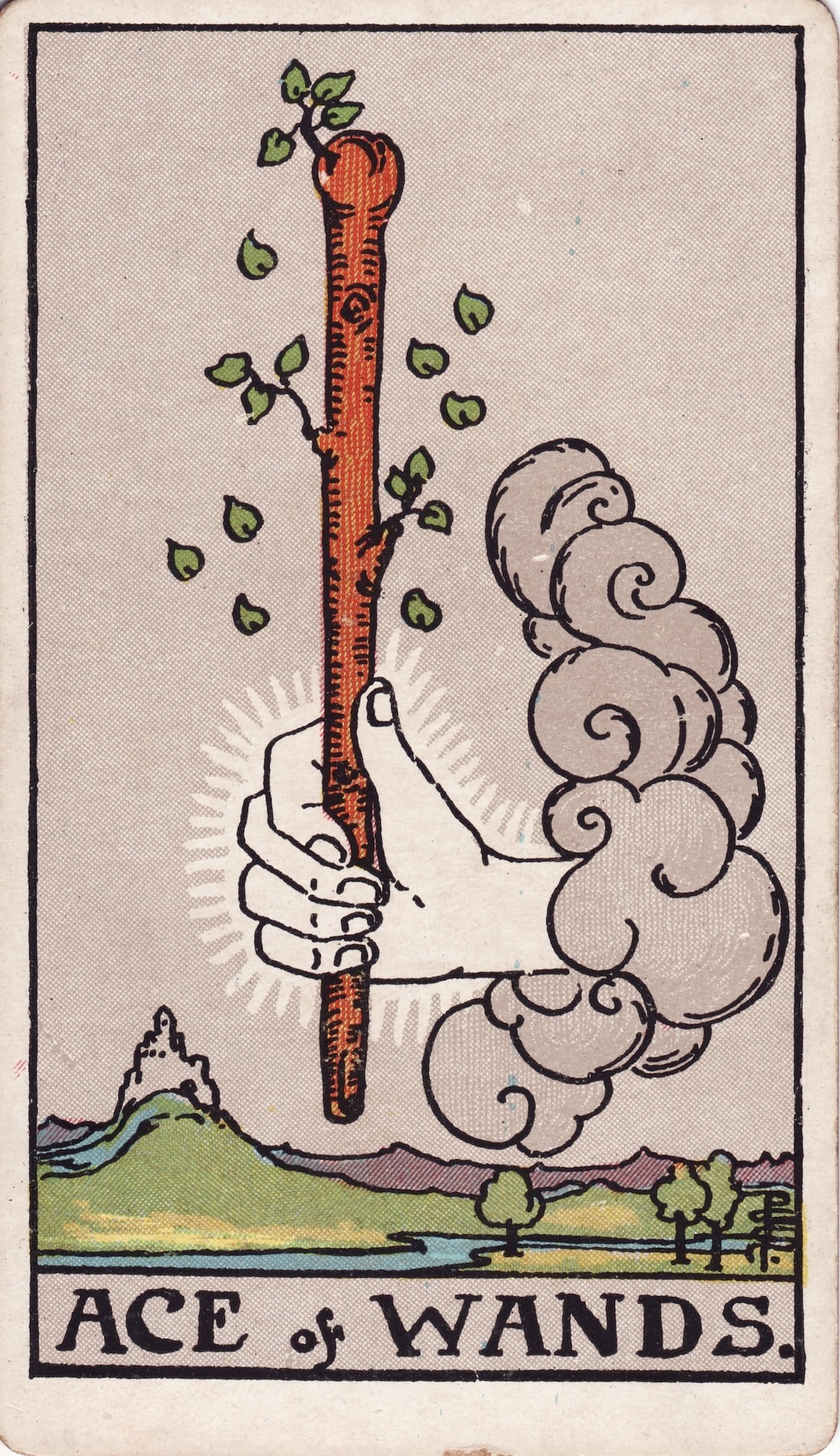
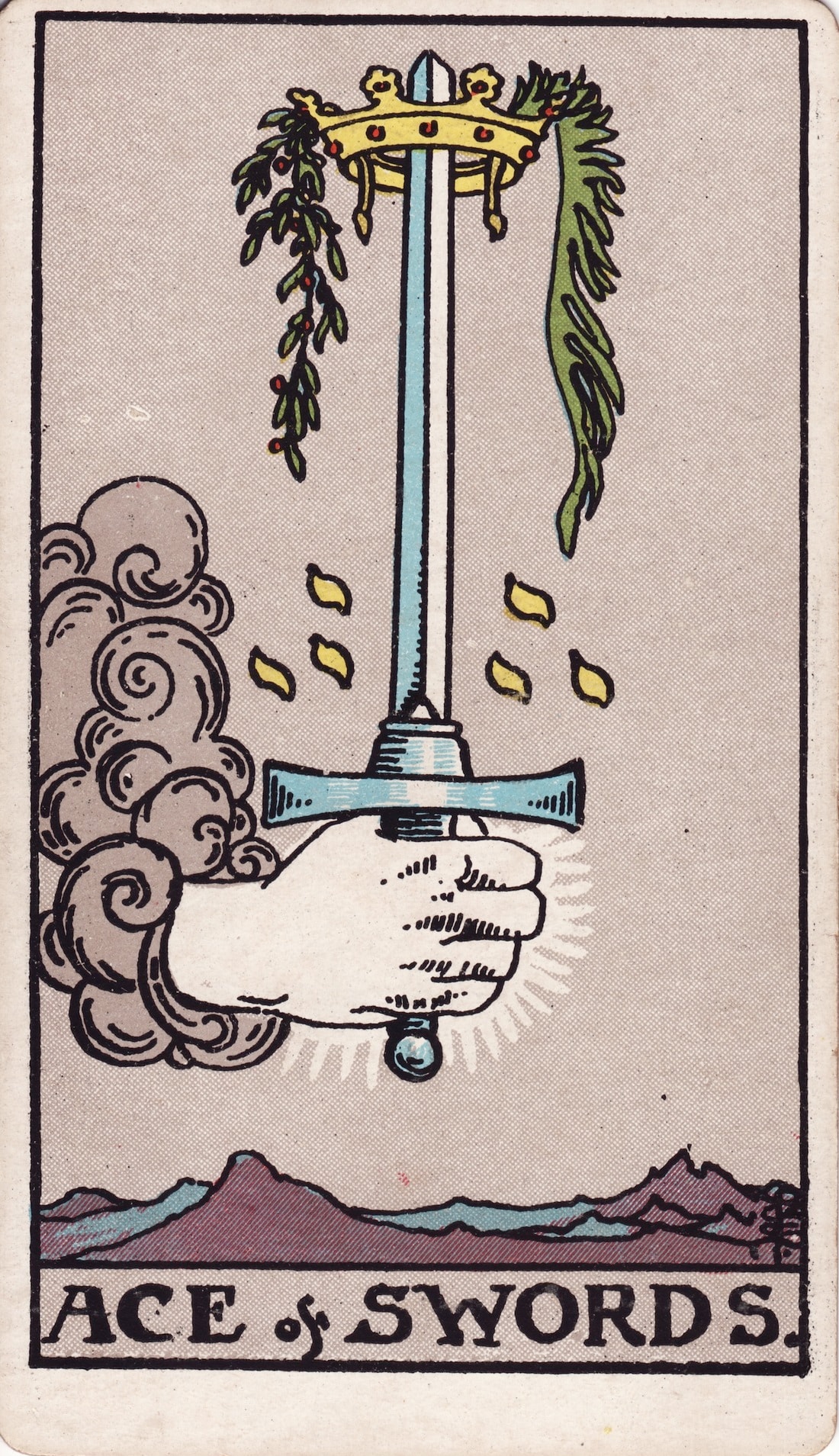
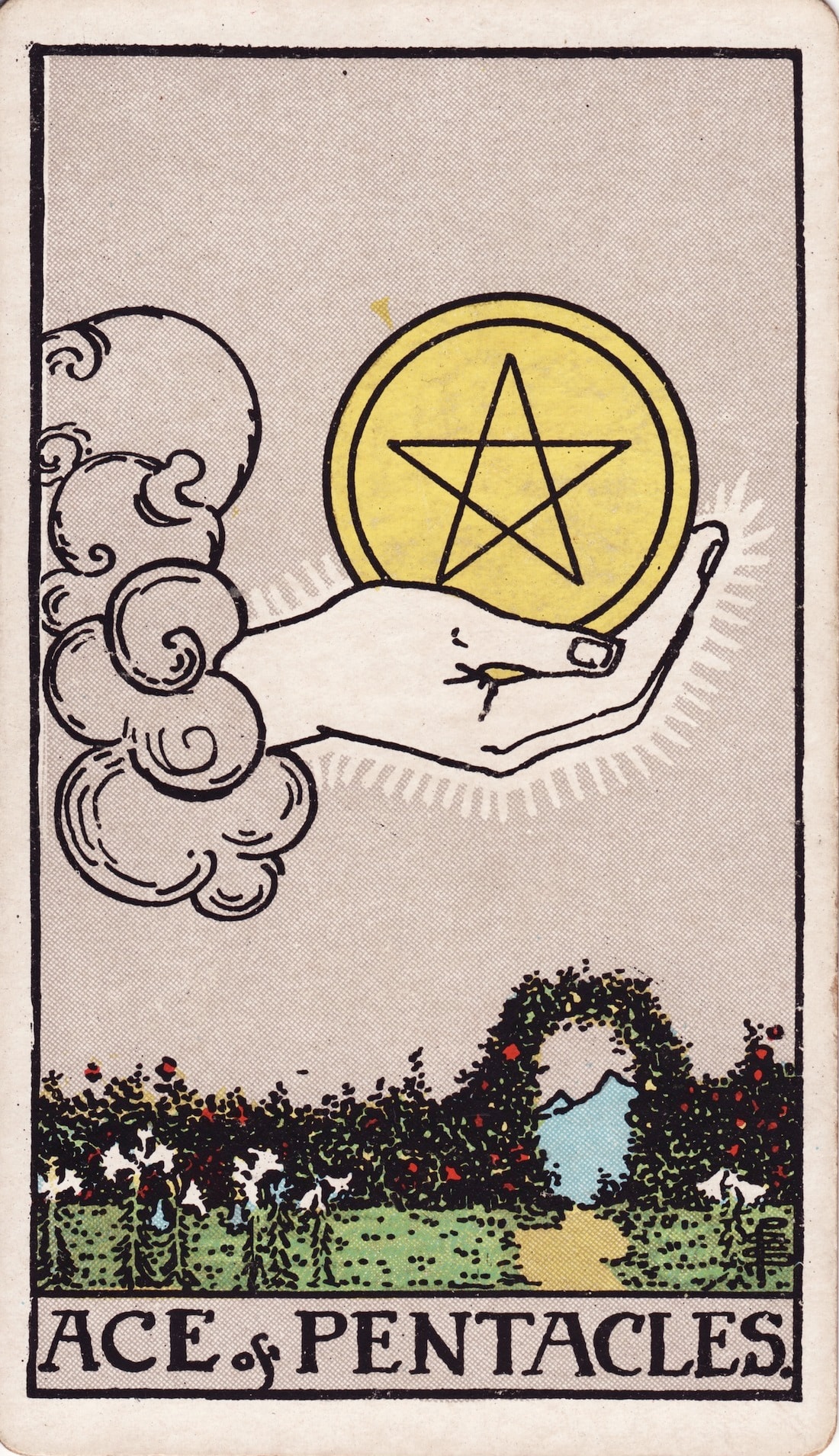

All the cards of the Cups, or the whole deck.