The Cups
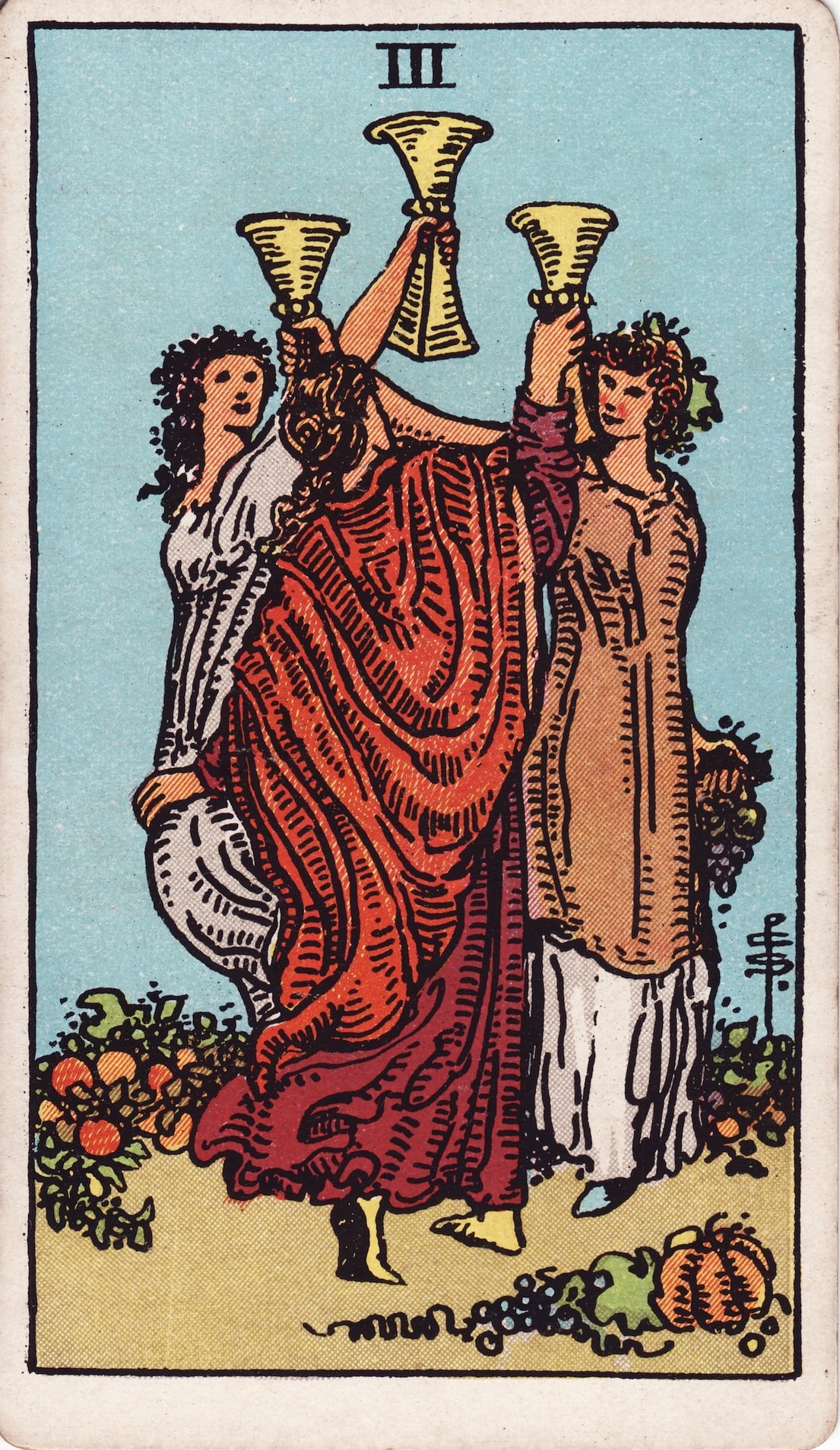
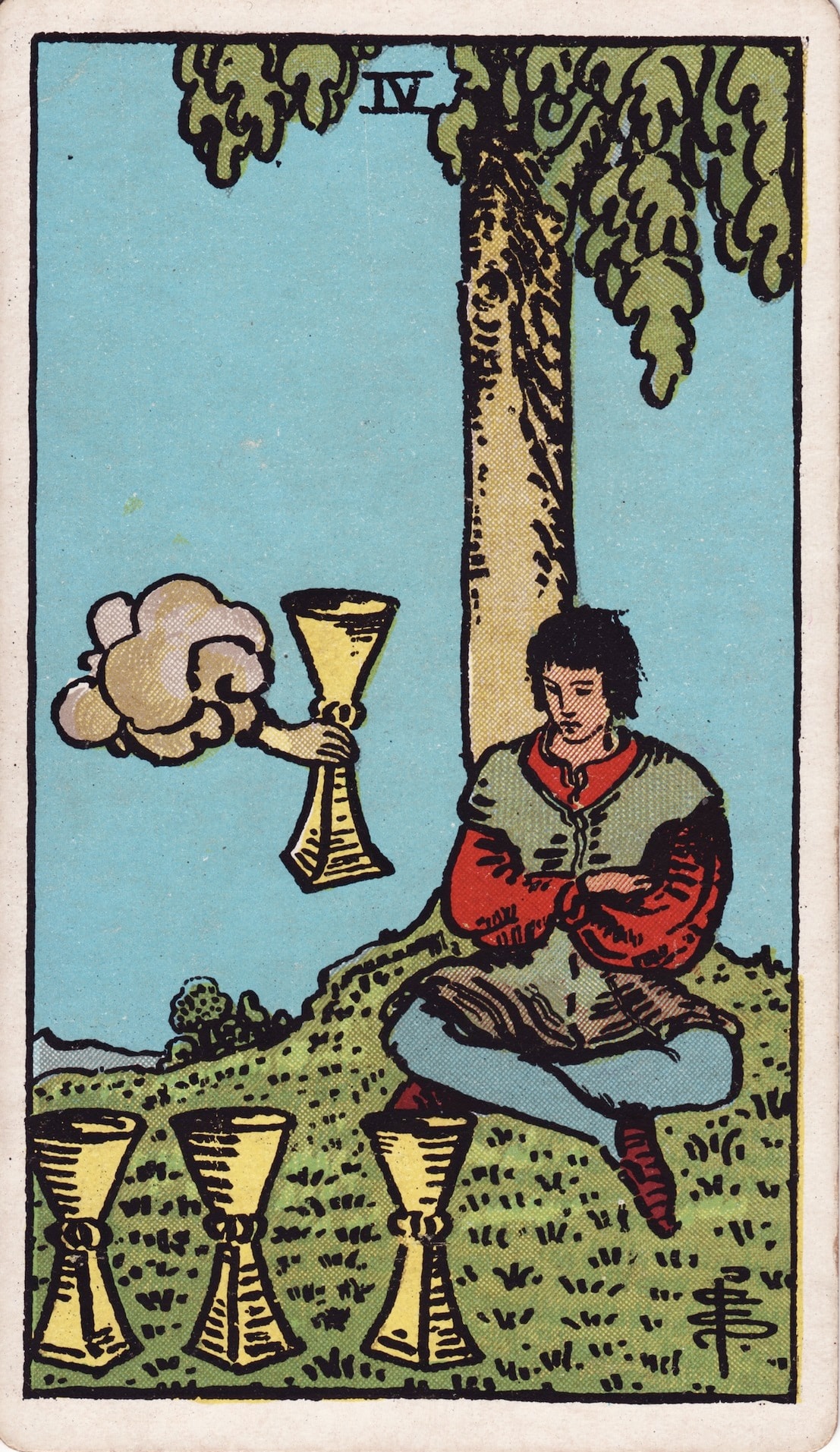
The fourteen cups of the 1909 deck, from the ace to the king. The Golden Dawn gave the suit to water.
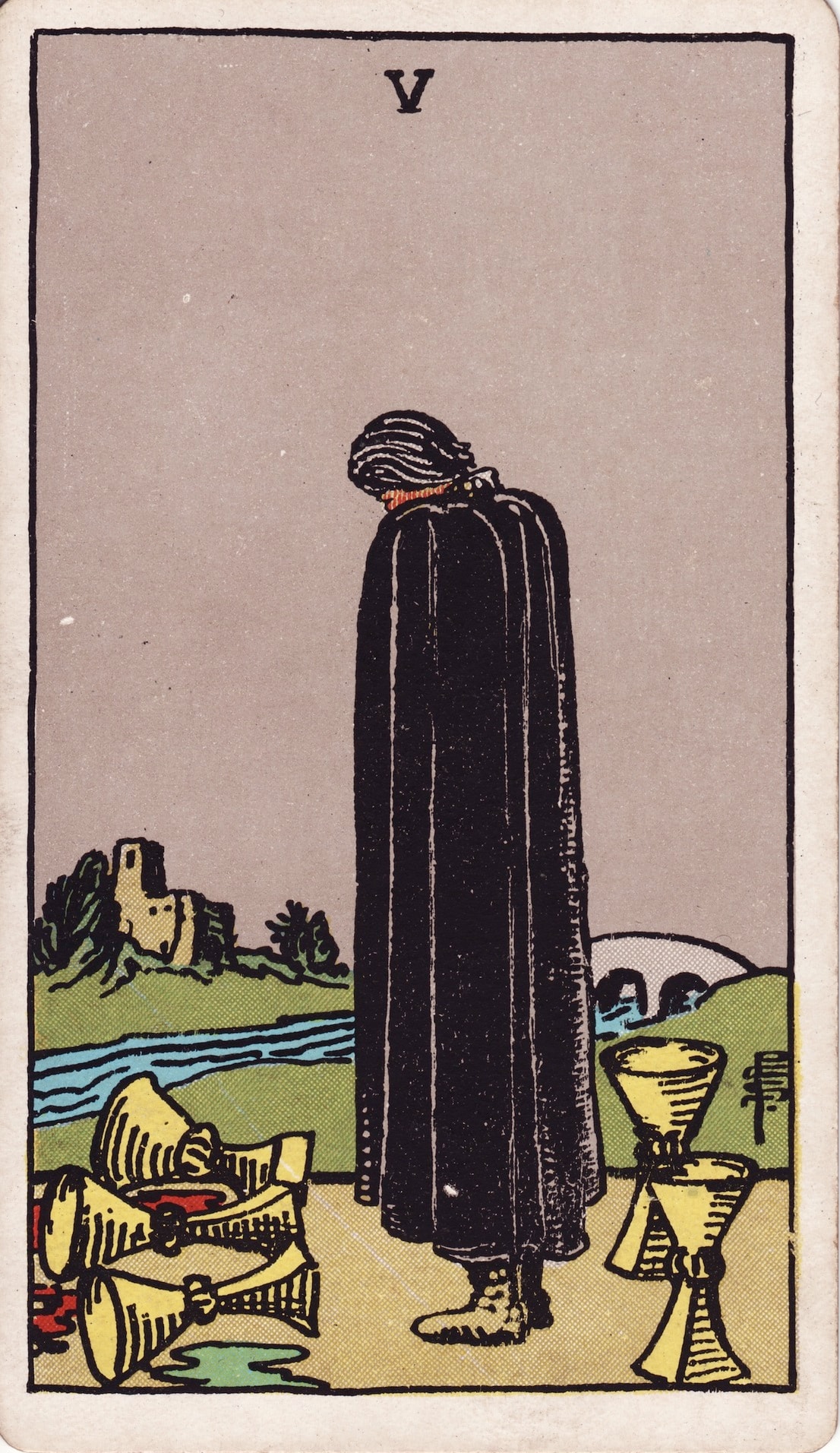
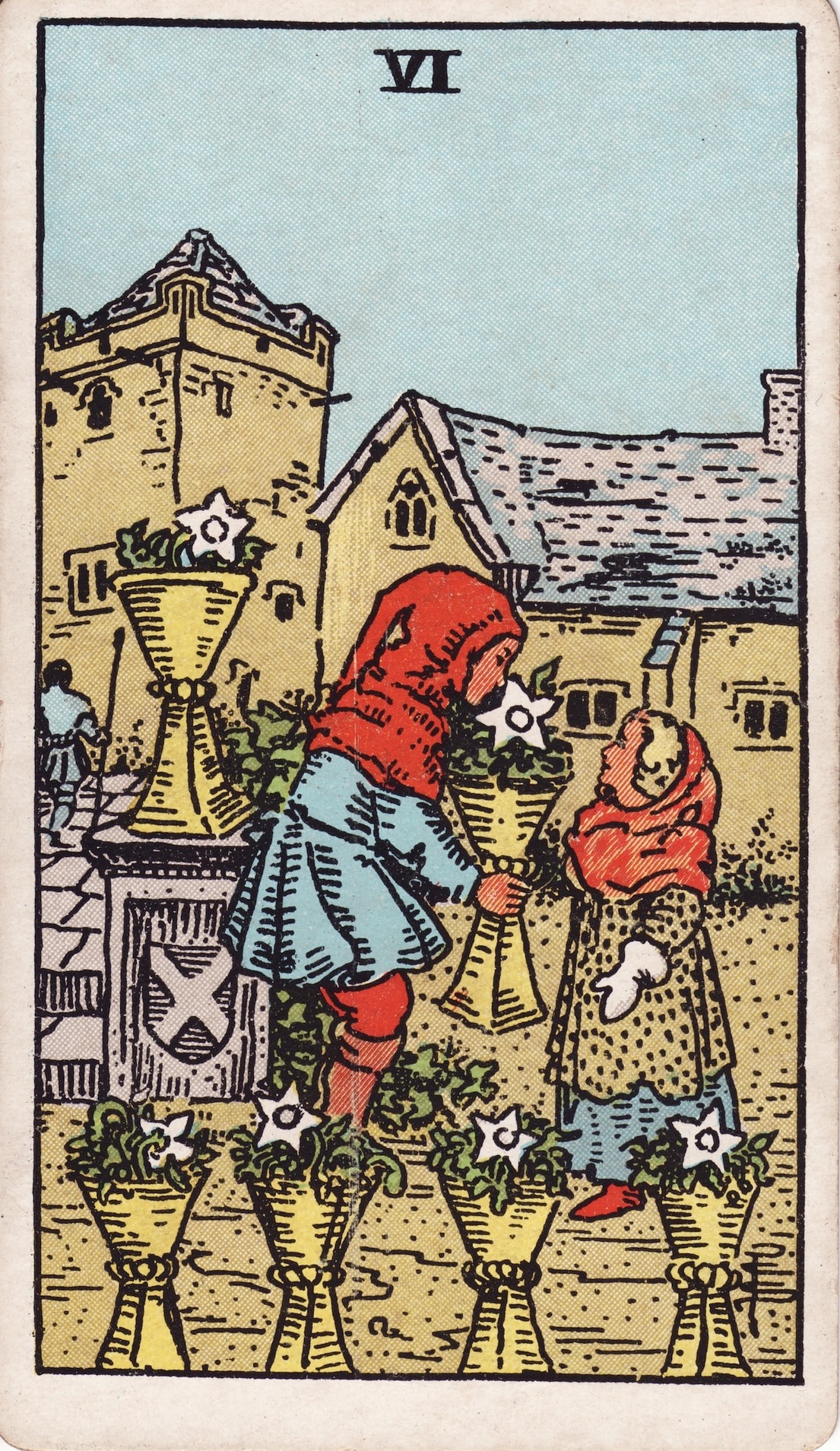
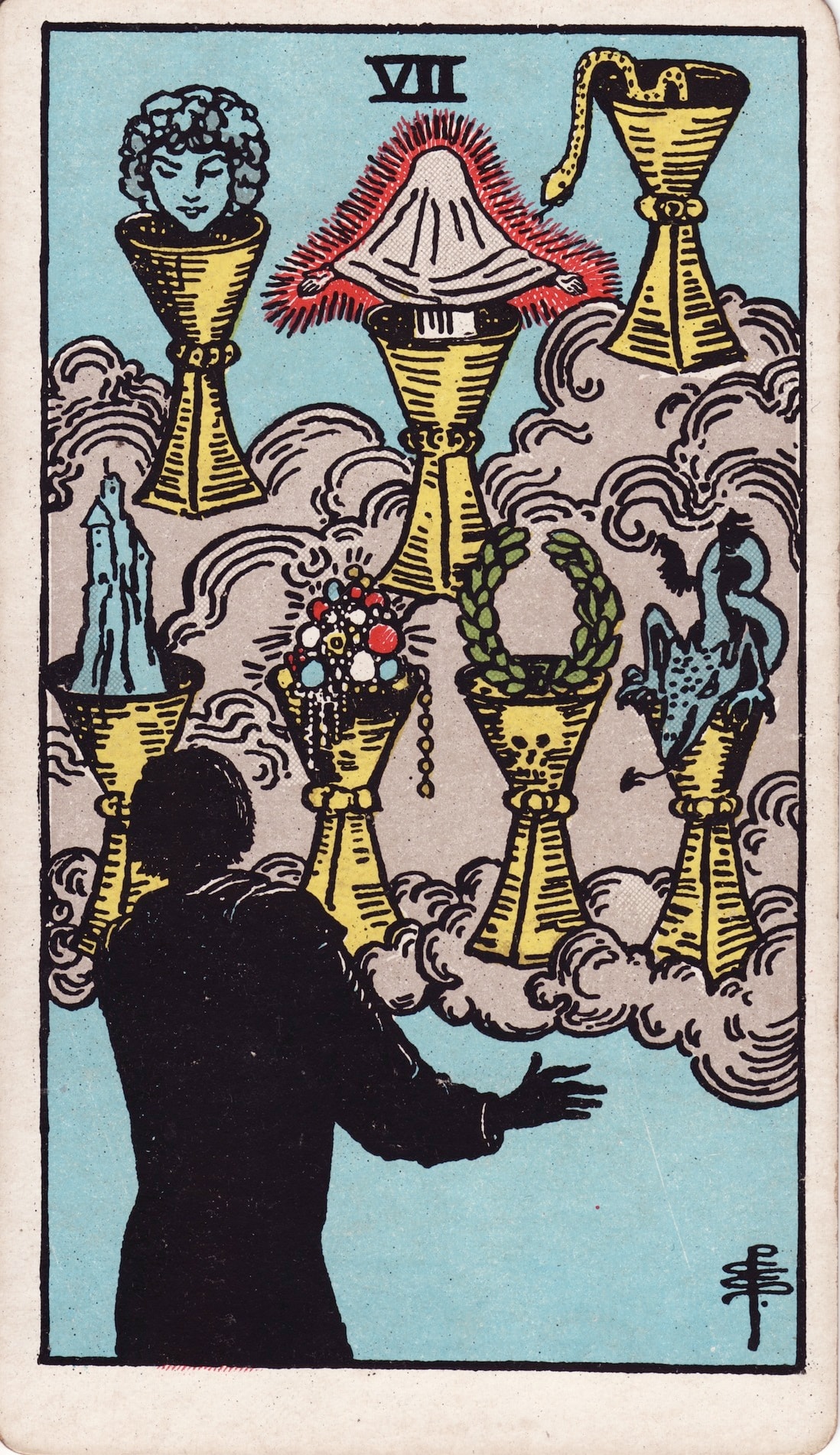
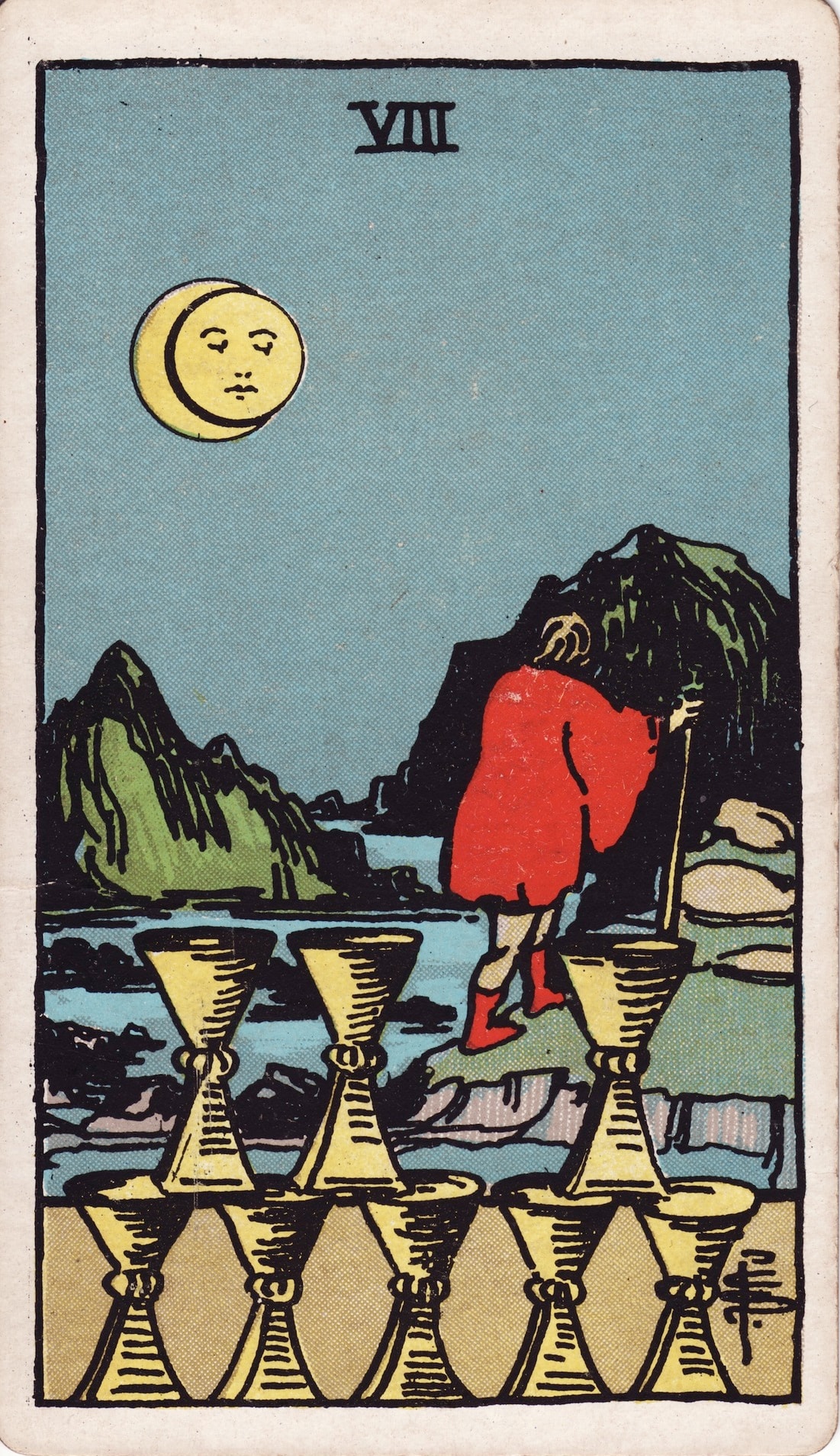
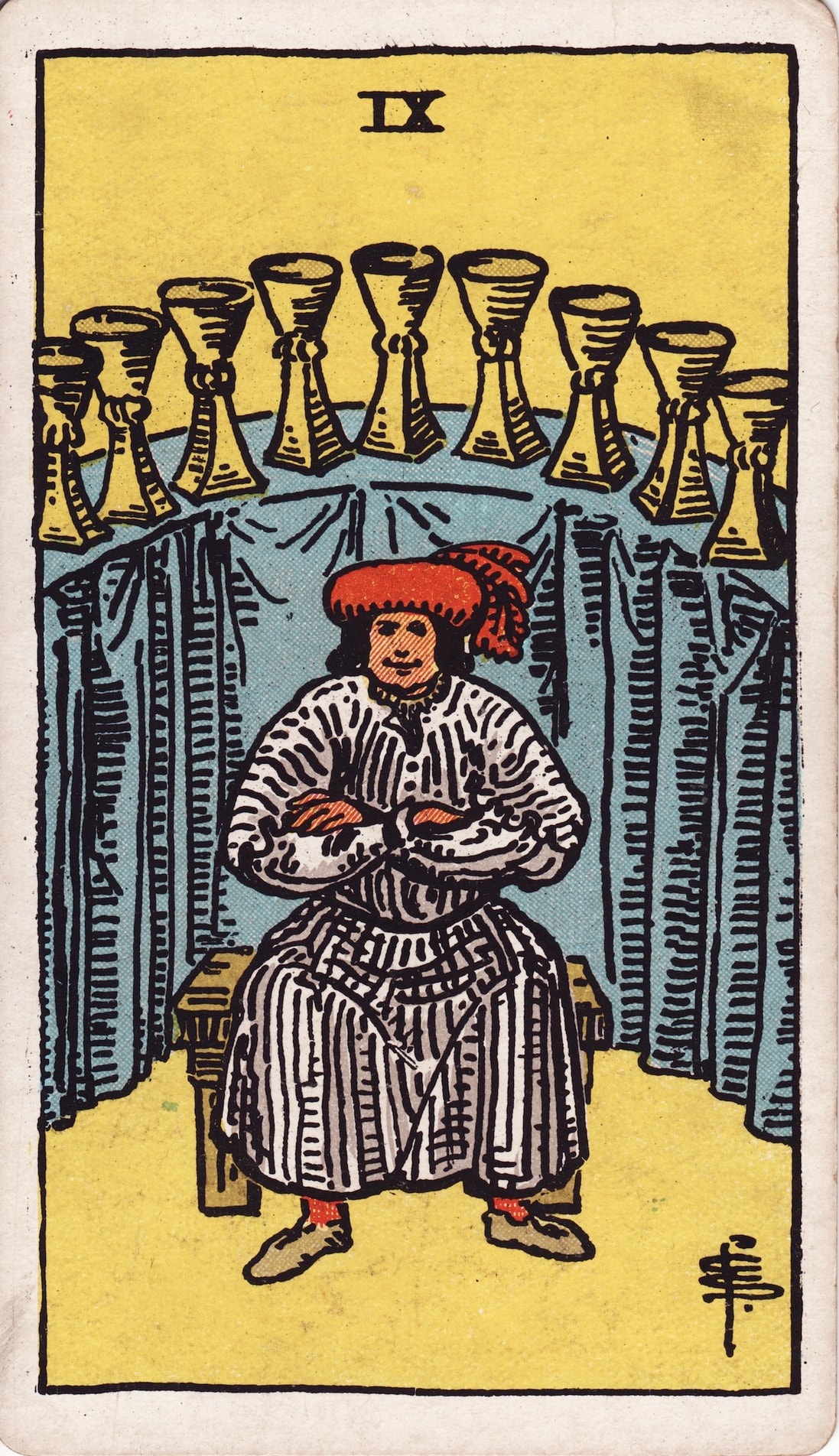
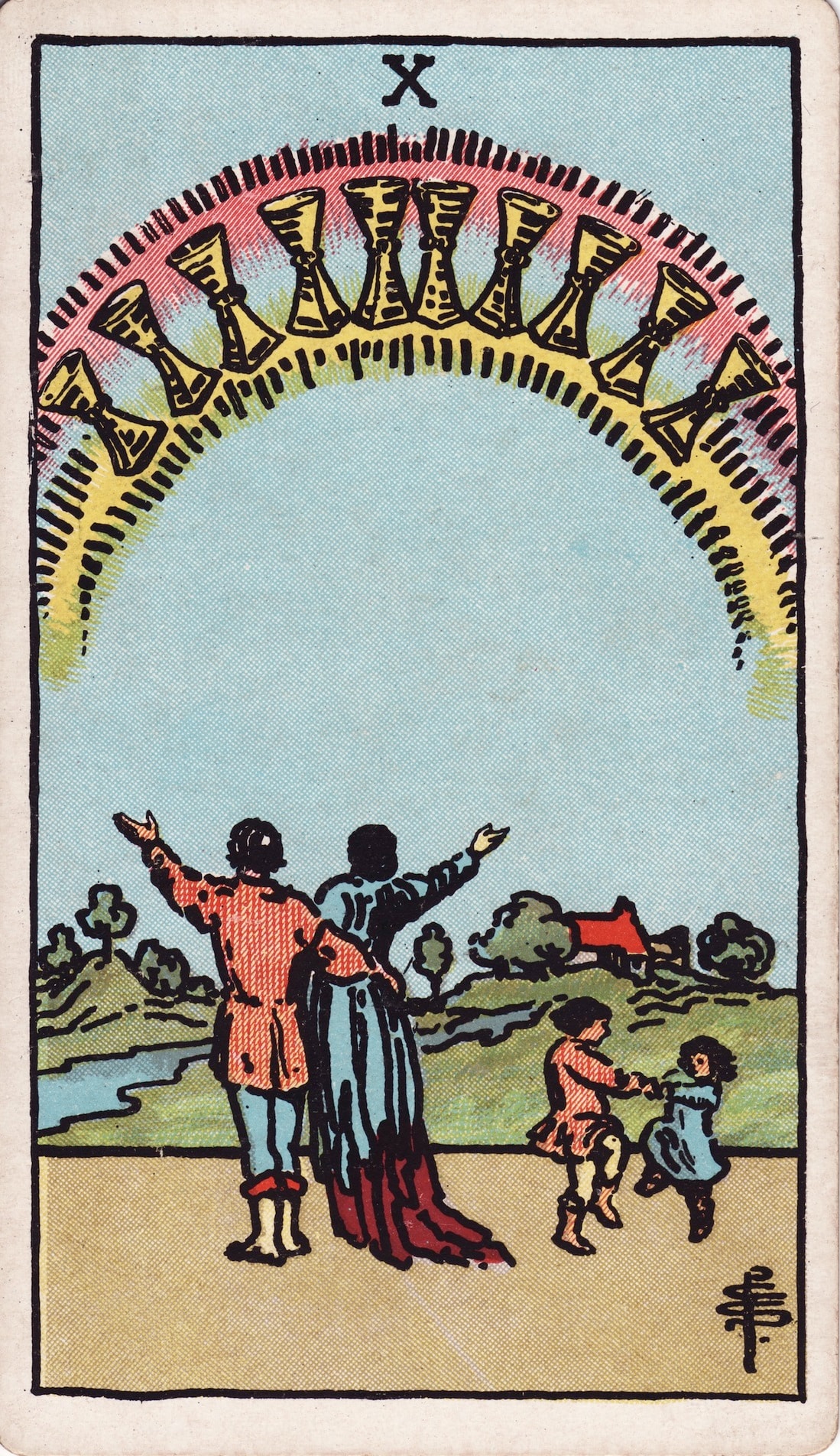
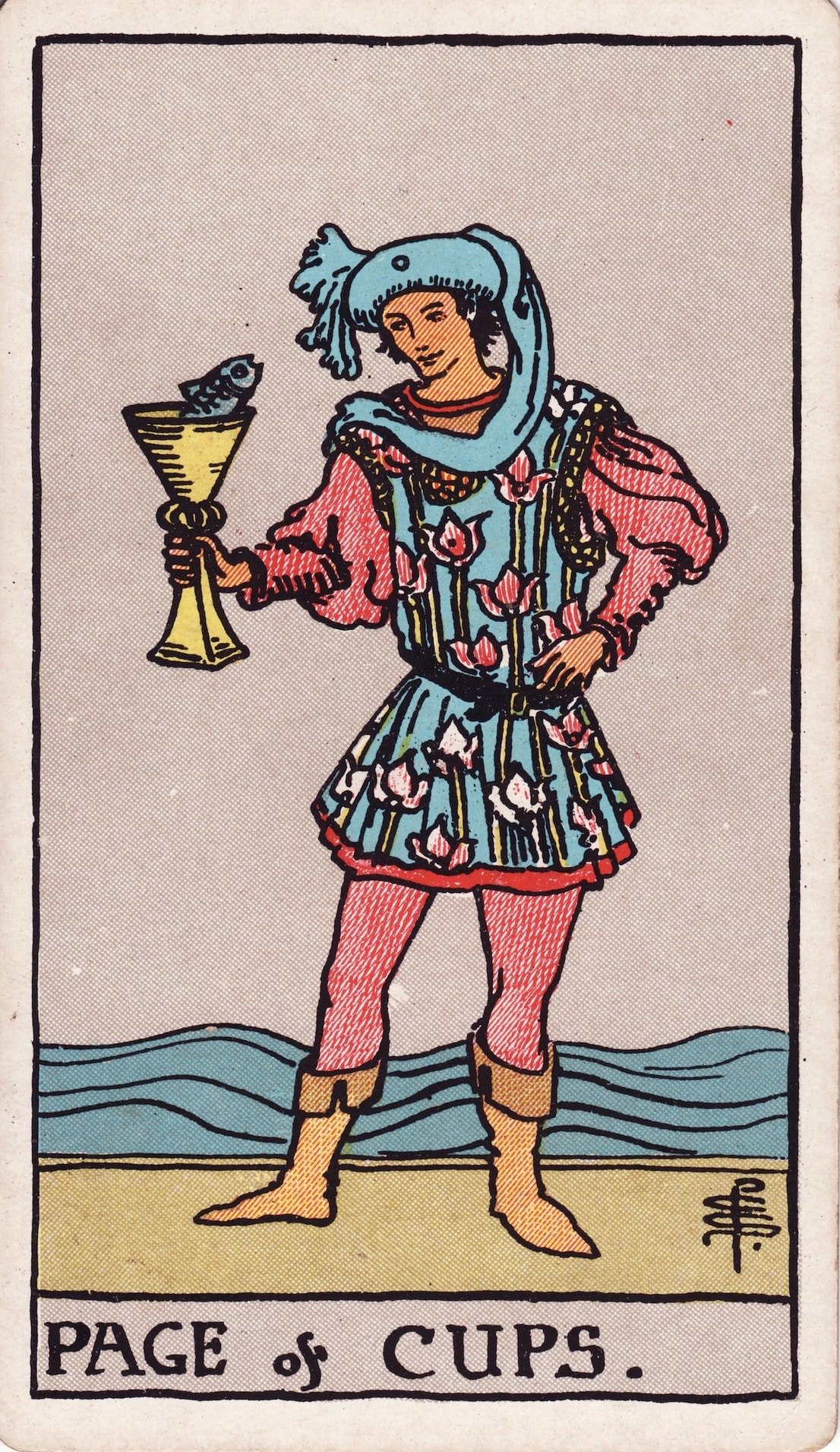
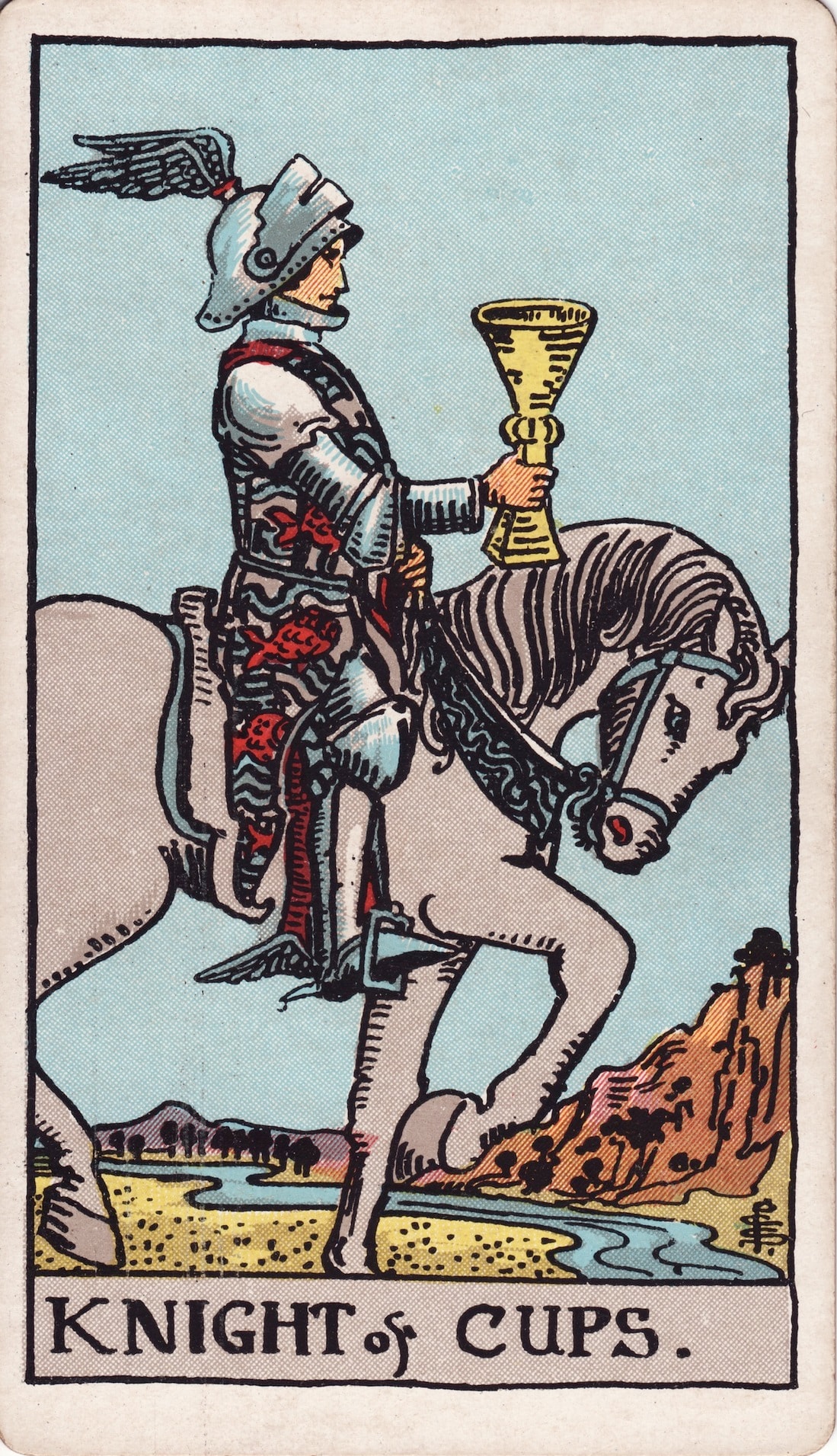
The Cups: a way into water
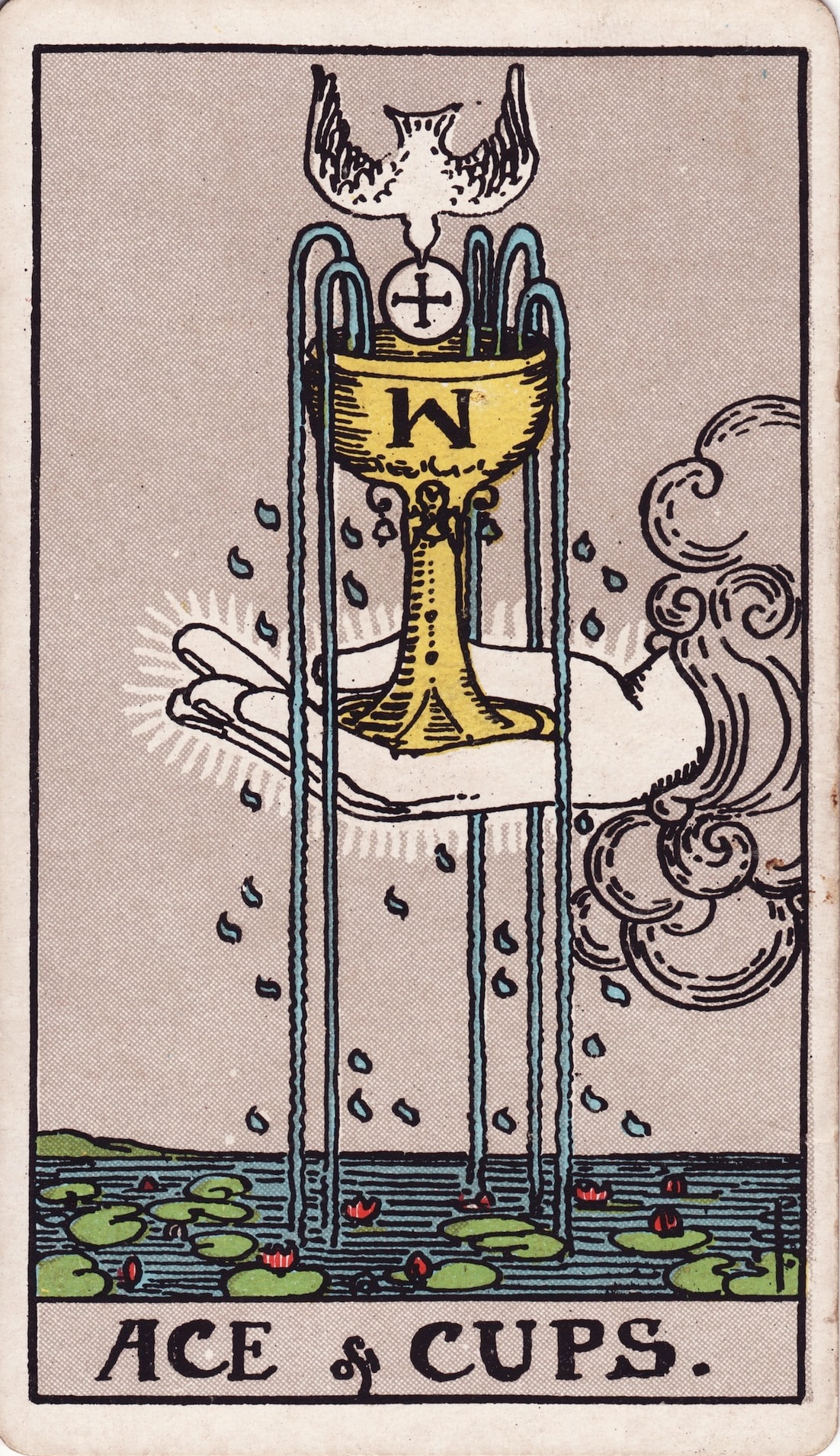
A cup is made to hold something. Look at the Ace of this suit. A hand comes out of a cloud and holds up a golden cup. Streams of water pour over its rim into a pond full of water lilies. Arthur Waite, who planned this deck, noticed that water "appears in all the court cards" of the suit. In the tables of the Golden Dawn, this suit belongs to water. Many readers come to the Cups through feeling. So each Cups card holds two things at once: a cup, which has a shape, and water, which has none. You could watch which of the two the card cares about today.
The image
Start with the Ace again. Above the cup, a white dove flies down with a small round wafer marked with a cross. Waite called it a Host, the bread of the Mass. Drops fall on all sides, like dew. The cup is a fountain and a holy vessel at once.
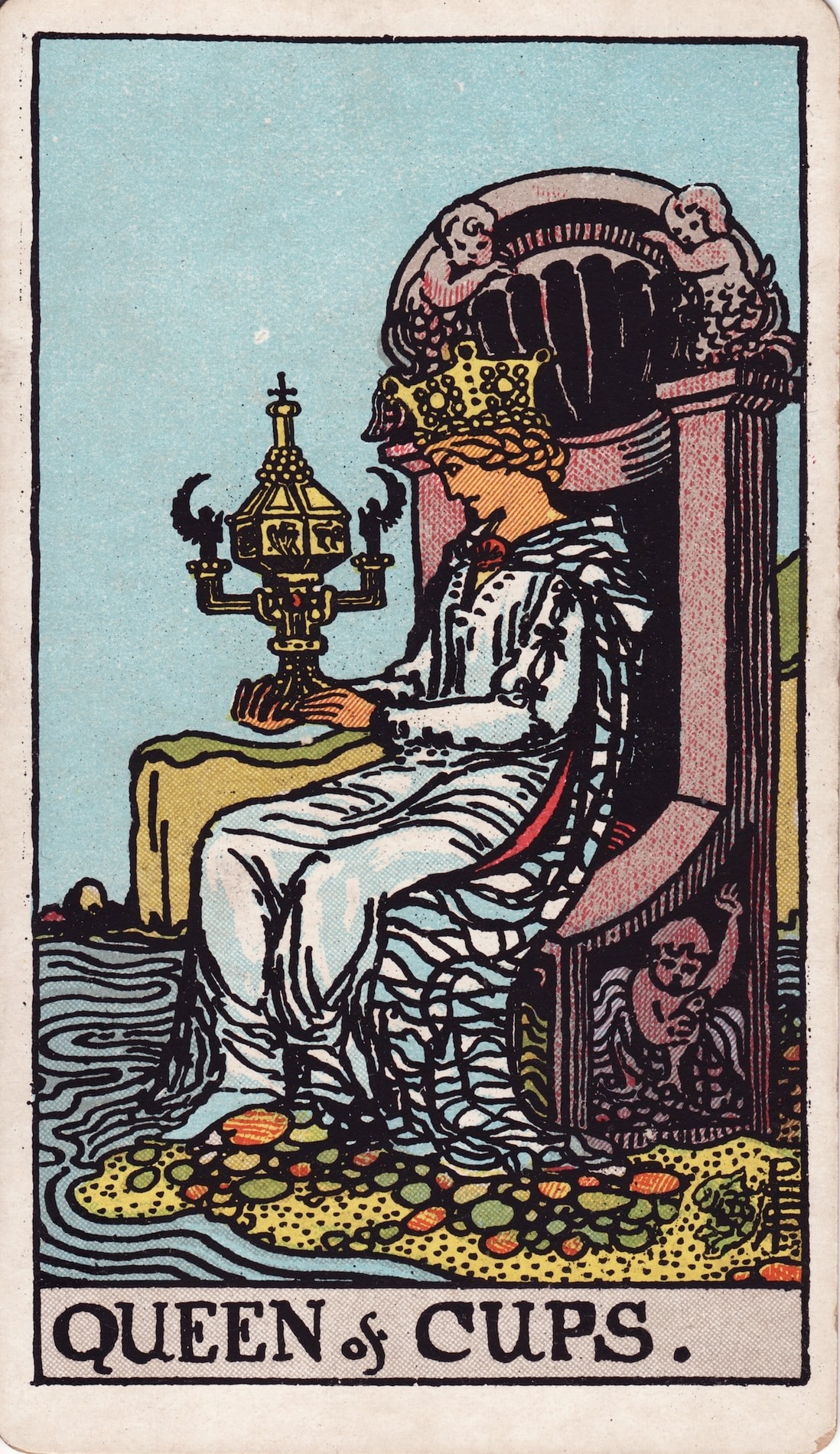
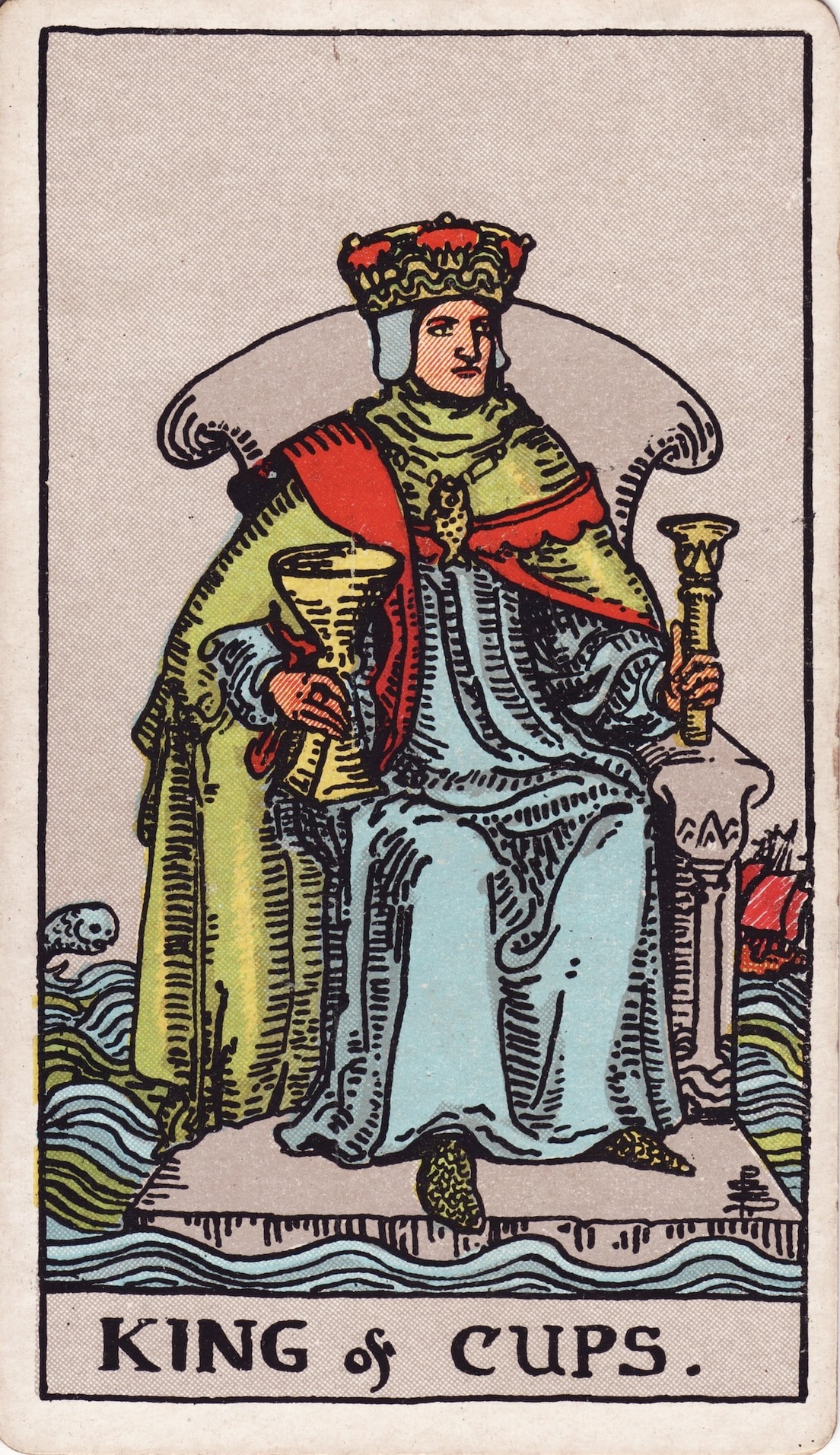
Now follow the water through the court. The Page stands by the sea. A fish looks up at him out of his cup. The Knight rides slowly toward a stream. The Queen sits at the very edge of the water, with coloured pebbles at her feet. The King's throne rests on the open sea. A ship sails on one side of him. A fish leaps on the other.
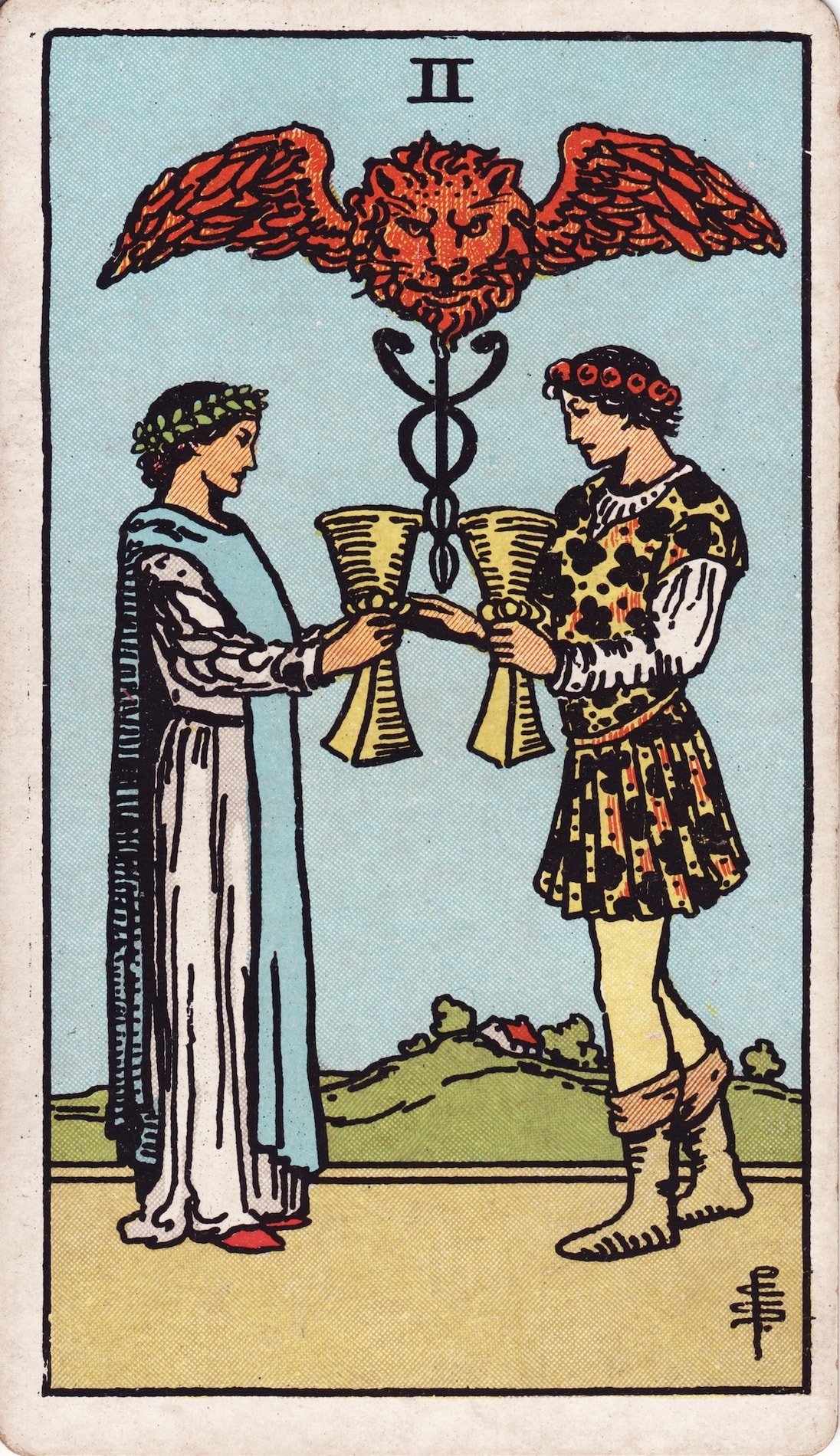
Watch what the cups do, too. On the Two, two people raise their cups to each other. On the Five, a figure in a black cloak stares at three cups knocked over. Two more still stand behind him. On the Eight, a man walks away from eight cups stacked by the water. A cup can be offered, kept, spilled or left behind.
The Queen's cup is unlike the others. It has a lid, winged figures for handles and a small cross on top. She gazes at it, though nobody can see inside. Waite saw her "as one who sees visions in a cup".
Across traditions
Book T, the Golden Dawn's guide to the tarot, calls the Ace "the Root of the Powers of the Waters". It says the water below is "clear" and "calm", and lotus flowers grow in it. It names the court cards after water spirits. This Queen is the "Queen of Nymphs and Undines". Book T also gives her a surprising line: "Imagination stronger than feeling." So even in the suit of feeling, the Golden Dawn saw pictures moving under the surface. Waite said something close about the Page. The fish in his cup is "the pictures of the mind taking form".
Thales of Miletus was one of the first Greek thinkers, around 600 BC. Aristotle reported that for Thales, water was the stuff of all things. Water freezes into ice, runs as a river and rises as mist. It changes shape more than anything else we know. Aristotle passed on another saying of his too: "All things are full of gods."
William Blake made the picture called Water at the top of this echo. An old man sits hunched in heavy rain, his feet in the water. He isn't holding the water. It is falling all over him.
Looking with water
So far you have been looking at water. You could also try looking with it. Water takes the shape of whatever holds it. It goes around things instead of through them. It finds the lowest place and rests there. When it is still, it shows you your own face.
If you look at a room this way, you may notice what is being held and what is leaking. You may notice who takes the shape of whom. The French philosopher Gaston Bachelard wrote a whole book about water and the daydreams it brings. You could let a Cups card do the same. Let it blur a little, the way a face blurs in a pond, and see what floats up.
Try this
Take today's Cups card. First, count the cups and see which ones are full. Then find the water. It may be a river, a sea, a fountain or only a colour. Ask where it comes from and where it goes. Last, think about your own day. Name one thing you are holding carefully, and one thing that is spilling over. Notice which one you would rather talk about.
Questions to sit with
- Which cup matters most to the figure on this card? Which is ignored?
- Is the water here still, flowing or falling?
- If this card were a pond and you leaned over it, what would you see?
- What in your life takes the shape of whatever holds it?
- What are you keeping in a cup with a lid?