Minor Arcana, the Wands
Page of Wands
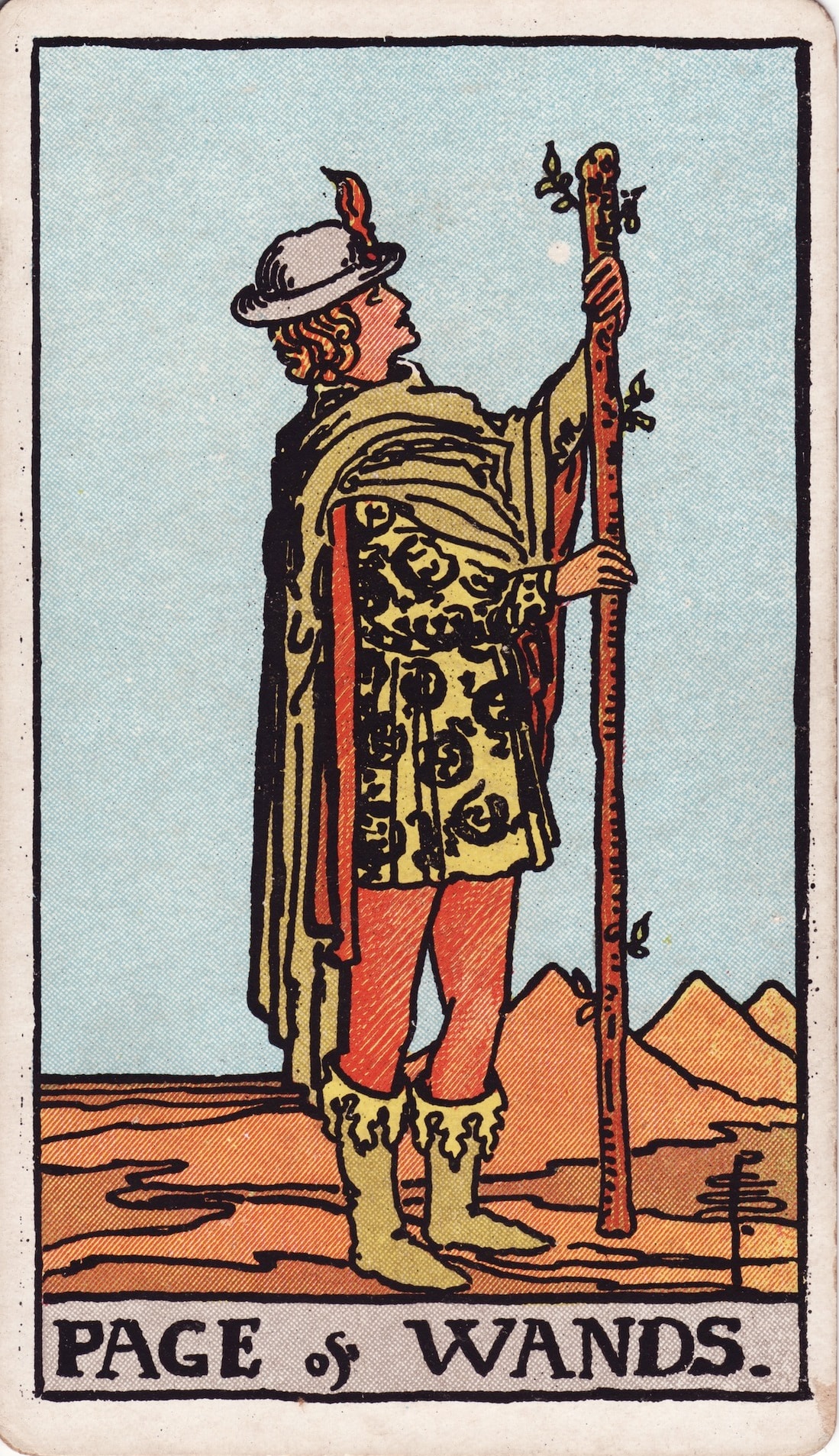
The Page of Wands is a court card that Pamela Colman Smith drew in 1909 as a young man standing alone in a desert, dressed in yellow and a feathered hat. He holds a tall staff with both hands and looks up at its top, with three pyramids rising on the horizon behind him.
What Waite wrote it means (1910)
- Divinatory meanings
Dark young man, faithful, a lover, an envoy, a postman. Beside a man, he will bear favourable testimony concerning him. A dangerous rival, if followed by the Page of Cups. Has the chief qualities of his suit. He may signify family intelligence.
- Reversed
Anecdotes, announcements, evil news. Also indecision and the instability which accompanies it.
Arthur Edward Waite, The Pictorial Key to the Tarot (London, 1911), p. 176. Read it in the chapter
In a scene similar to the former, a young man stands in the act of proclamation. He is unknown but faithful, and his tidings are strange.
What's in the picture
- The feather. A tall red-orange feather, shaped like a flame, stands up from the band of his round grey hat, which has a narrow brim.
- The upturned face. His face is lifted toward the top of the staff, and his eyes follow it up. Waite has him standing "in the act of proclamation", as if about to announce something.
- The staff. The staff is taller than he is and rests on the ground by his feet. He holds it with one hand high and one at his waist, and small leaves sprout along it. Its top is a knobbly end.
- The salamanders. His yellow tunic is covered with black curled shapes. Look closely and they are small lizards, salamanders, each bent round into a ring. They come back on the Knight and the King of Wands.
- The cloak. A yellow-green cloak hangs from his shoulders and falls down his back past his knees, with a red lining showing at the edge.
- The boots. He wears red-orange hose and pale green boots, and stands with his feet set apart. The tops of the boots are yellow, cut into wavy points like small flames.
- The pyramids. Three pyramids stand on the orange desert at the right, drawn as plain, flat triangles. The same shapes appear again behind the Knight of Wands.
- The desert. Nothing grows on the bare orange sand, which is marked with a few dark ridges, and nobody else is there. The sky above is pale blue.
The card in brief
- In the deck
- Card 33 of 78
- Arcana
- Minor Arcana, Wands
- Number
- Page
- Element (Golden Dawn)
- Fire
- Title in Book T
- The Princess of the Shining Flame: the Rose of the Palace of Fire
- Drawn by
- Pamela Colman Smith
- Planned by
- Arthur Edward Waite
- Published
- London, William Rider & Son, 1909
- Scan
- Pam-A printing, c. 1910, Wikimedia Commons
In the old books
Book T (1912)
A Very strong and beautiful woman with flowing red-gold hair, attired like an Amazon. Her shoulders, arms, bosom and knees are bare. She wears a short kilt reaching to the knee. Round her waist is a broad belt of scale-mail; narrow at the sides; broader in front and back; and having a winged tiger's head in front. She wears a Corinthian-shaped helmet and crown with a long plume. It also is surmounted by a tiger's head, and the same symbol forms the buckle of her scale-mail buskins. A mantle lined with tiger's skin falls back from her shoulders. Her right hand rests on a small golden or brazen altar ornamented with rams' heads and with Flames of Fire leaping from it. Her left hand leans on a long and heavy club, swelling at the lower end, where the sigil is placed; and it has flames of fire leaping from it the whole way down; but the flames are ascending. This club or torch is much longer than that carried by the King or Queen. Beneath her firmly placed feet are leaping Flames of Fire.
Brilliance, courage, beauty, force, sudden in anger or love, desire of power, enthusiasm, revenge.
If ill dignified, she is superficial, theatrical, cruel, unstable, domineering.
Book T, “A Description of the Cards of the Tarot”, The Equinox I.8 (London, 1912), pp. 161–162. See the source Papus (1892)
A dark child, a friend. Also represents a message from a near relation.
Papus, The Tarot of the Bohemians, tr. A. P. Morton (London, 1892), p. 311. See the source
Before 1909
The older cards and pictures behind this one will be shown here once their licences are checked.
The film
No film for this card yet.
Around this card
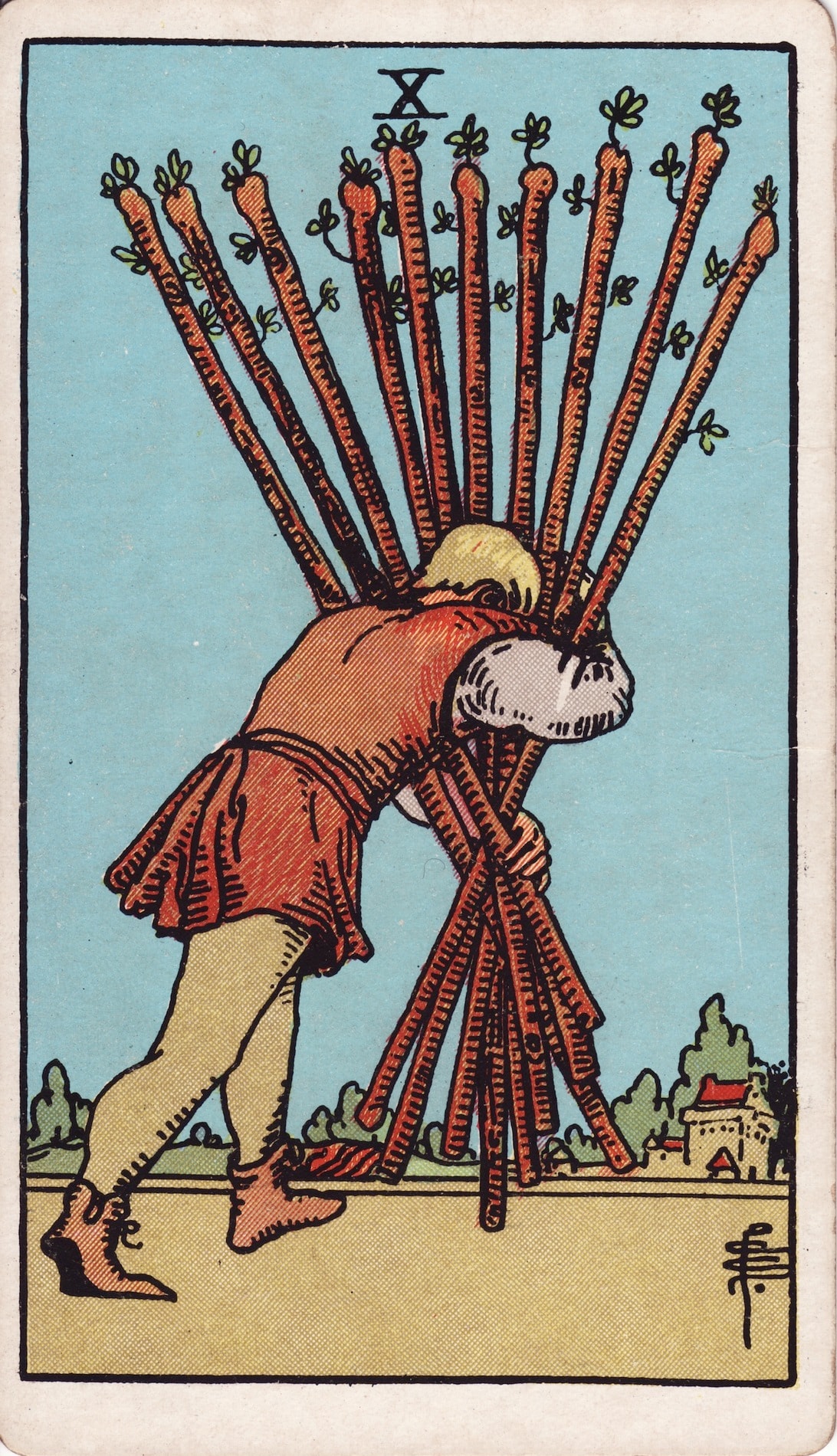
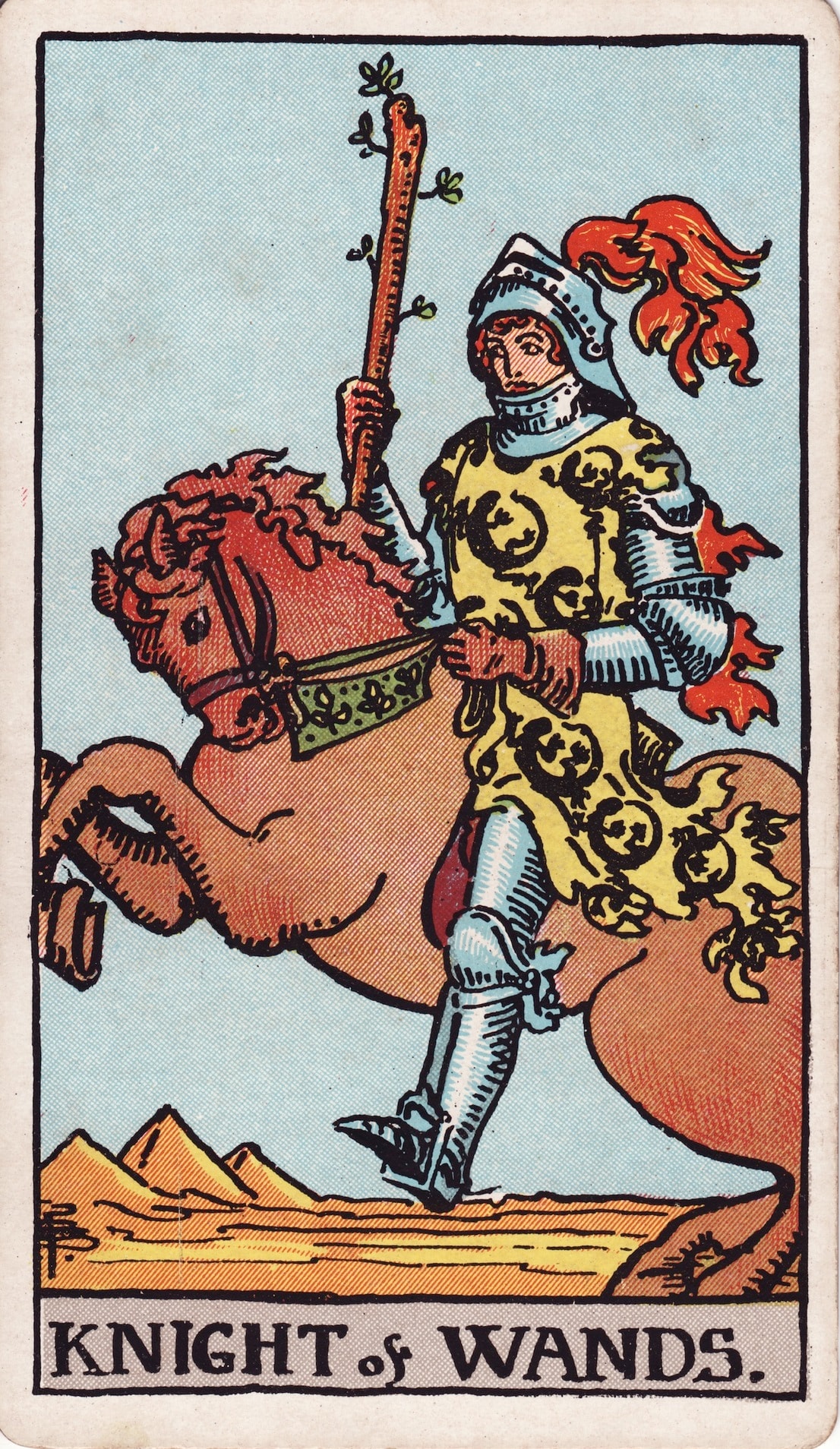
Before and after it in the deck
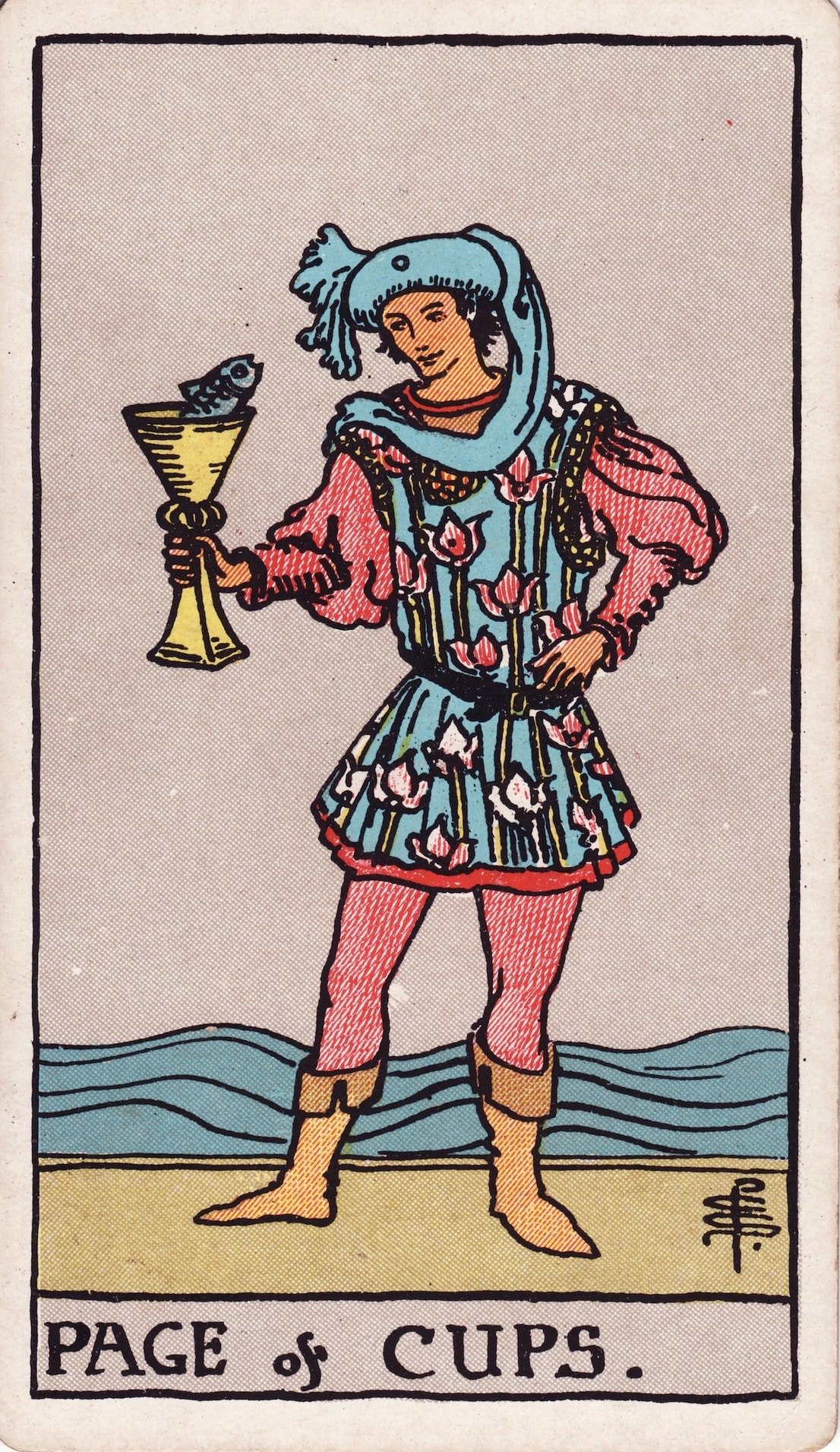
The same number in the other suits

All the cards of the Wands, or the whole deck.