The Wands
The fourteen wands of the 1909 deck, from the ace to the king. The Golden Dawn gave the suit to fire.
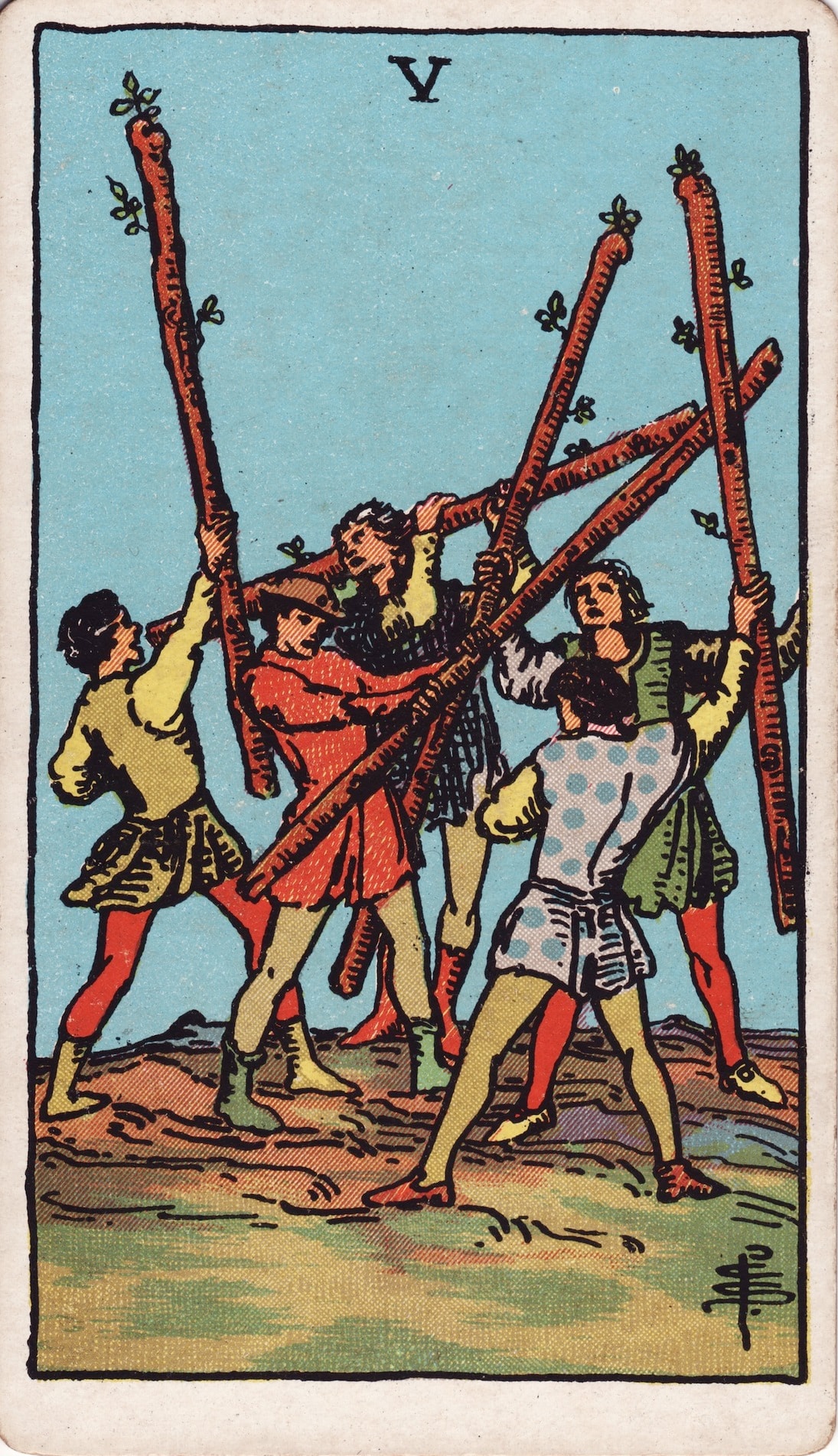
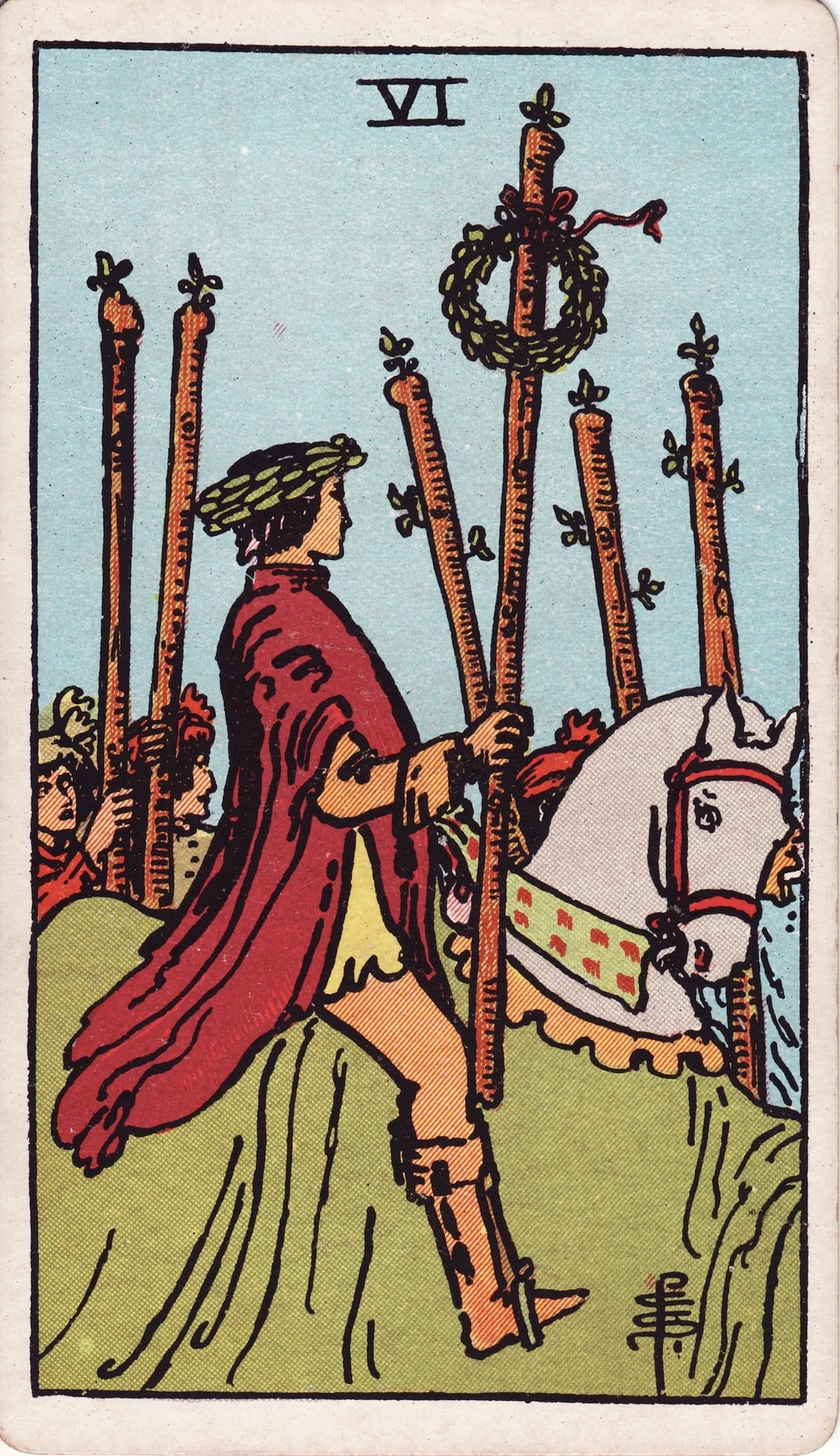
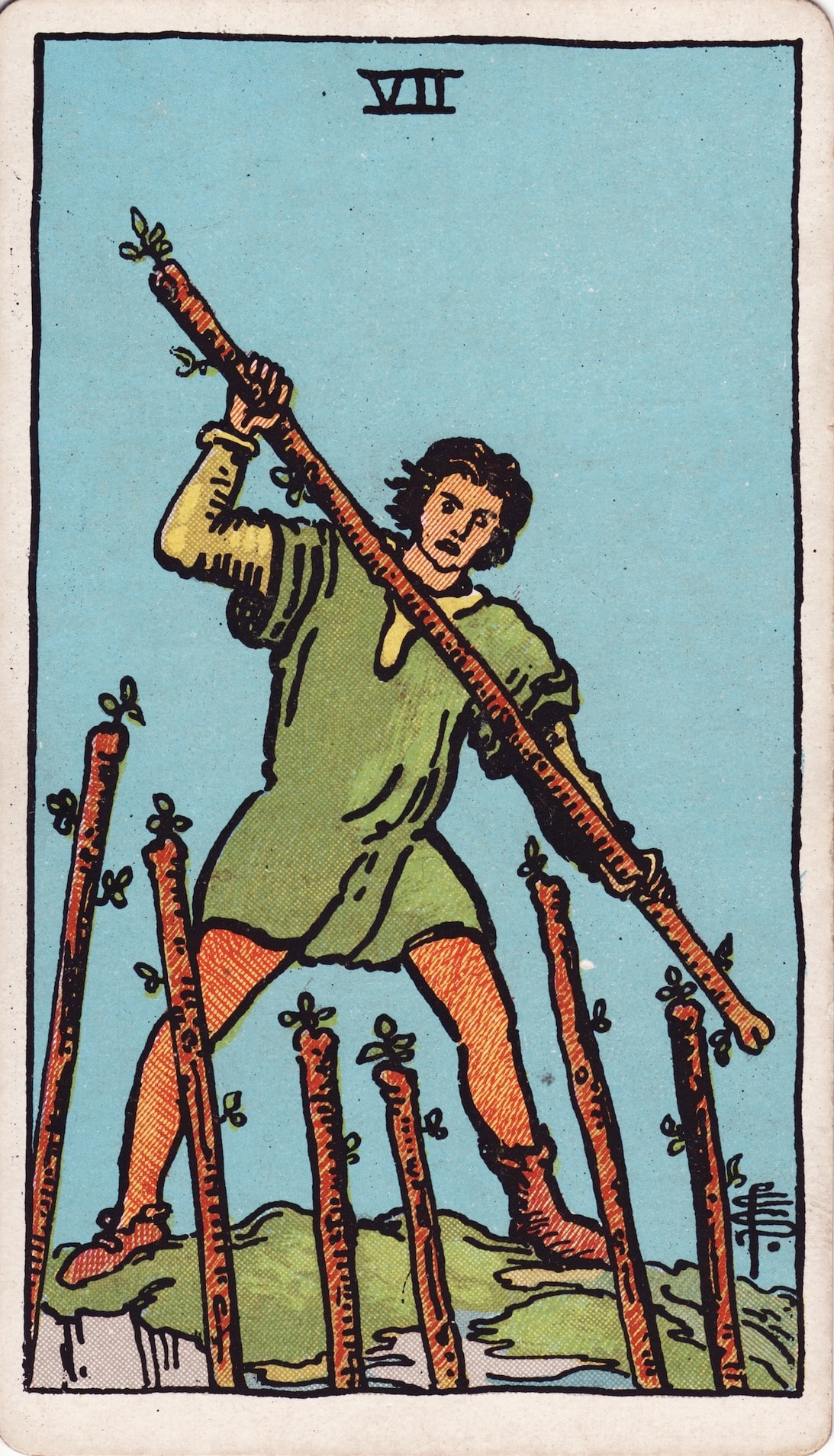
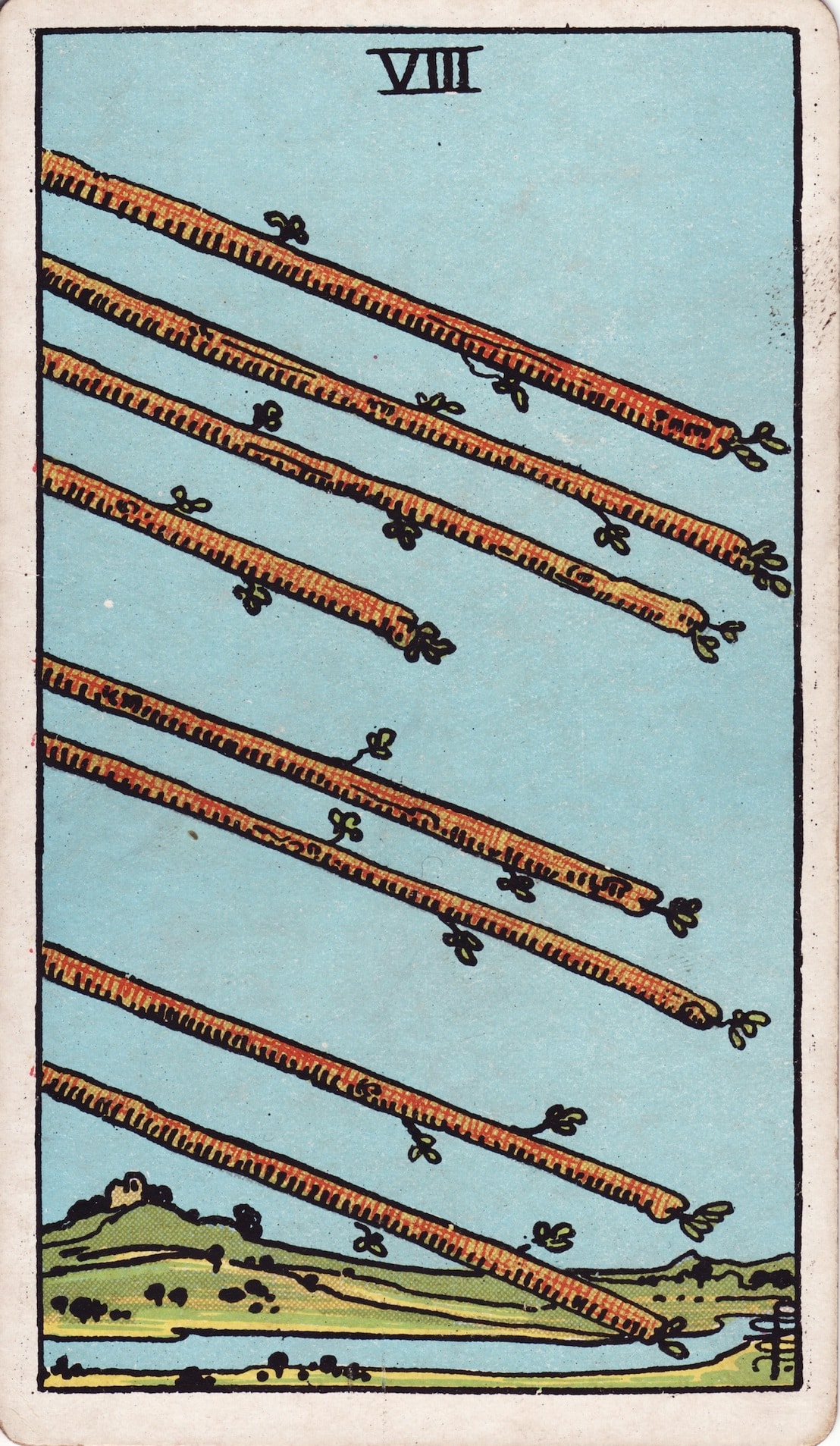
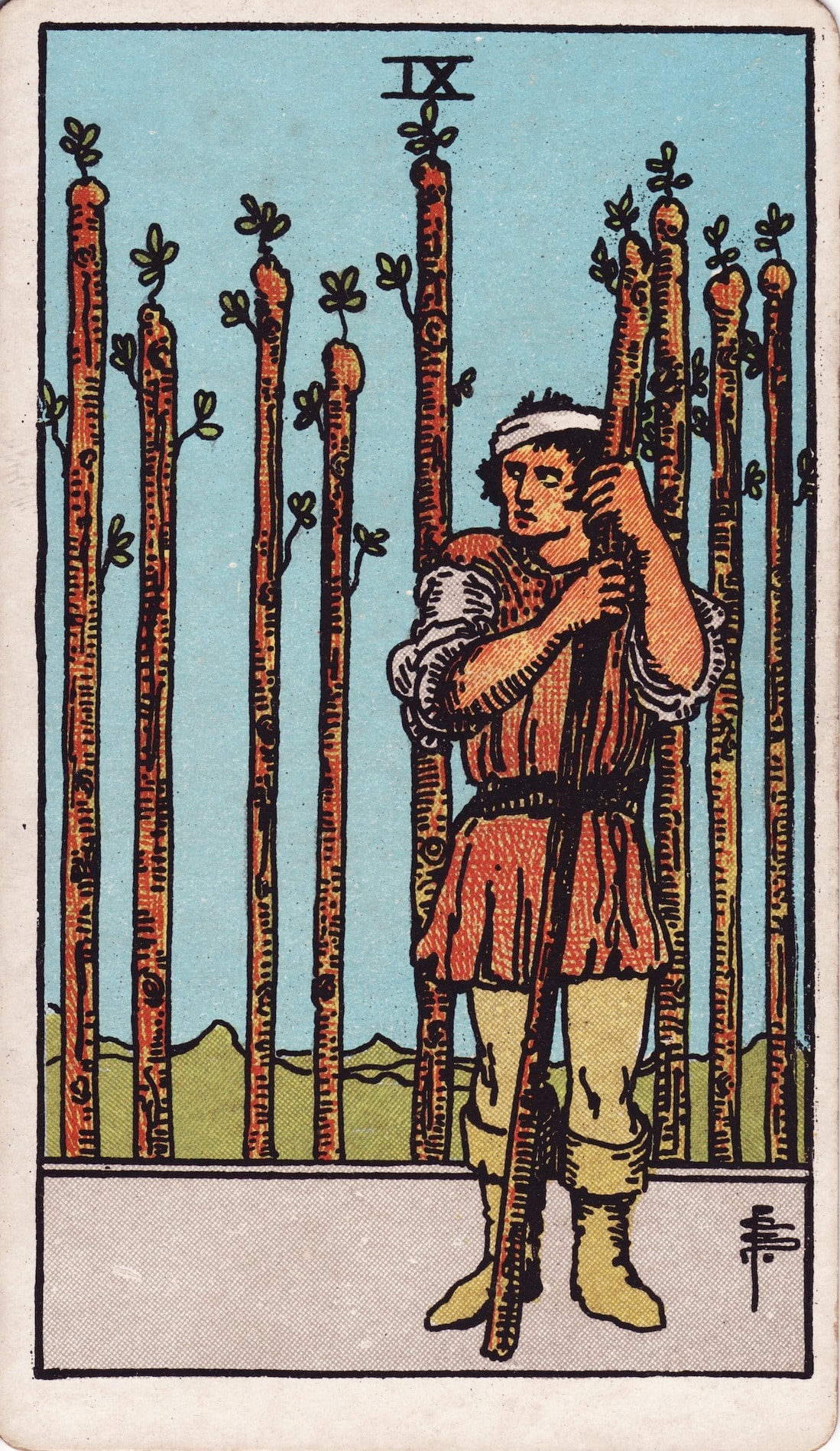
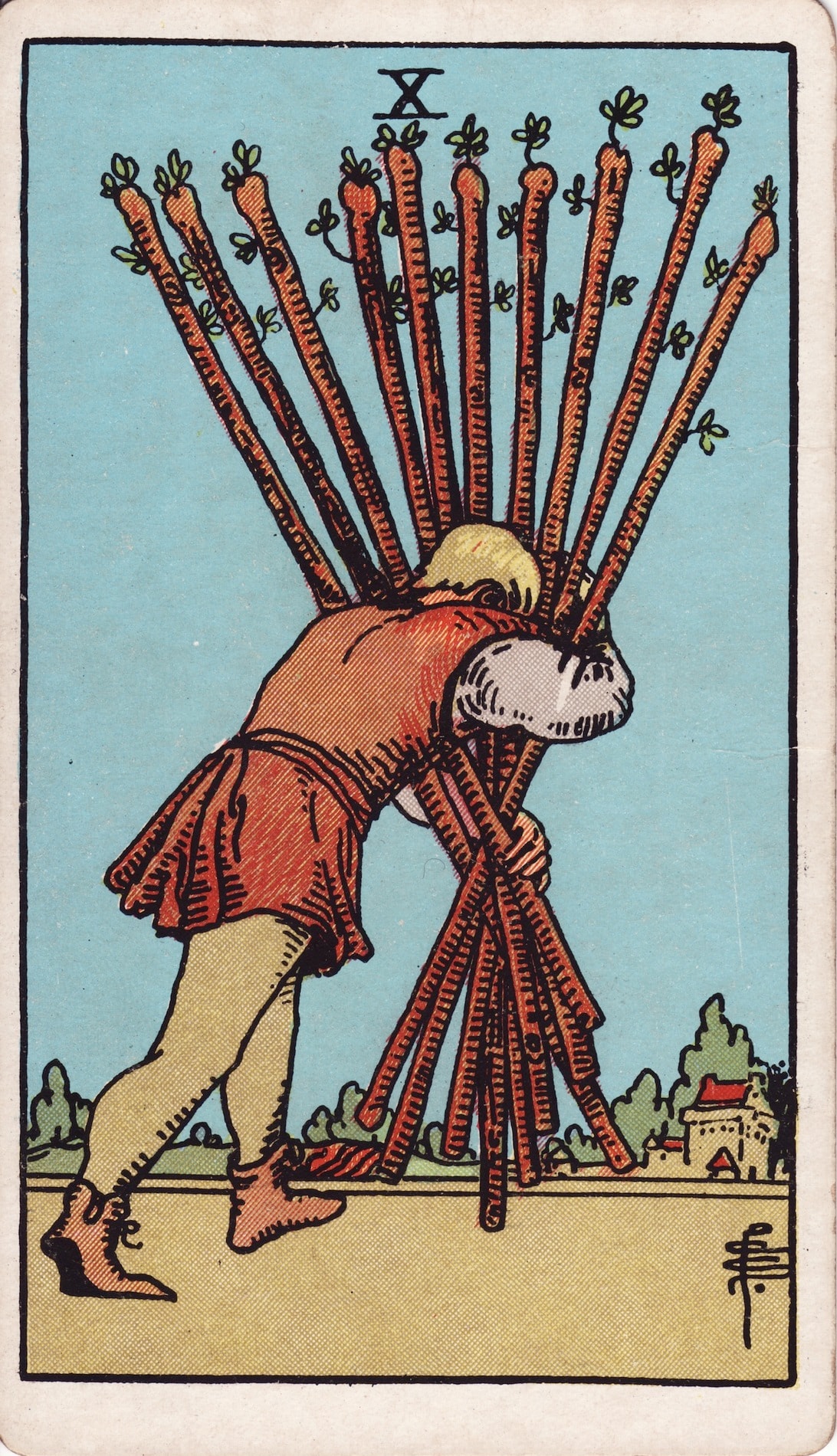
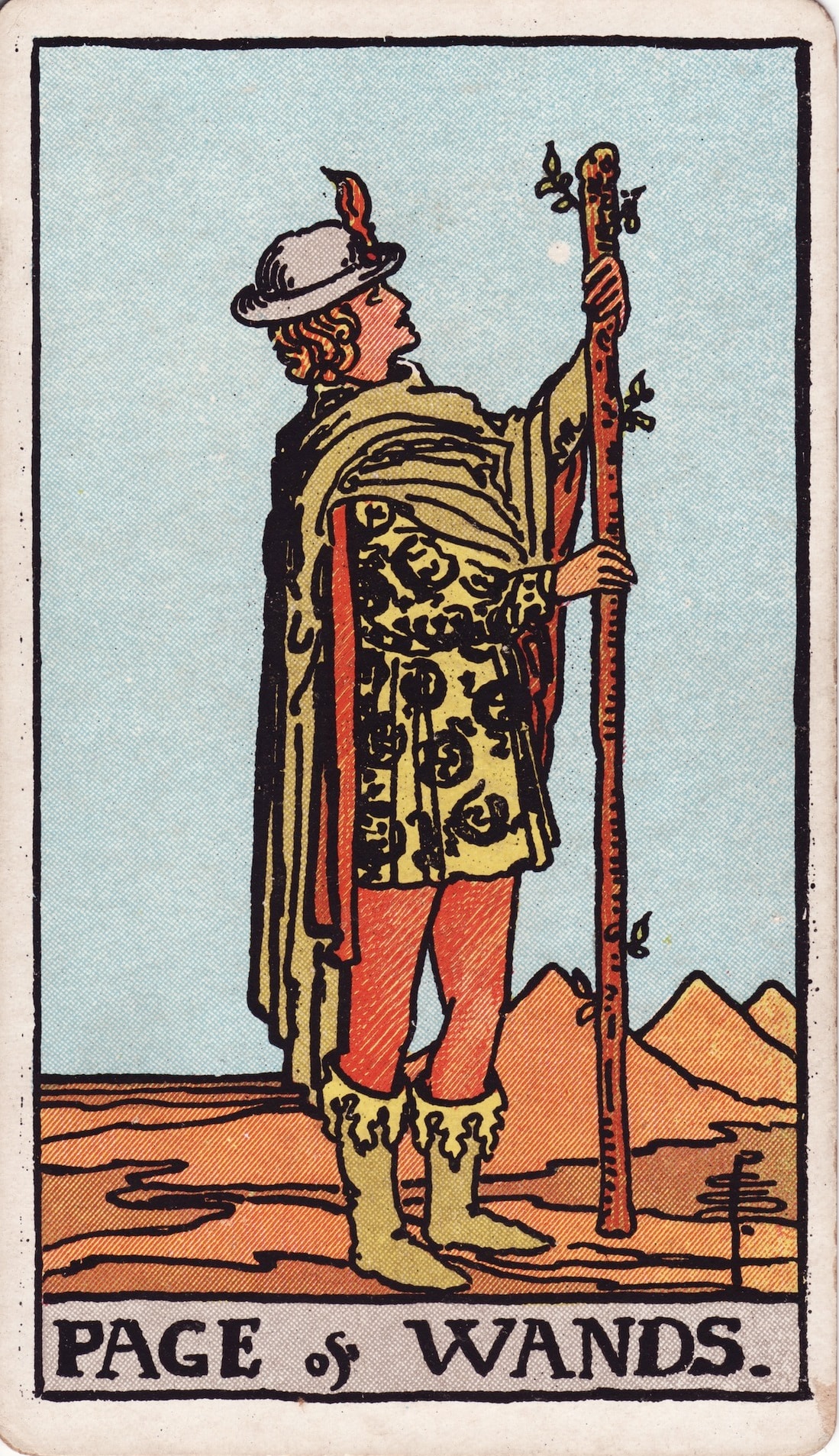
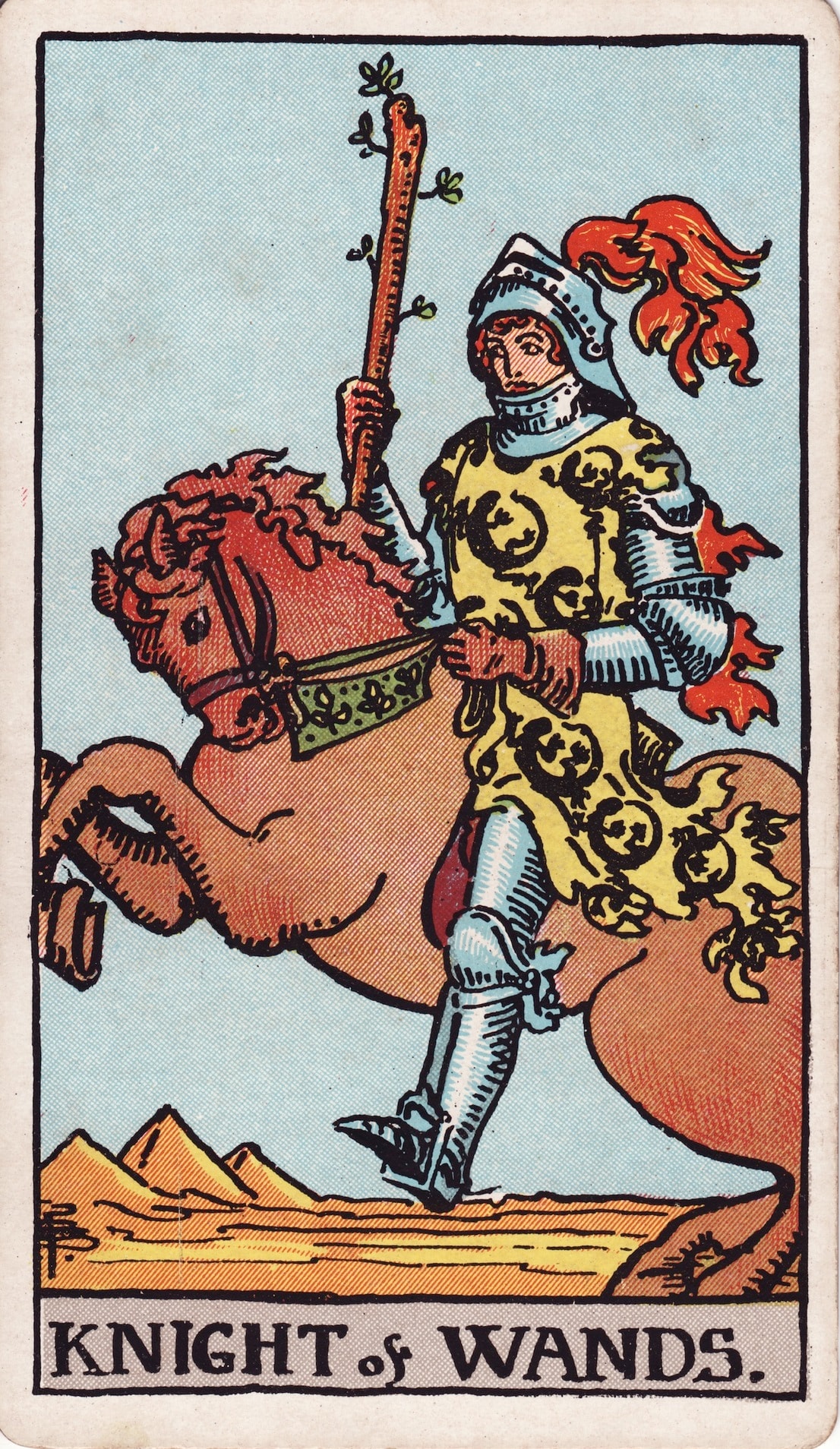
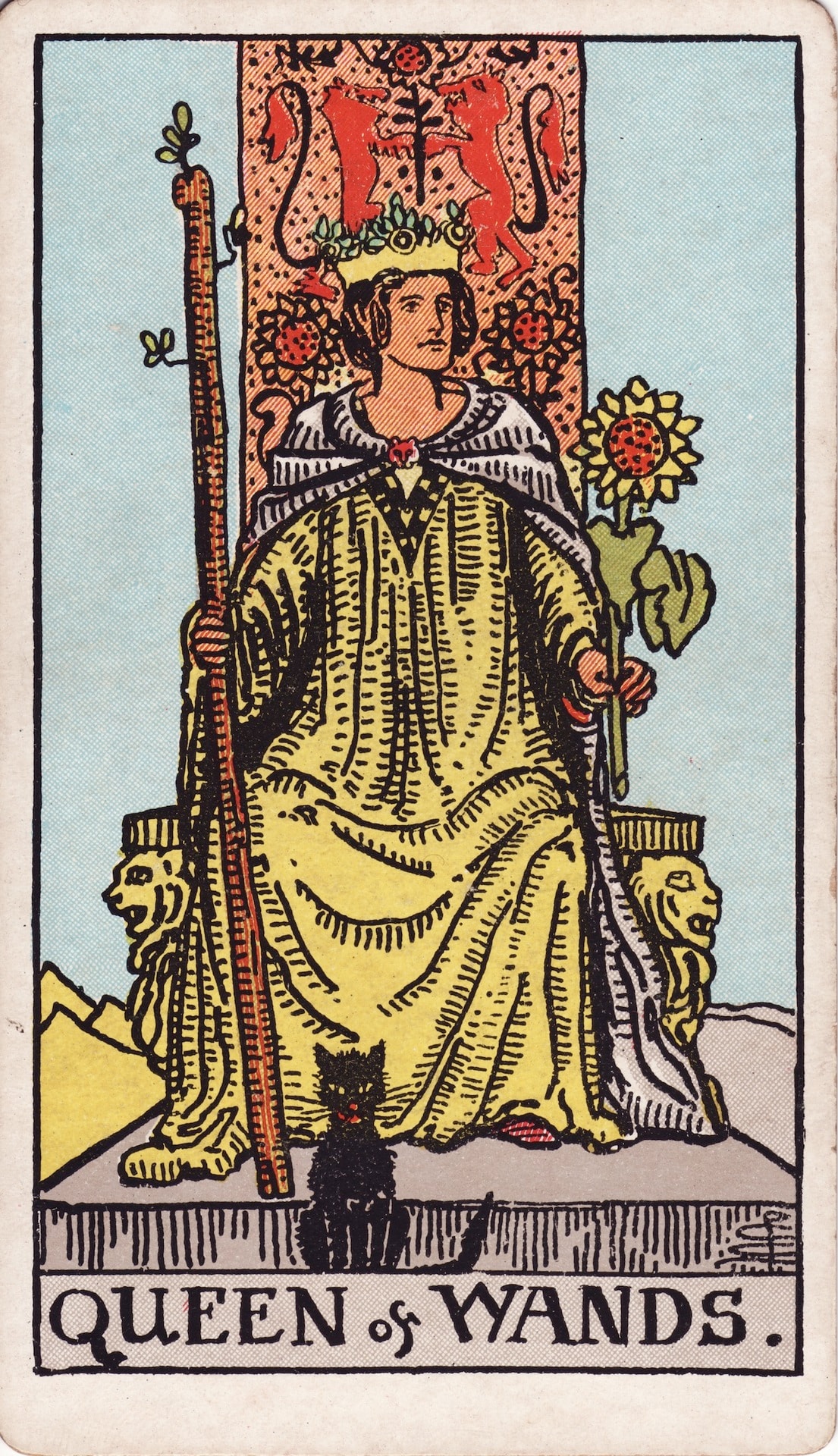
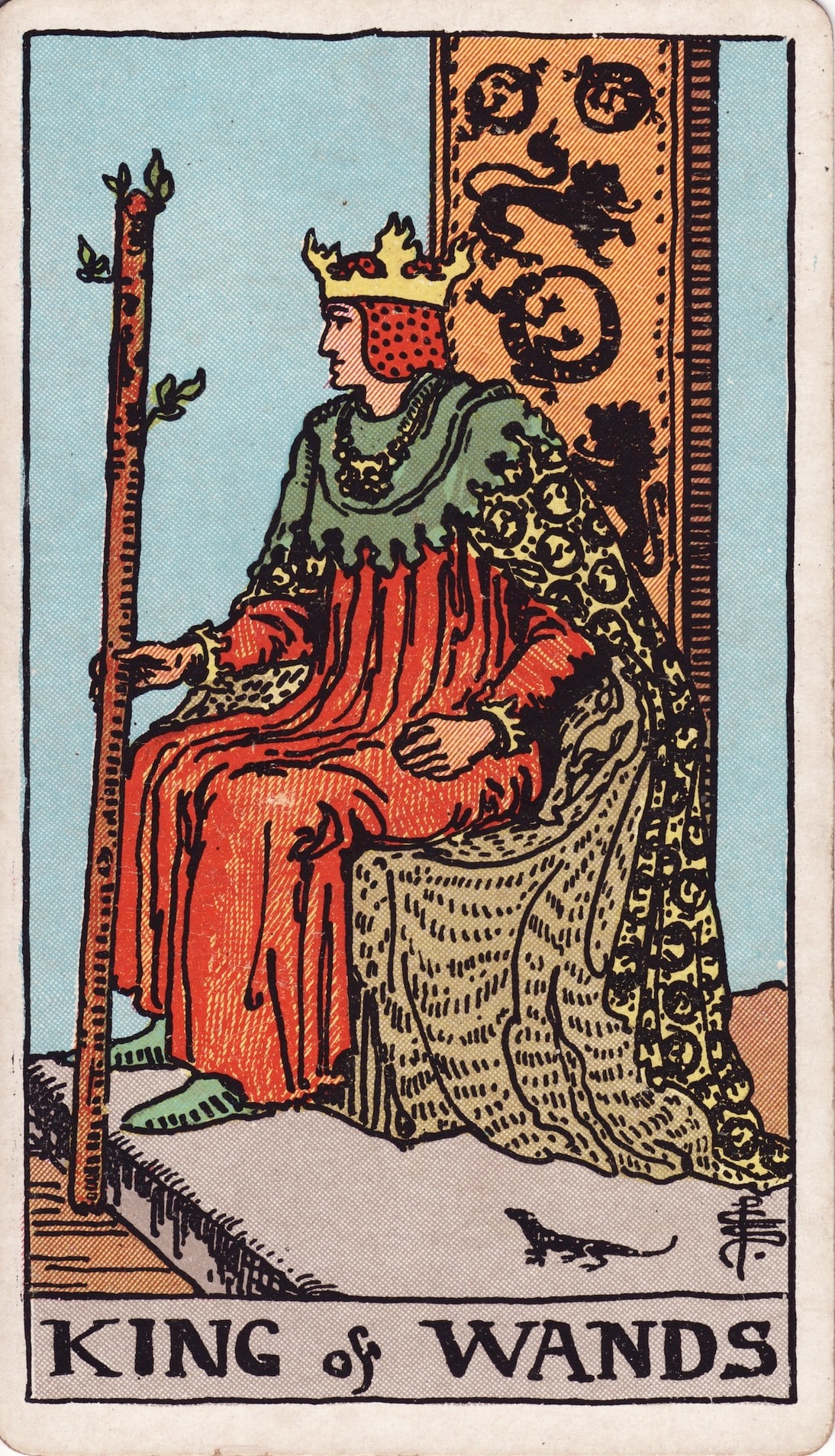
The Wands: a way into fire
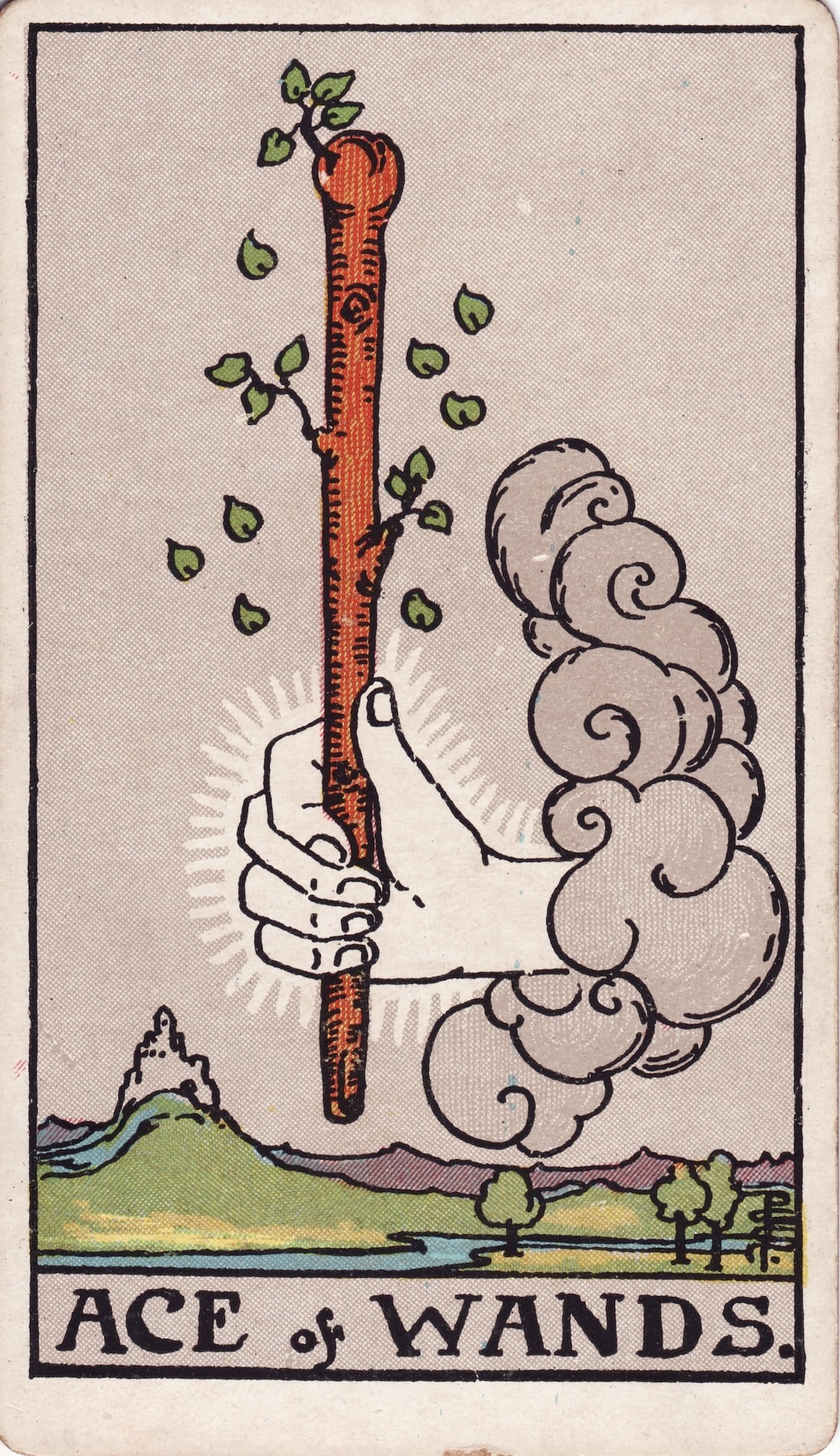
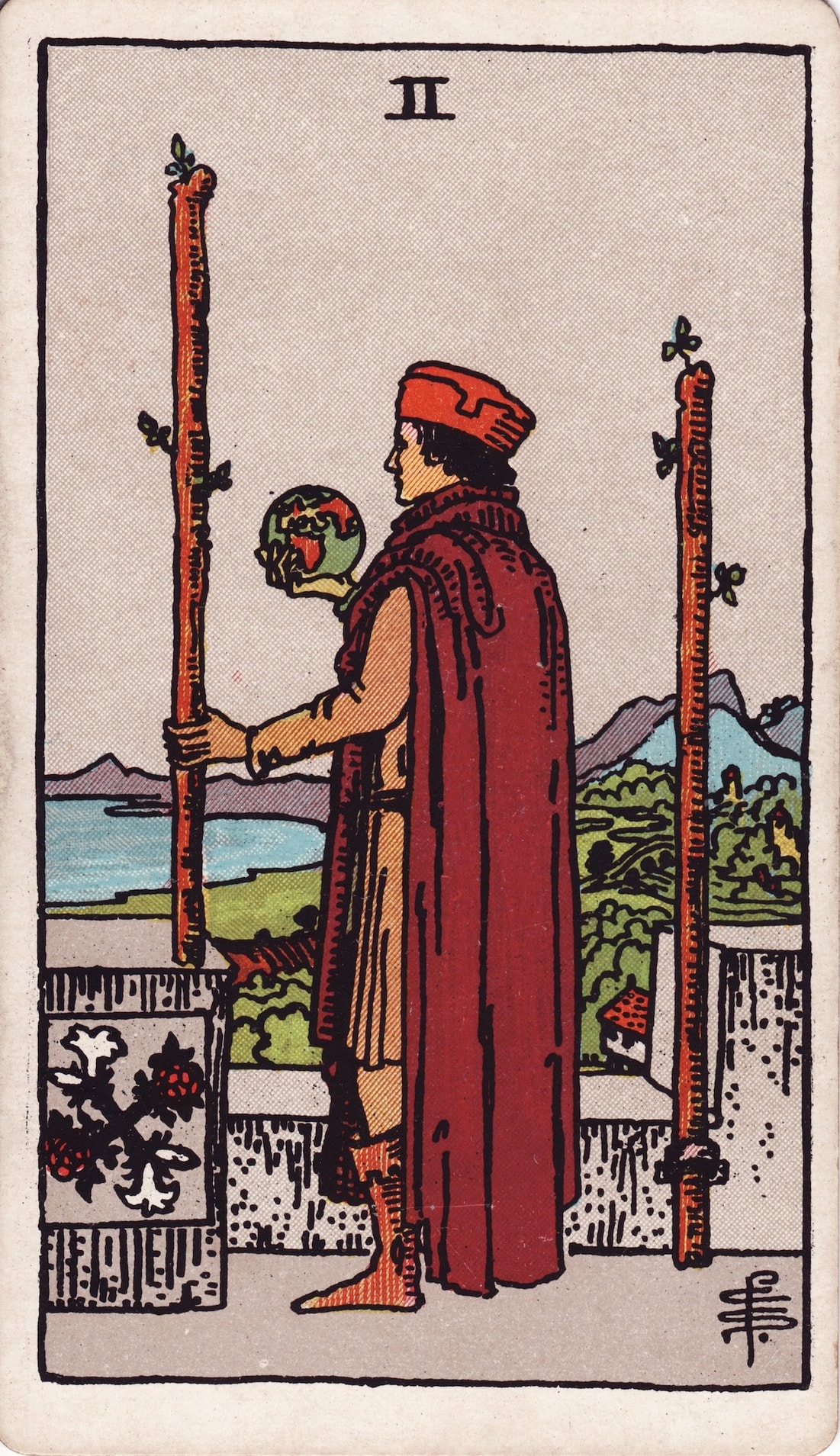
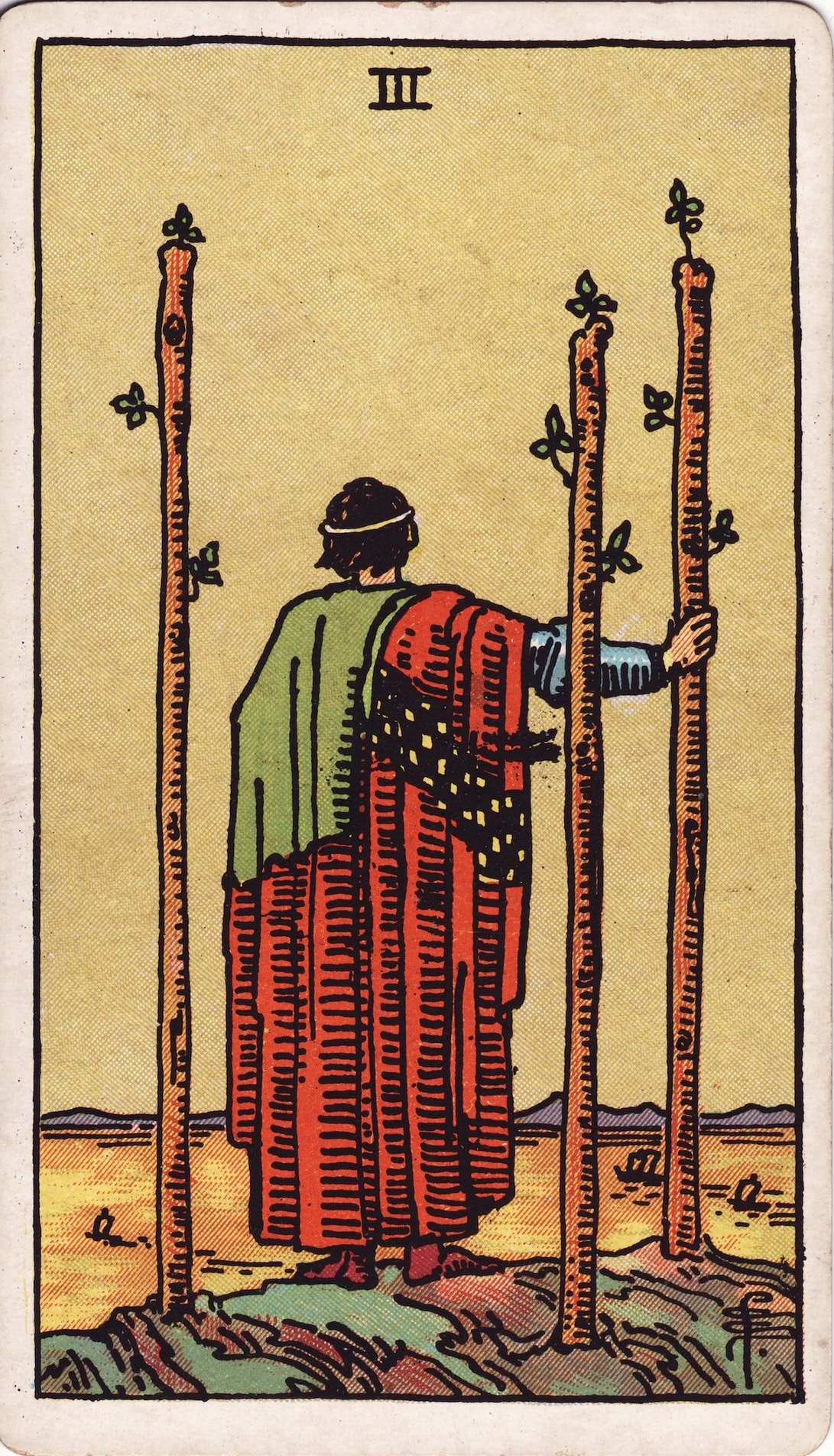
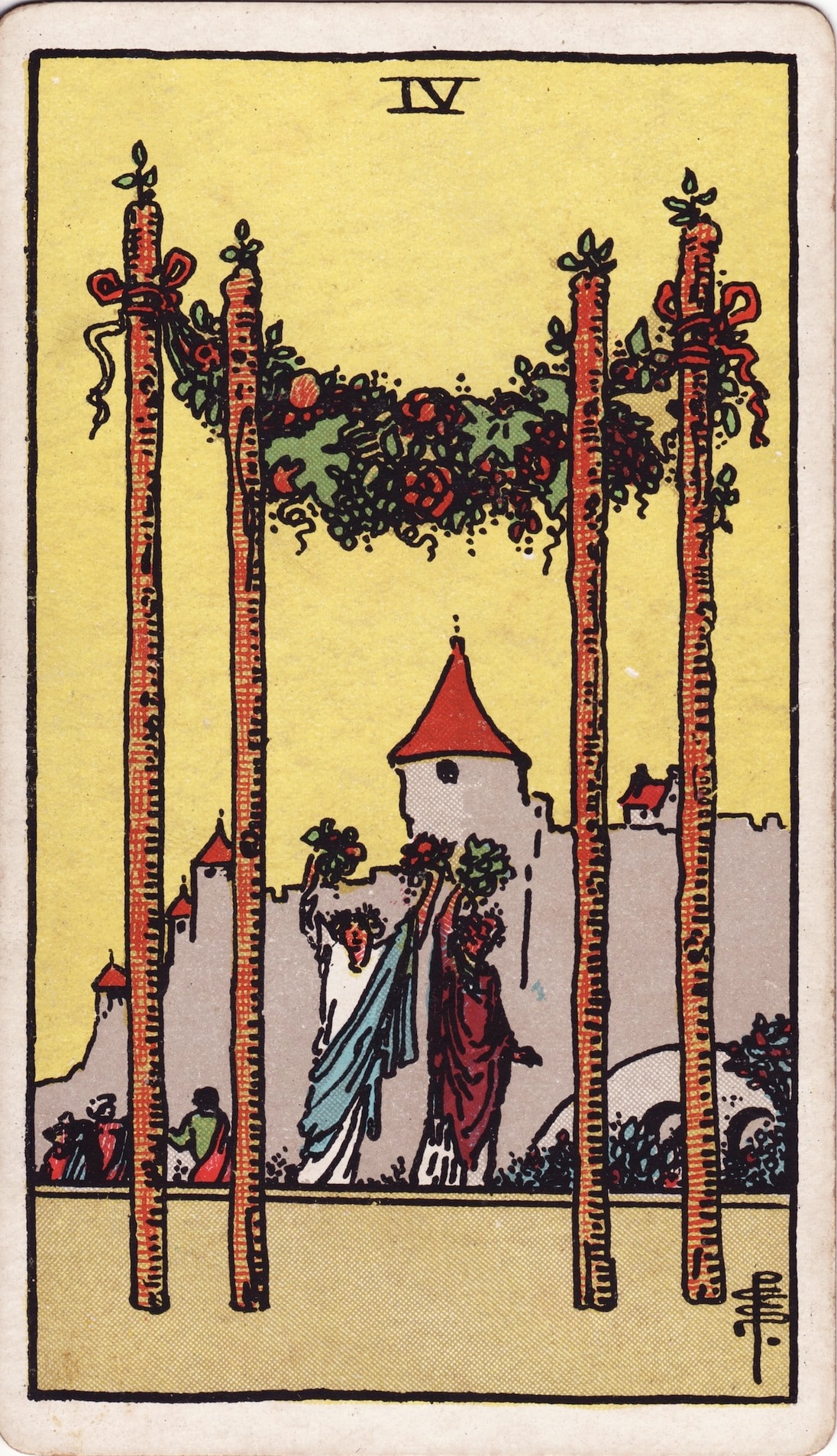
Look at any wand in this suit. It is a cut stick, but it still has leaves. There is a sprig at the top and a bud halfway down. On the Ace, a few loose leaves drift through the air. Arthur Waite planned this deck, and Pamela Colman Smith drew it. Waite noticed the leaves too. The wands are "always in leaf", he wrote. It is "a suit of life and animation". The Golden Dawn, a magical order of Waite's day, linked this suit to fire. So each Wands card holds two things at once: wood, which grows, and fire, which can burn wood. You could keep both in mind today and see which one the card leans toward.
The image
Start with the Ace. A hand comes out of a cloud and holds a thick stick. New leaves grow on it while other leaves fall away. The wand is sprouting and shedding at the same time. Below, a river winds past a castle on a hill. Nothing is on fire.
That is strange for a fire suit. Smith drew almost no flames in it. She put the heat somewhere else. You can see it in the reds and yellows of the clothes. You can see it in the Knight's red plume, and in his sleeves, which are cut like flames. It is there in the bare orange desert behind the Knight and the Page, with its pyramids.
Now look at what the King, the Knight and the Page are wearing. Their clothes are covered in small black lizards, each curled into a ring. A live one sits on the floor by the King's feet. These are salamanders. Book T, the Golden Dawn's own guide to the tarot, calls these court cards the kings and queens of the Salamanders. The Greek thinker Aristotle passed on an old story about this animal. When a salamander walks over a fire, people said, the fire goes out. So the animal of fire can also put fire out. You can hold that as lightly as the old writers did.
Then there is the wood itself. On the Eight, the wands fly through open country with nobody holding them. They look like a message that has already been sent. On the Ten, a man carries all ten wands at once. He is bent under their weight.
Across traditions
Book T describes the Ace of Wands as "a great and Flaming Torch". It calls the Ace's force natural. The force of the Ace of Swords, it says, is invoked, or called up on purpose. Seen this way, fire starts by itself. It is already in the wood, the way the leaves are.
Heraclitus was a Greek thinker who lived in Ephesus around 500 BC. He saw the whole world like this. In John Burnet's translation, the world is "an ever-living Fire". Some of it is always "kindling", and some of it is always "going out". You could try looking at your room through that line for a minute. The kettle becomes fire that is about to flare up. The person reading beside it becomes fire too, burning low and slow.
In 1628 the Dutch painter Hendrick ter Brugghen painted Heraclitus as an old man weeping over a globe of the world.
The Greek poet Hesiod tells how Prometheus stole fire back for people. He hid it in a hollow fennel stalk, so that Zeus would not see it. That stalk is a kind of wand: a green stem with a hot coal inside. You could set this picture beside the Page and the Knight. They carry their wands as if they had somewhere to take them.
William Blake made the picture called Fire at the top of this echo. It shows a young man standing in flames, with a spear and a shield. In the same years, Blake made a book called The Marriage of Heaven and Hell. On one of its pages he wrote, "Energy is Eternal Delight".
Looking with fire
So far you have been looking at fire. You could also try looking with it, as if you were fire for a while. What would you notice first? Fire notices what is dry and ready to burn. It notices what has already caught, and what is still glowing under the ash. It is drawn to anything alive.
The meditation teacher Rob Burbea taught that the way you look shapes what you see. He also taught that you can practise a way of looking, the way you practise a scale on the piano. You could think of the four elements in the tarot as four ways of looking. Fire is the one this suit offers. On some days it may show you what you care about. On other days, everything may start to look like fuel.
Try this
Take today's Wands card. Before anything else, you could count the leaves. Then look for the heat. It might be a colour, a gesture, an animal or someone on the move. For each one, ask whether it is being held, passed on or let loose. Last, think about your own day. Name one thing that is in leaf and one thing that is on fire. See whether they turn out to be the same thing.
Questions to sit with
- Where are the leaves on this card? Where is the heat?
- Is the fire on this card being kept, or used up?
- If this card were a fireplace, who would sit by it? If it were a torch, where would it go?
- What in your life is dry and ready to catch?
- What might happen if you let something burn at its own pace?