Minor Arcana, the Swords
King of Swords
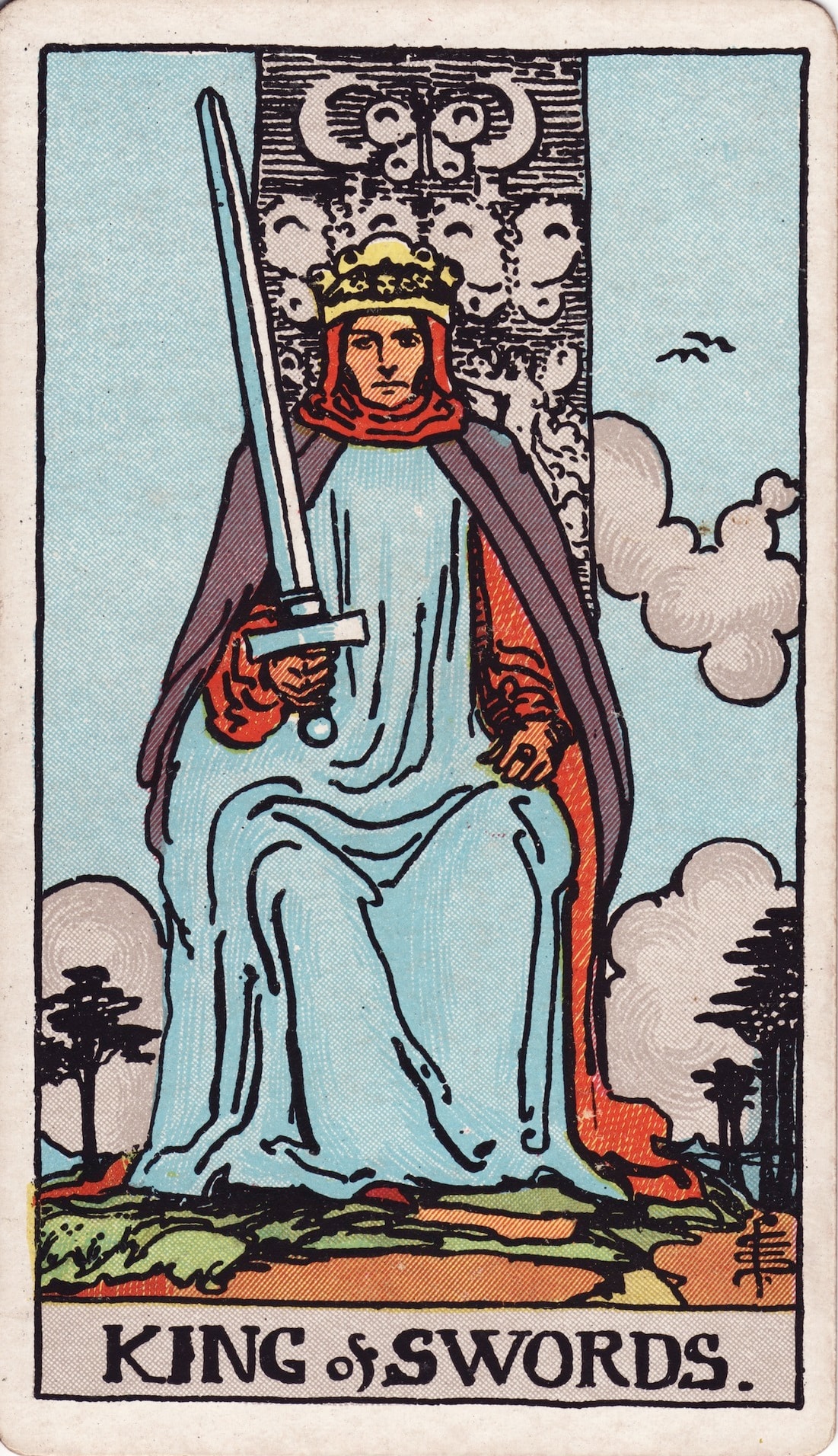
Drawn by Pamela Colman Smith in 1909 for Arthur Edward Waite, the King of Swords is the king, highest of the four court cards in the suit of swords. He sits facing straight out from a tall throne carved with a butterfly and crescent moons, a drawn sword in his right hand, tilted a little to one side, and his left hand on his knee.
What Waite wrote it means (1910)
- Divinatory meanings
Whatsoever arises out of the idea of judgment and all its connexions—power, command, authority, militant intelligence, law, offices of the crown, and so forth.
- Reversed
Cruelty, perversity, barbarity, perfidy, evil intention.
Arthur Edward Waite, The Pictorial Key to the Tarot (London, 1911), p. 226. Read it in the chapter
He sits in judgment, holding the unsheathed sign of his suit. He recalls, of course, the conventional Symbol of Justice in the Trumps Major, and he may represent this virtue, but he is rather the power of life and death, in virtue of his office.
What's in the picture
- The sword. He holds it by the hilt, the blade raised and leaning away from his body, its point near the top of the card. Waite wrote that “he sits in judgment, holding the unsheathed sign of his suit”.
- His face. He sits square to the front and looks straight at us, his mouth set. A gold crown sits on a red hood that wraps his head and neck.
- The tall throne. The back of the throne is narrow, dark and carved. It rises far above his crown, right up to the top edge of the card, dark against the blue sky.
- The butterfly. At the top of the throne's back a large butterfly is carved with its wings spread, two big wings above and two small ones below.
- The crescent moons. Below it, rows of pale round shapes are carved on either side of his head, each marked with a small crescent, like a moon.
- His left hand. His left hand rests on his knee, open and still.
- Robe and cloak. His long robe is pale blue, with red sleeves, and covers his feet. Over it a purple cloak, lined with orange-red, falls to the ground behind him.
- The two birds. Two birds fly together in the sky on the right, small and dark, above the clouds.
- Clouds and trees. Low clouds and dark, tall trees stand on both sides, below the level of his knees. The ground under the throne is patched with green and orange.
The card in brief
- In the deck
- Card 64 of 78
- Arcana
- Minor Arcana, Swords
- Number
- King
- Element (Golden Dawn)
- Air
- Title in Book T
- The Prince of the Chariot of the Winds
- Drawn by
- Pamela Colman Smith
- Planned by
- Arthur Edward Waite
- Published
- London, William Rider & Son, 1909
- Scan
- Pam-A printing, c. 1910, Wikimedia Commons
In the old books
Book T (1912)
A Winged King with Winged Crown, seated in a chariot drawn by Arch Fays, represented as winged youths very slightly dressed, with butterfly wings: heads encircled by a fillet with a pentagram thereon: and holding wands surmounted by pentagrams, the same butterfly wings on their feet and fillets. General equipment as the King of Wands: but he bears as a crest a winged angelic head with a pentagram on the brows. Beneath the chariot are grey nimbus clouds. His hair long and waving in serpentine whirls, and whorl figures compose the scales of his armour. A drawn sword in one hand; a sickle in the other. With the sword he rules, with the sickle he slays.
Full of ideas and thoughts and designs, distrustful, suspicious, firm in friendship and enmity; careful, observant, slow, over-cautious, symbolizes Α and Ω; he slays as fast as he creates.
If ill dignified: harsh, malicious, plotting; obstinate, yet hesitating; unreliable.
Book T, “A Description of the Cards of the Tarot”, The Equinox I.8 (London, 1912), pp. 167–168. See the source Papus (1892)
A dark, bad man. He is a soldier, a powerful enemy, who must be distrusted.
Papus, The Tarot of the Bohemians, tr. A. P. Morton (London, 1892), p. 313. See the source
Before 1909
The older cards and pictures behind this one will be shown here once their licences are checked.
The film
No film for this card yet.
Sources
- Waite: he sits in judgment, holding the unsheathed sign of his suit.Arthur Edward Waite, The Pictorial Key to the Tarot (1910), Part III, King of Swords
Around this card
Before and after it in the deck
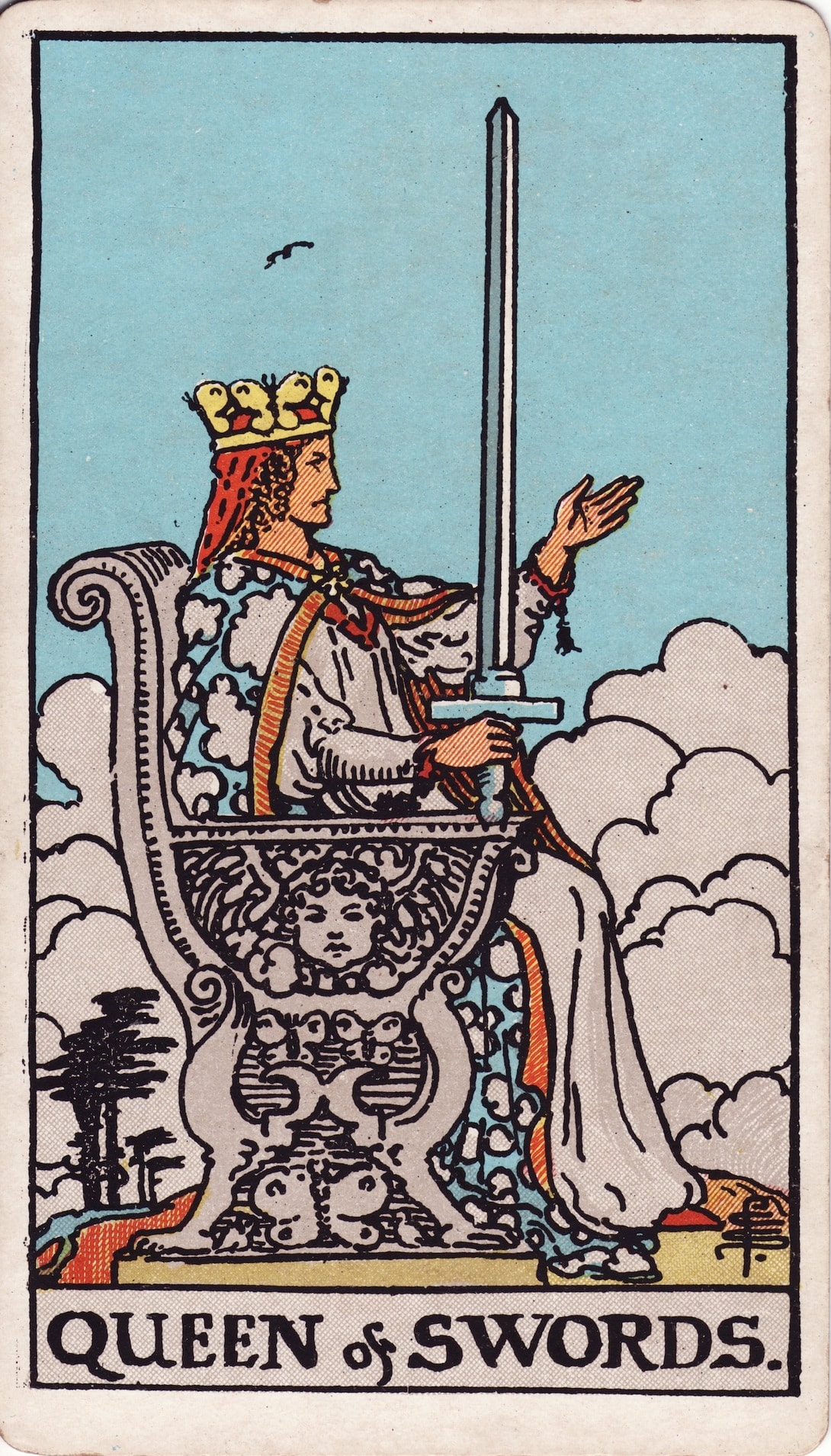
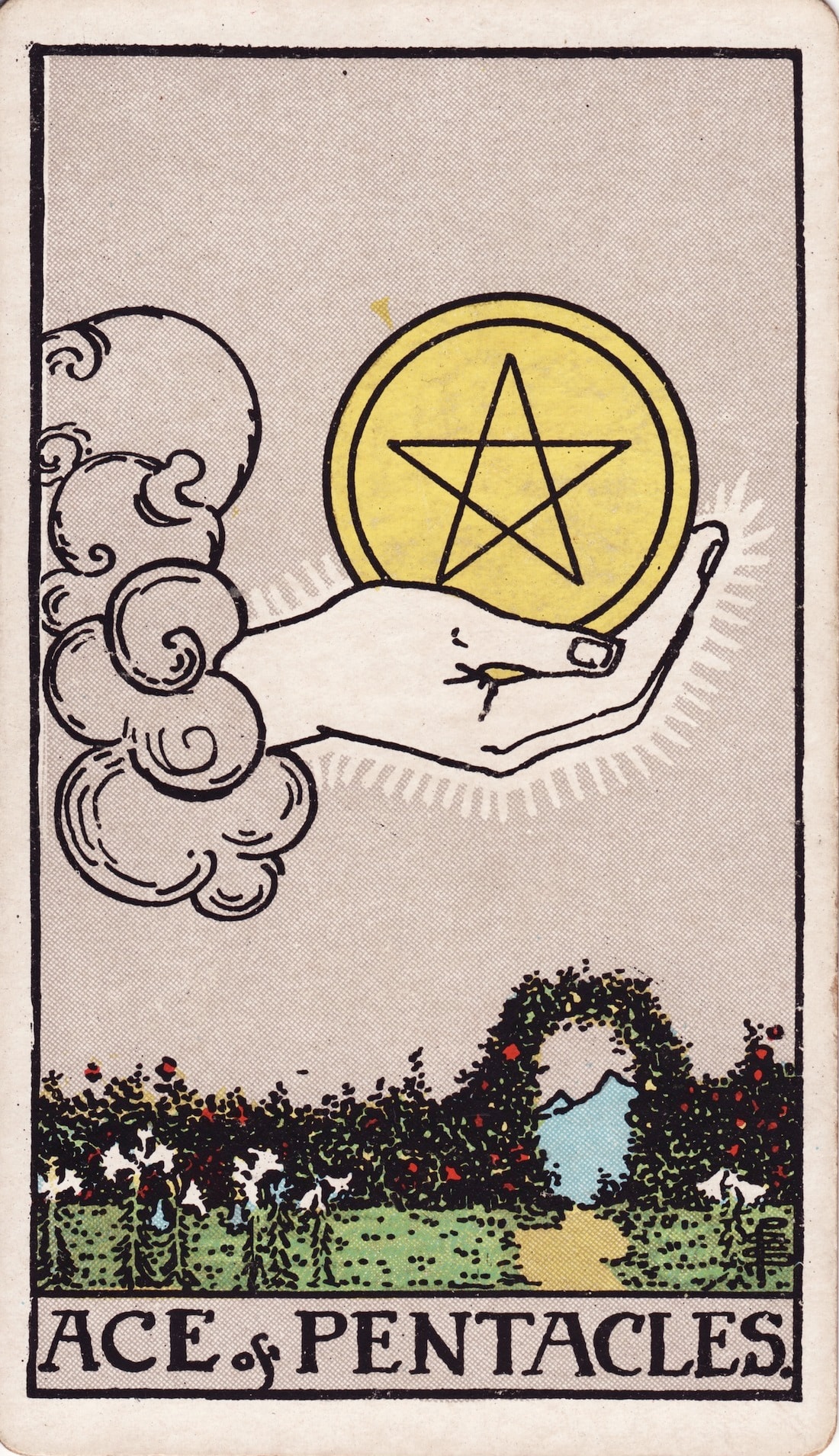
The same number in the other suits
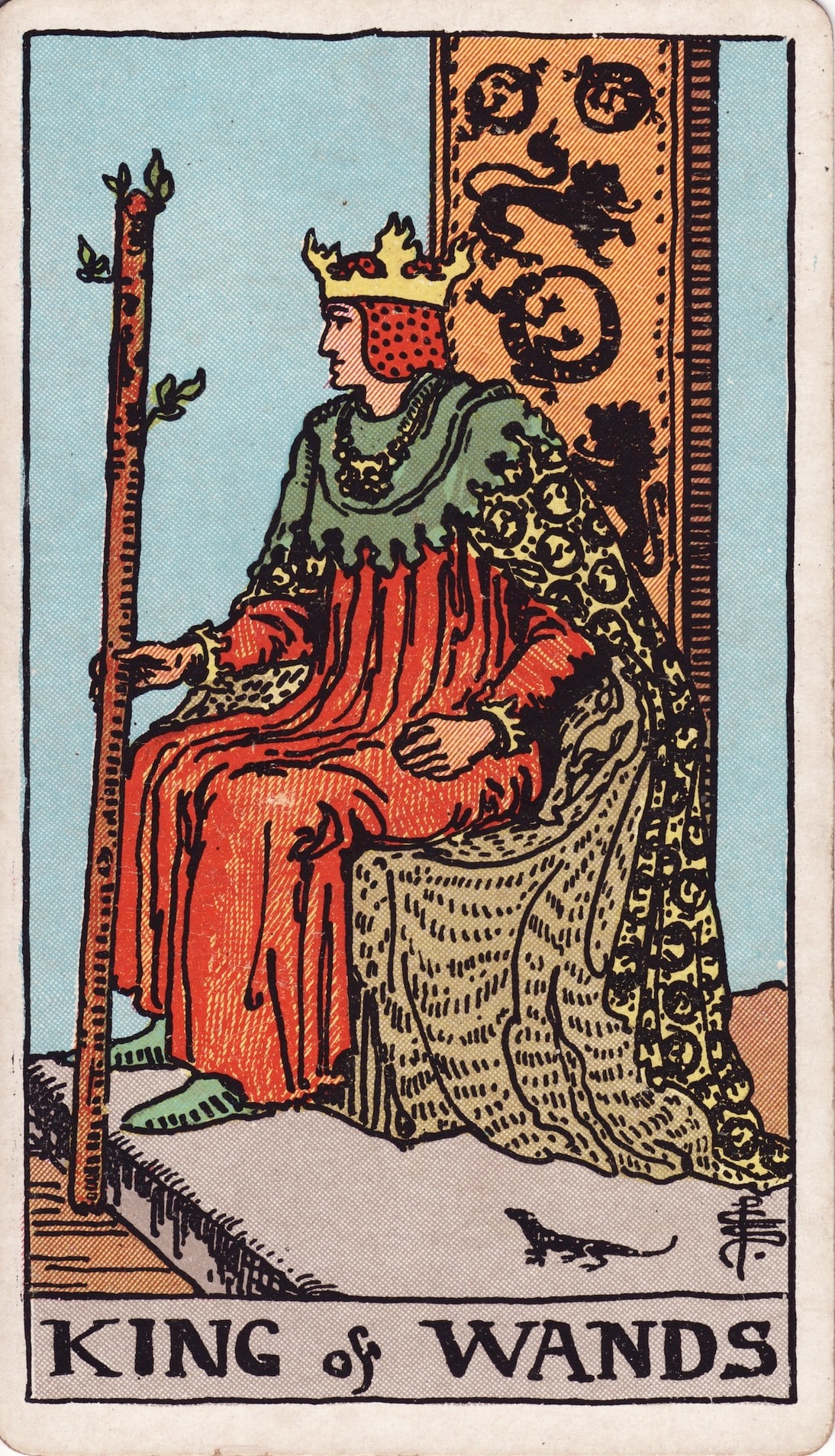
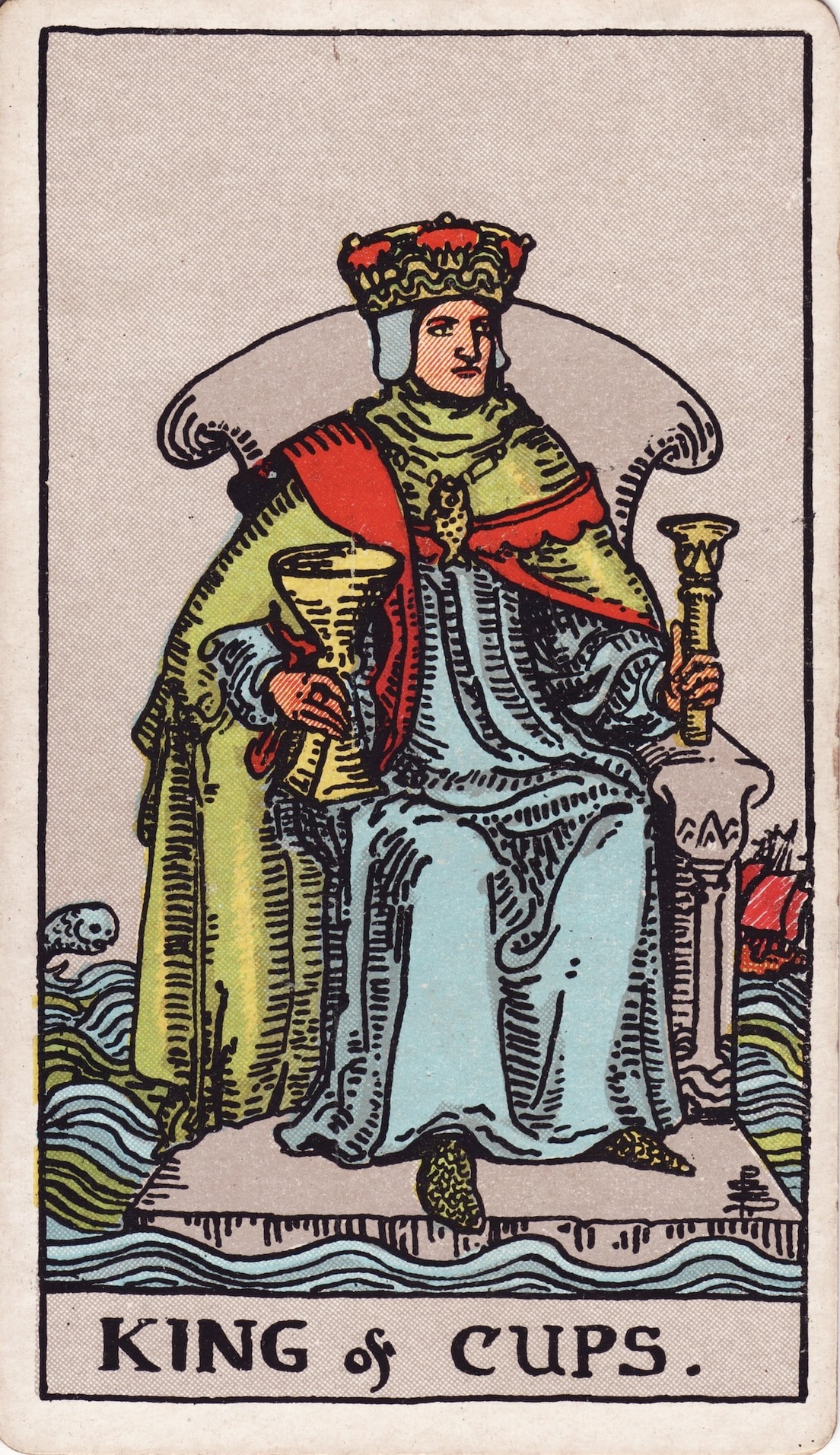
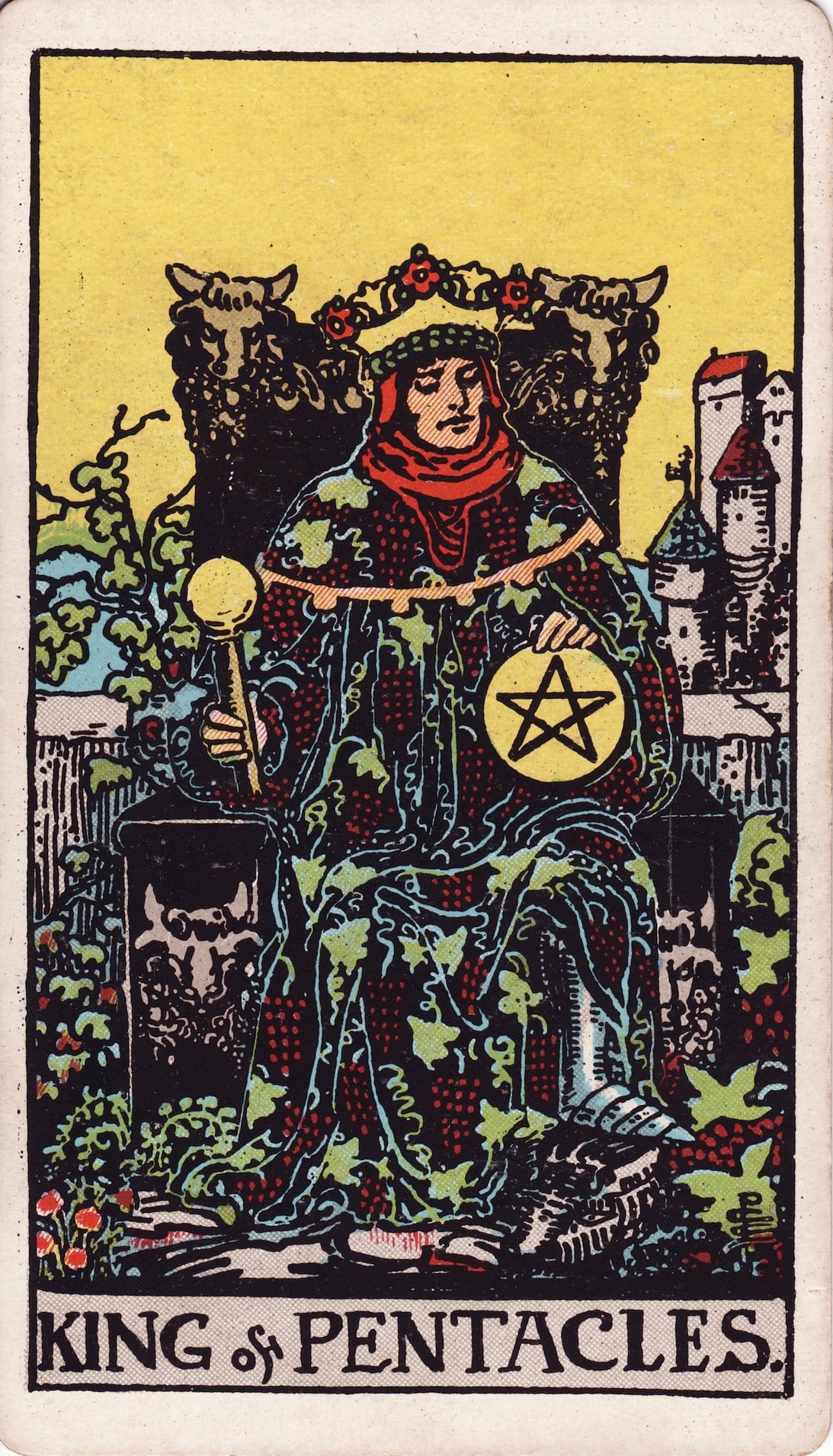

All the cards of the Swords, or the whole deck.