The Swords
The fourteen swords of the 1909 deck, from the ace to the king. The Golden Dawn gave the suit to air.
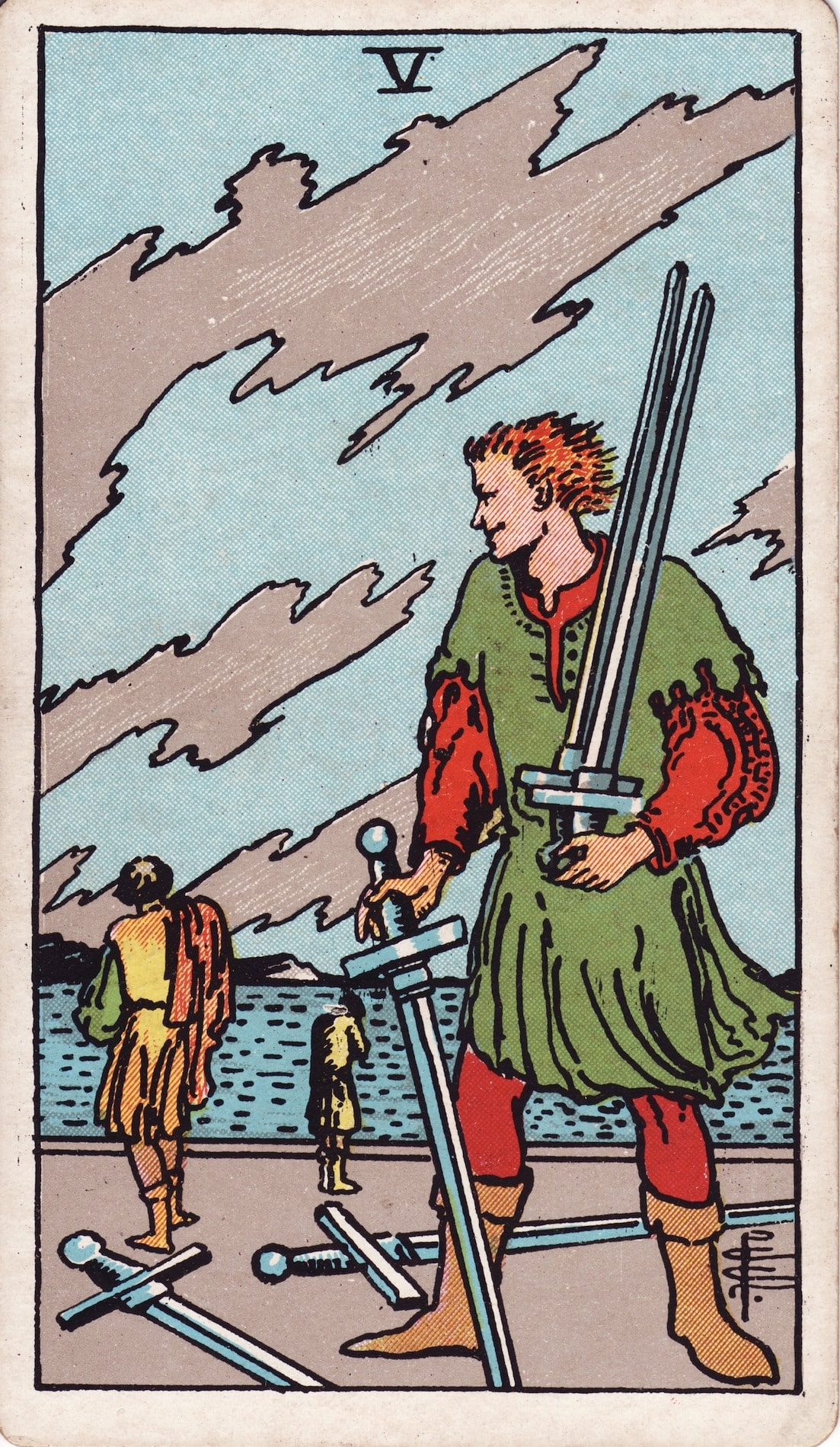
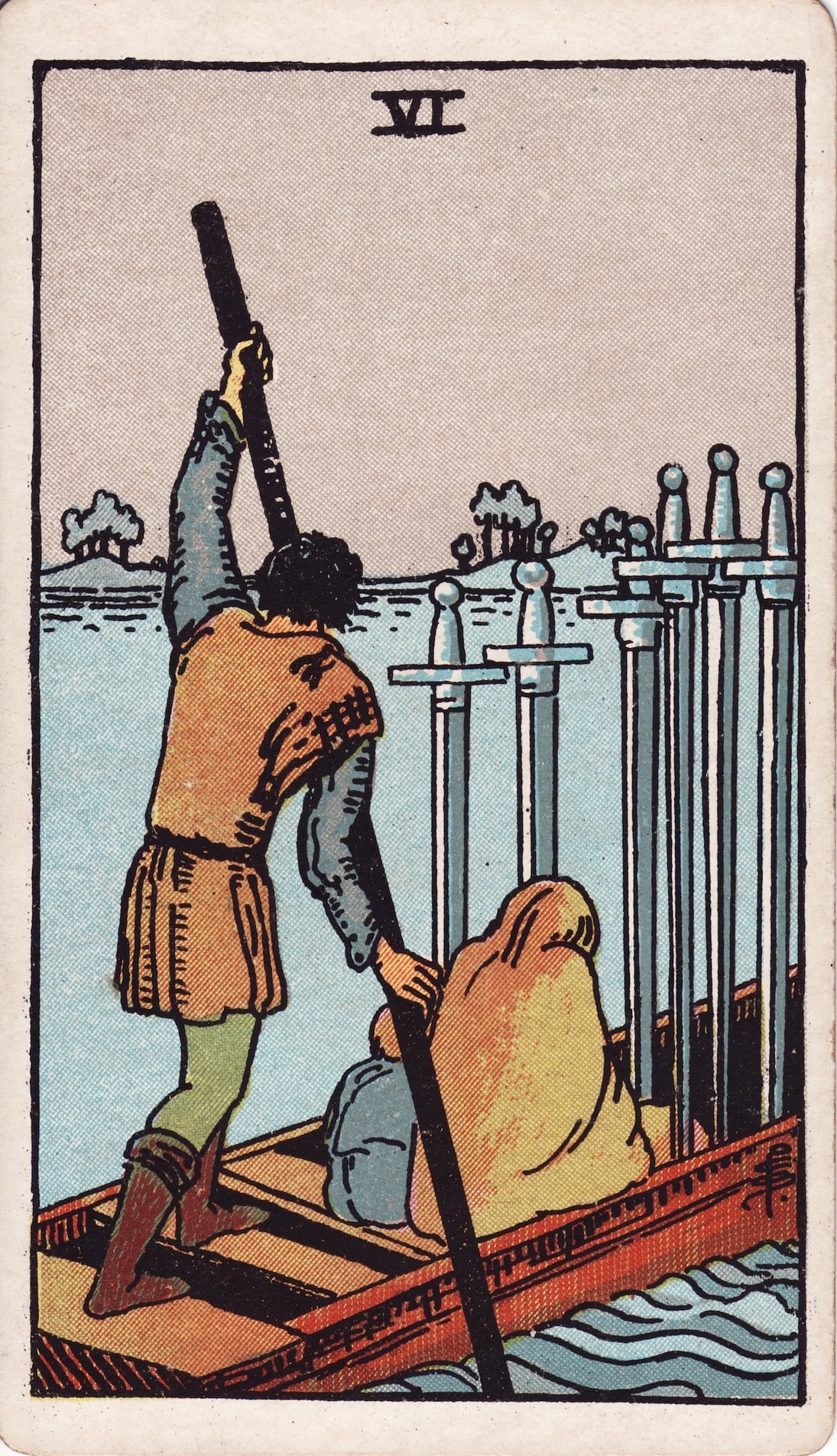
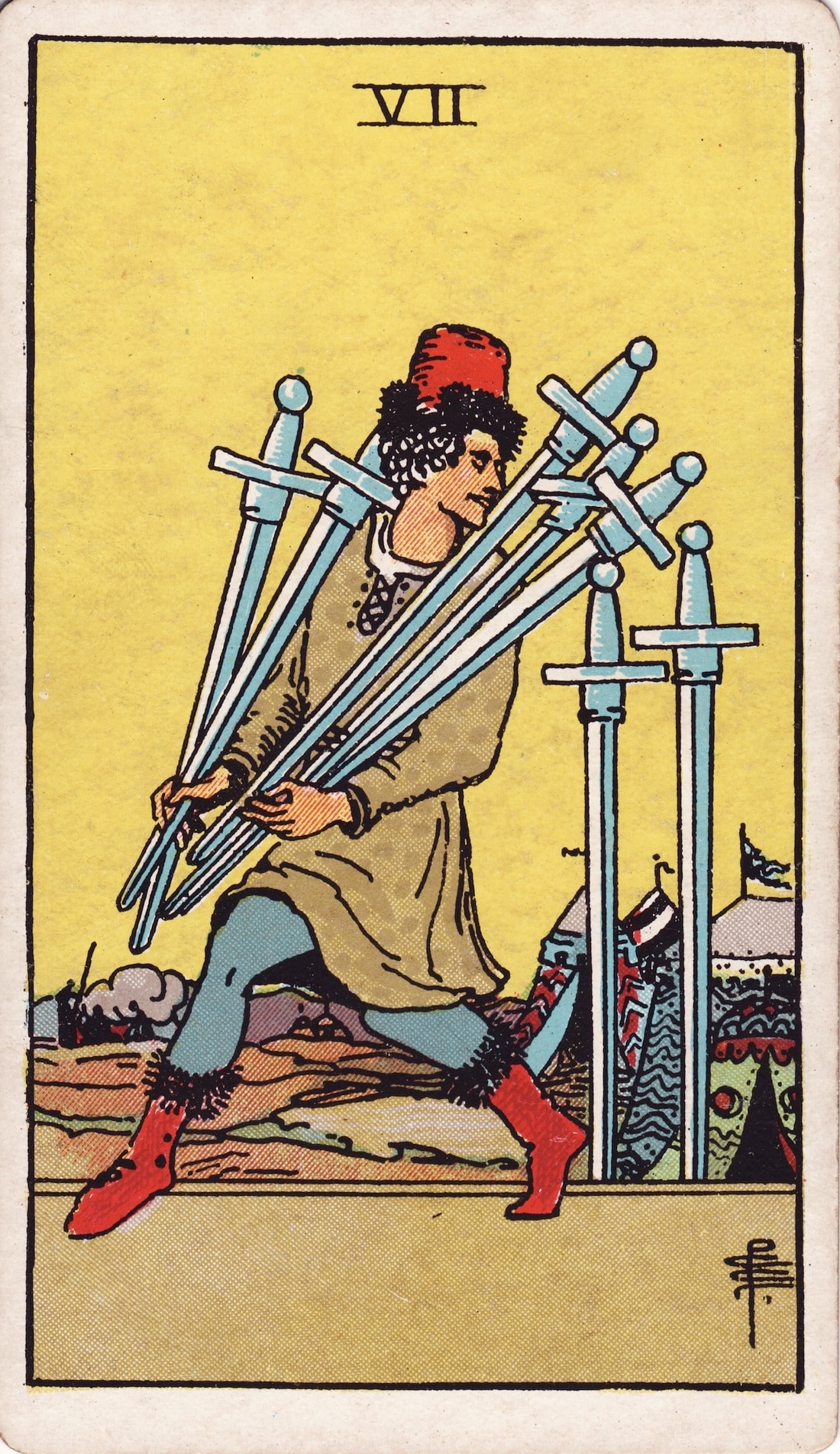
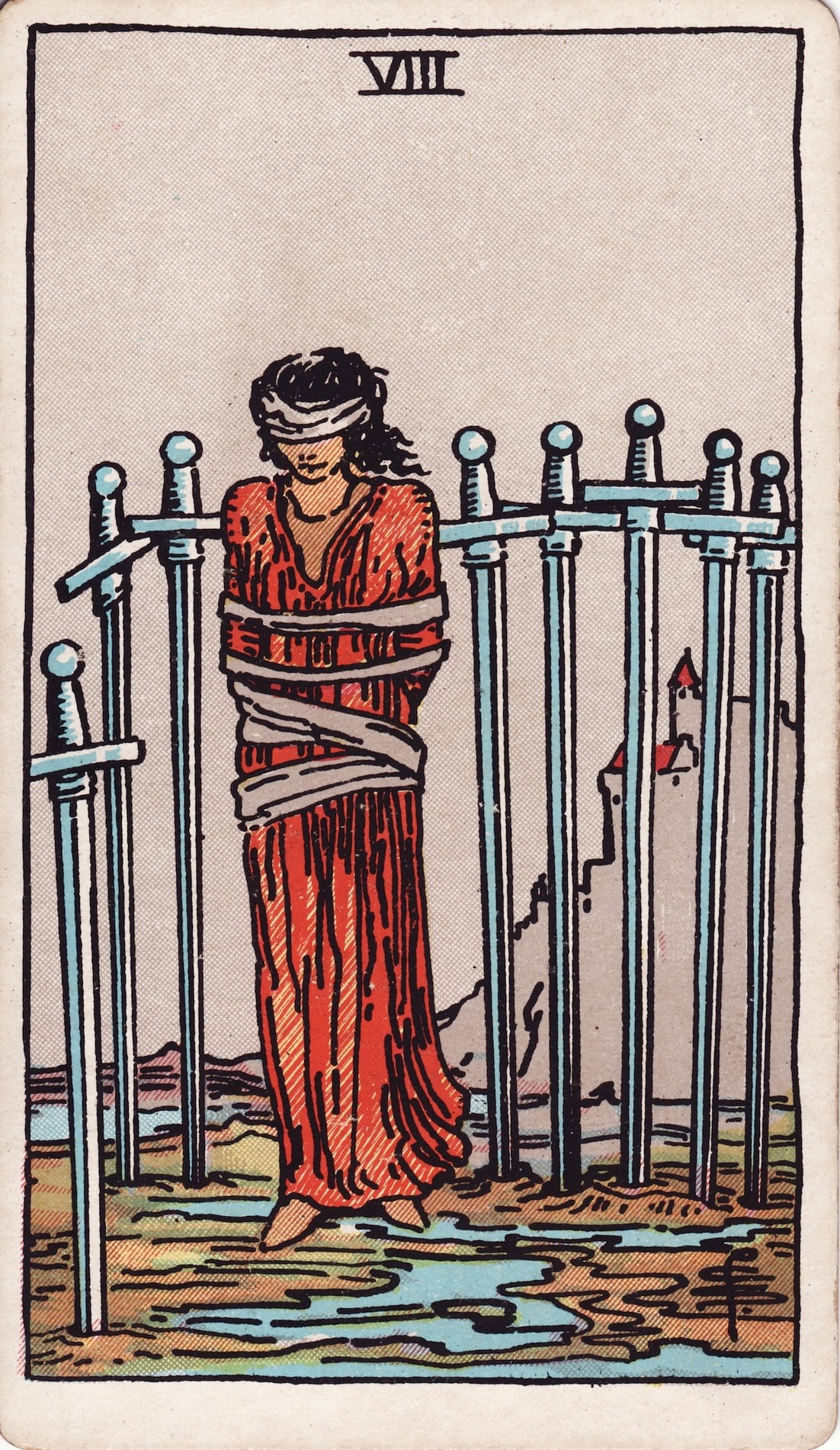
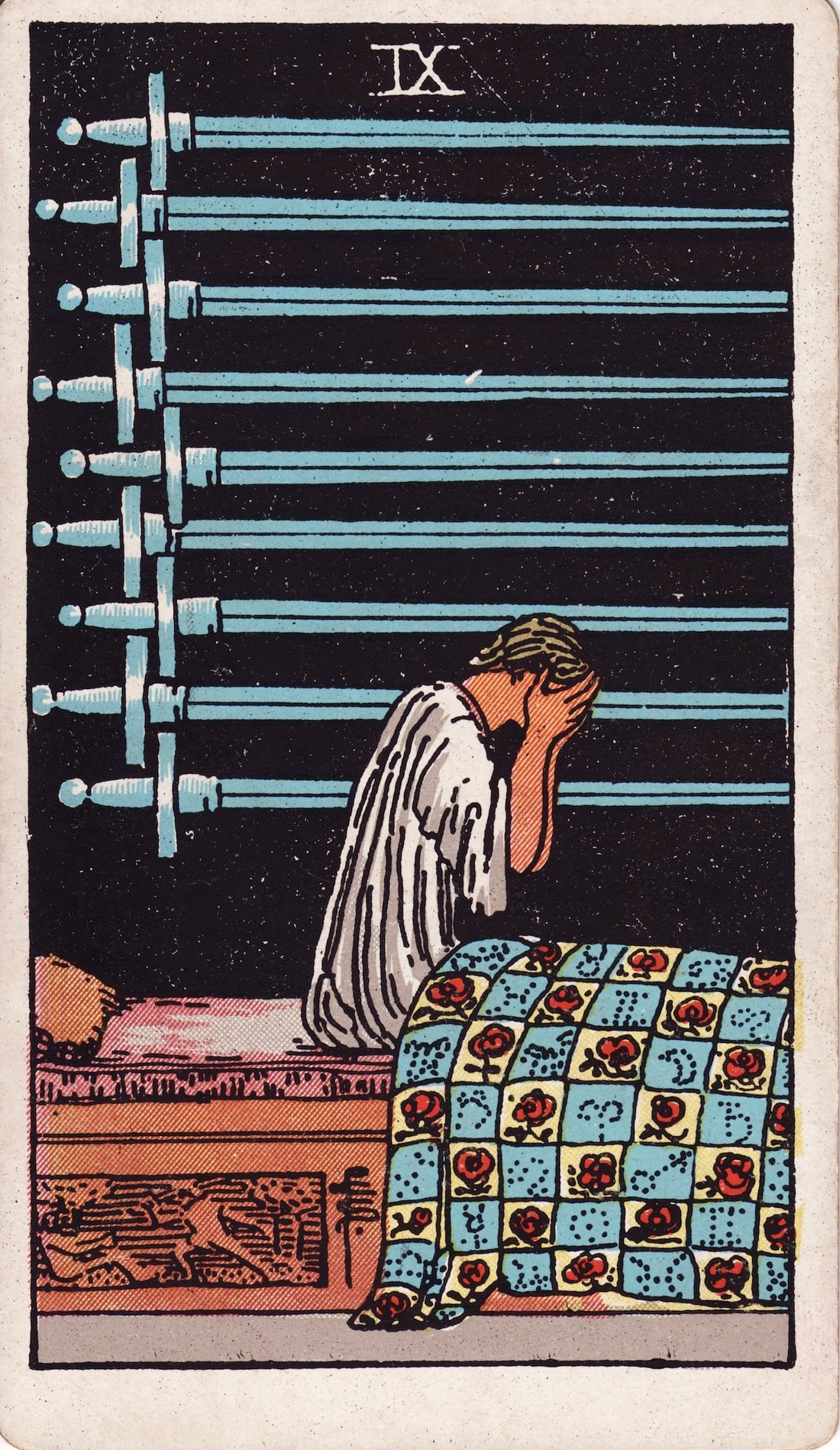
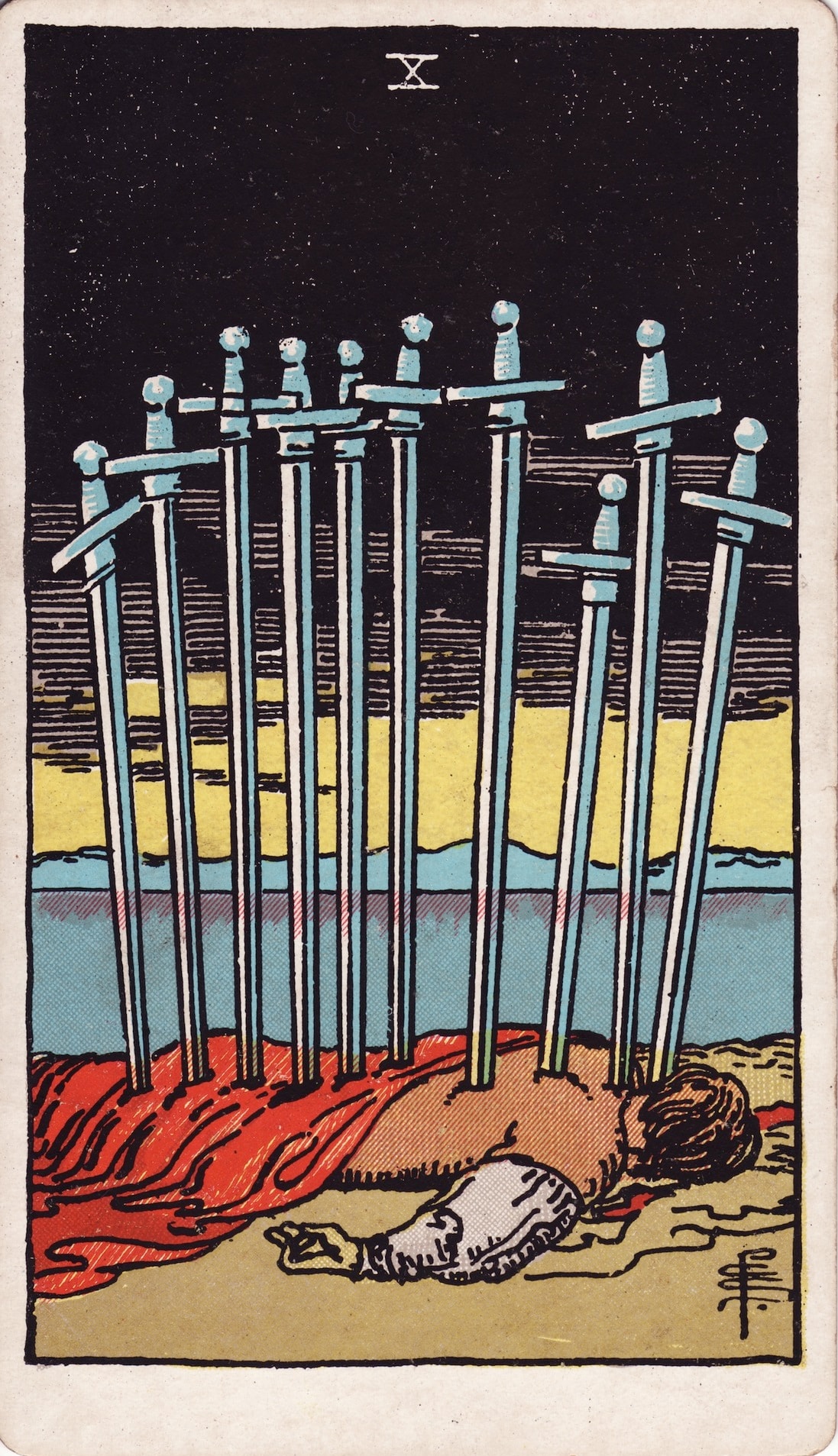
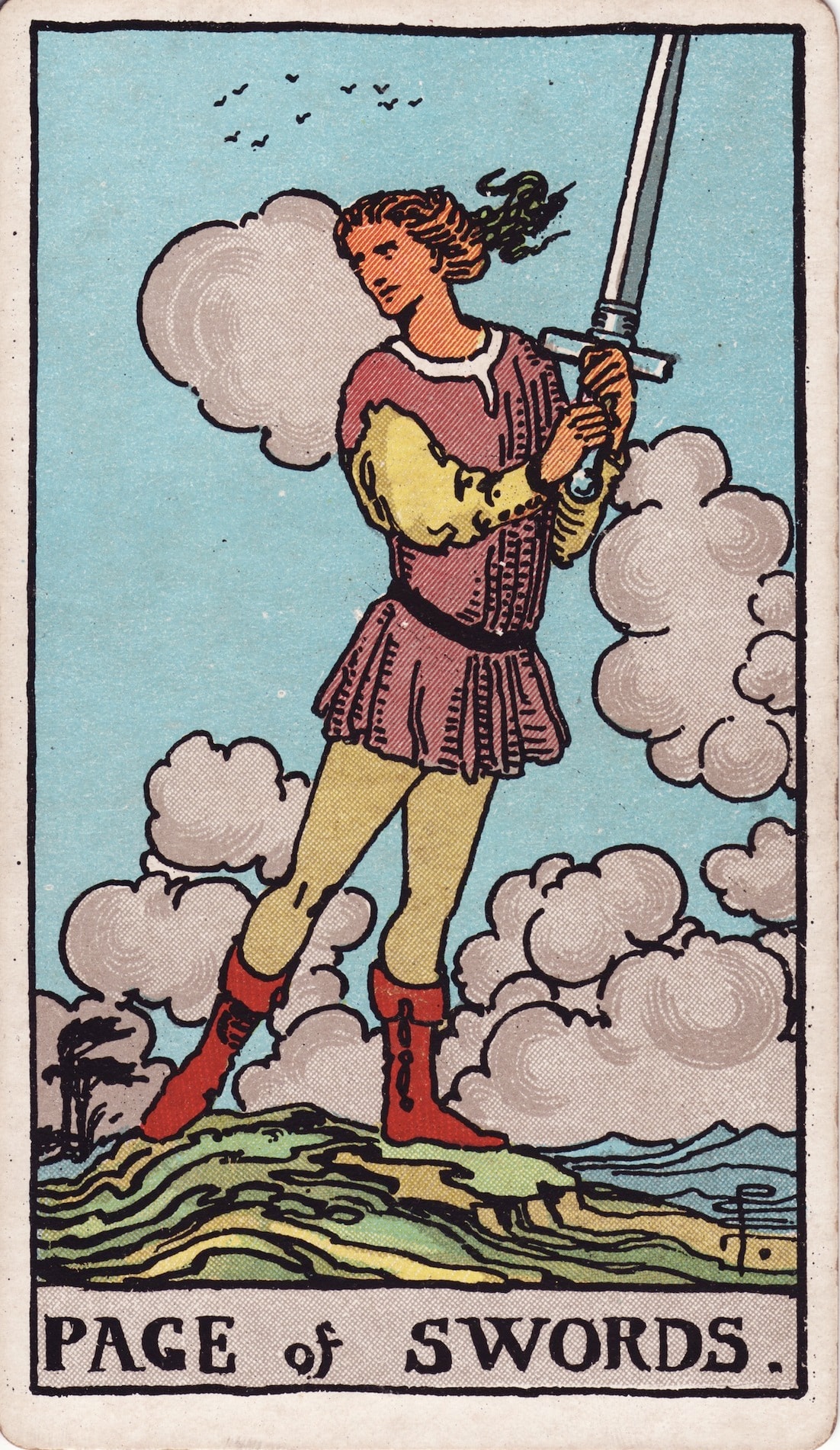
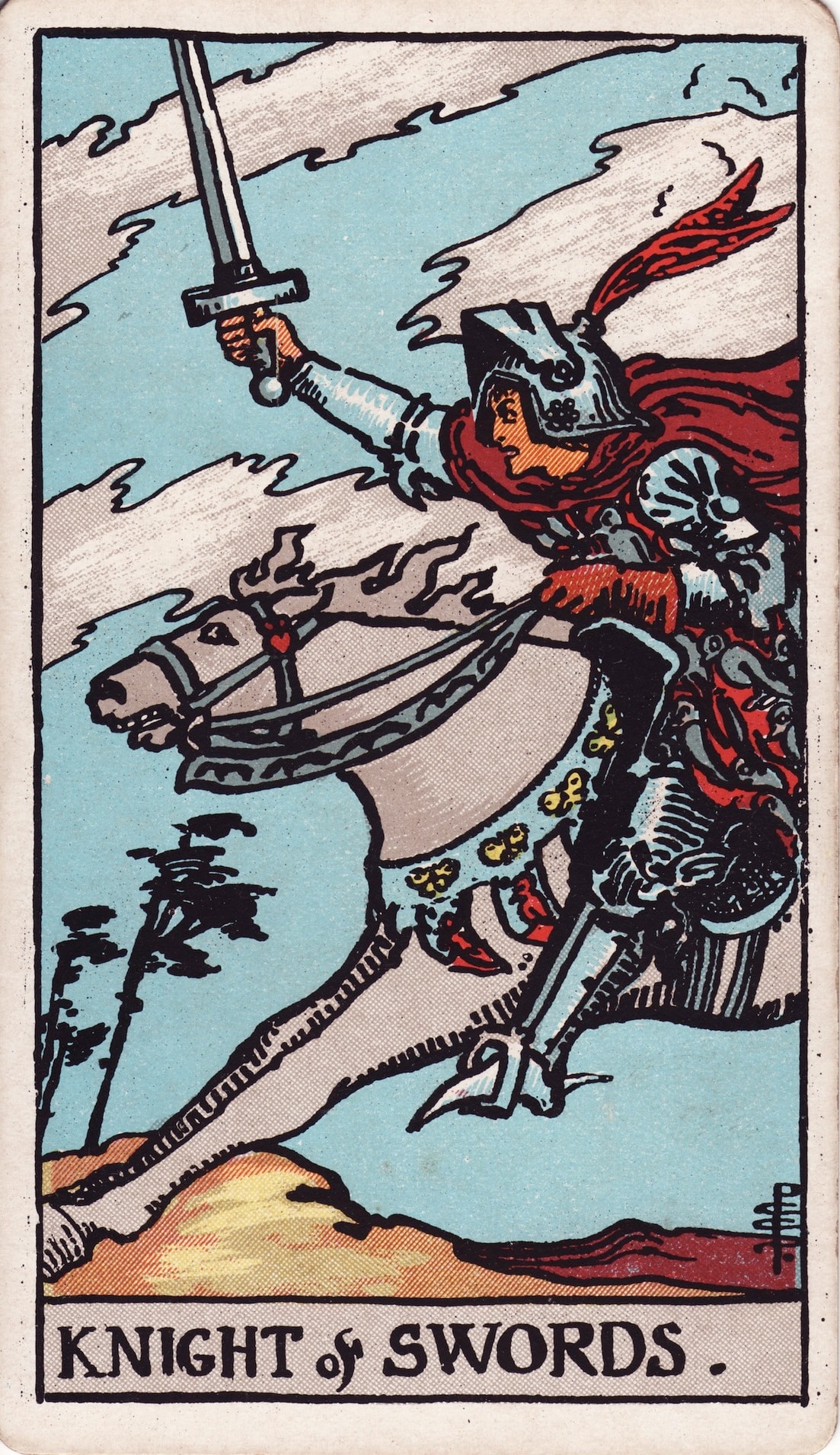
The Swords: a way into air
Look up in almost any Swords card and you find weather. Clouds pile up behind the Page and the Queen. Wind tears the sky above the Knight and bends the trees below him. Birds fly past the King. The Golden Dawn, an order of magicians in Arthur Waite's time, gave this suit to air. Many readers take the Swords as the suit of the mind: thinking, words, deciding. So each card holds two things at once. There is air, which you can't see or hold, and a blade, which is hard and sharp. You could keep both in mind and see which one the card leans toward.
The image
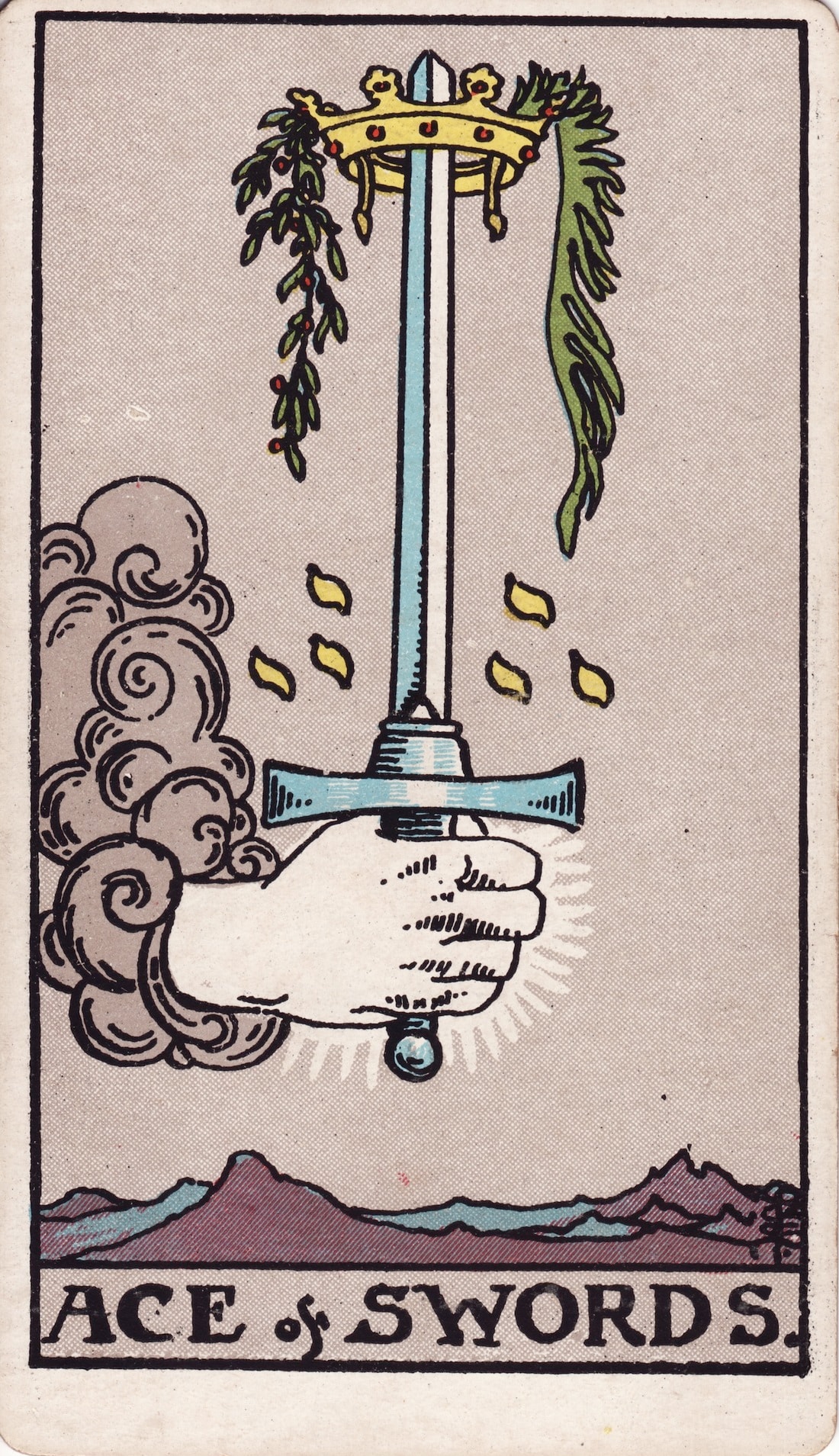
Start with the Ace. A hand comes out of a cloud and holds a sword straight up. Its point goes through a golden crown. Green sprays hang from the crown, one on each side. Small yellow drops fall around the blade. Below, there is only a line of bare mountains.
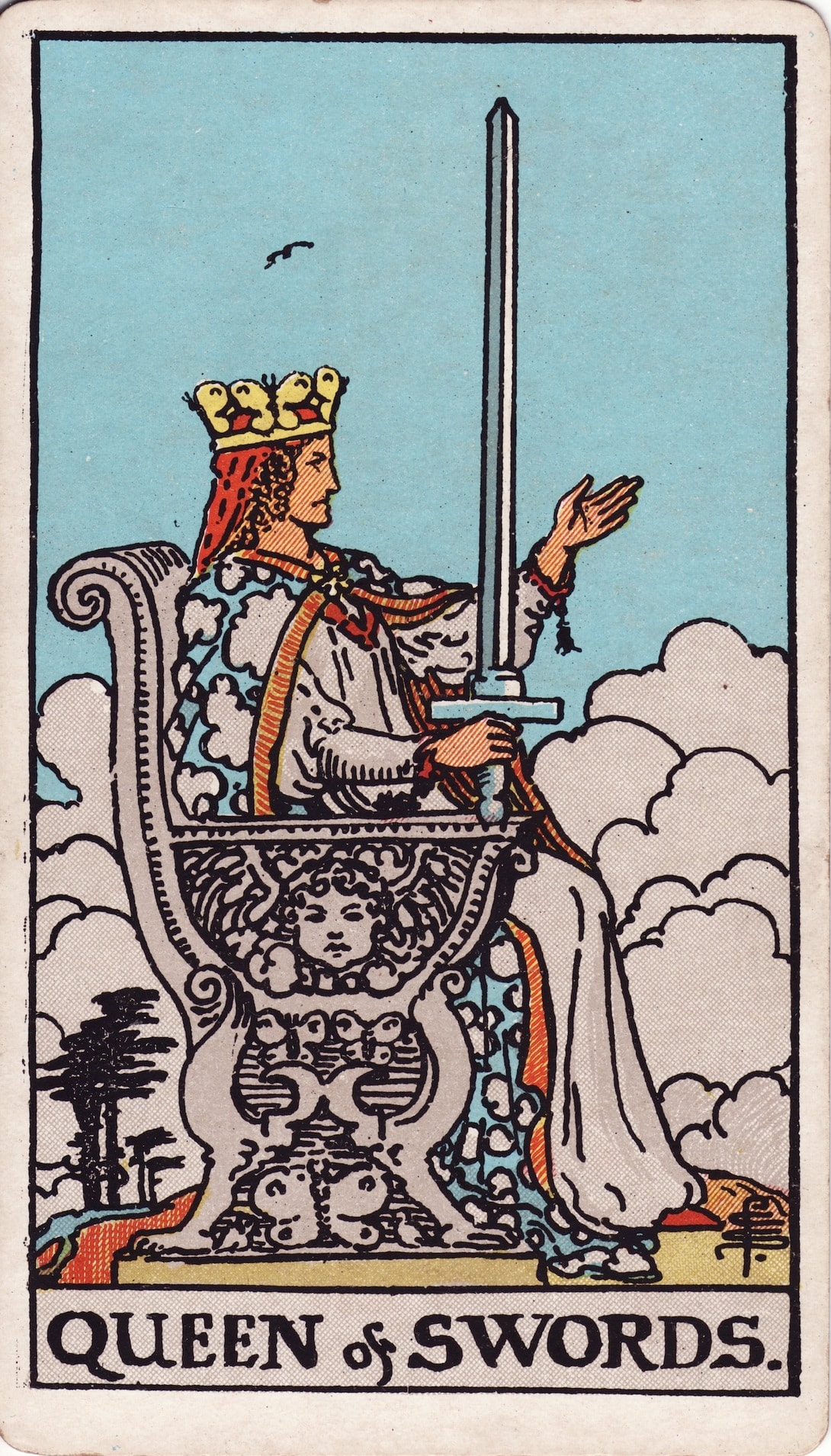
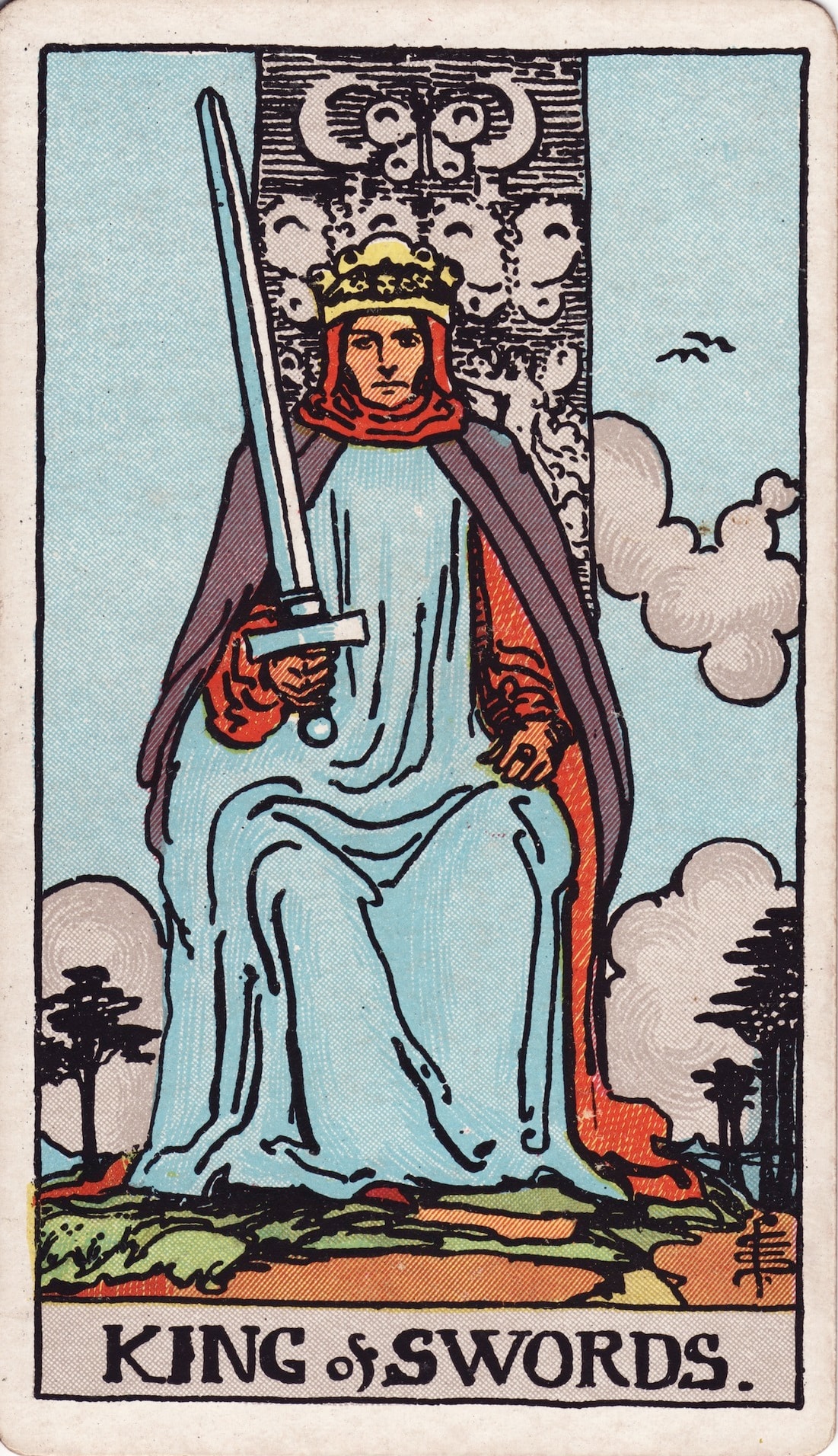
Then the court. The Page stands on a hill with his sword raised in both hands. He glances off to one side, as if he heard something. Waite wrote that the clouds around him "are collocated wildly", an old way of saying they are tossed together. The Knight charges at full speed with his sword up. His horse is stretched out flat. The Queen sits in profile above the clouds. She holds her sword upright and lifts her other hand, open, toward something we can't see. Waite said her face "suggests familiarity with sorrow". Butterflies are carved on her throne, and more sit along her crown. The King faces you straight on. A butterfly is carved at the top of his throne as well.
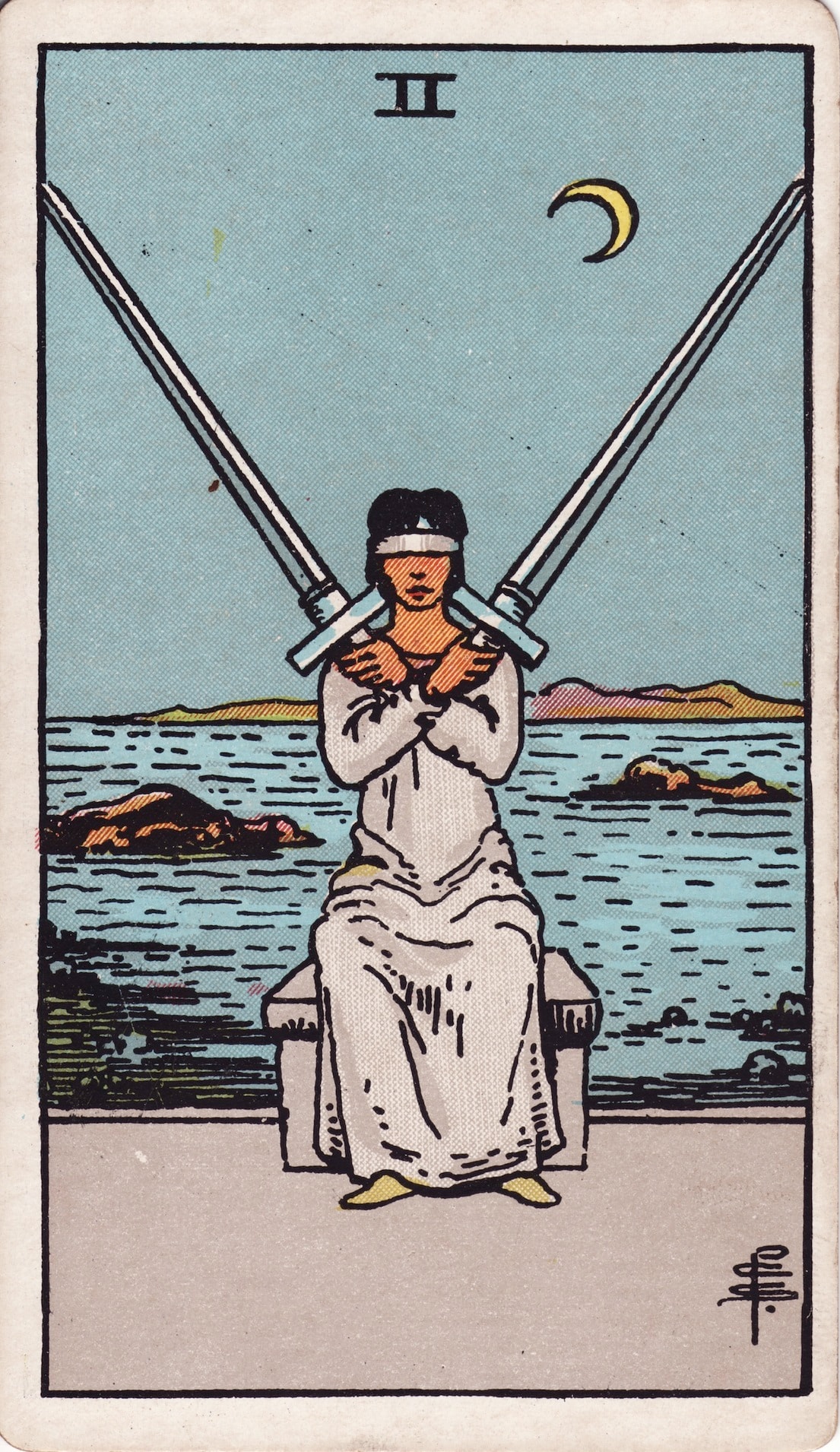
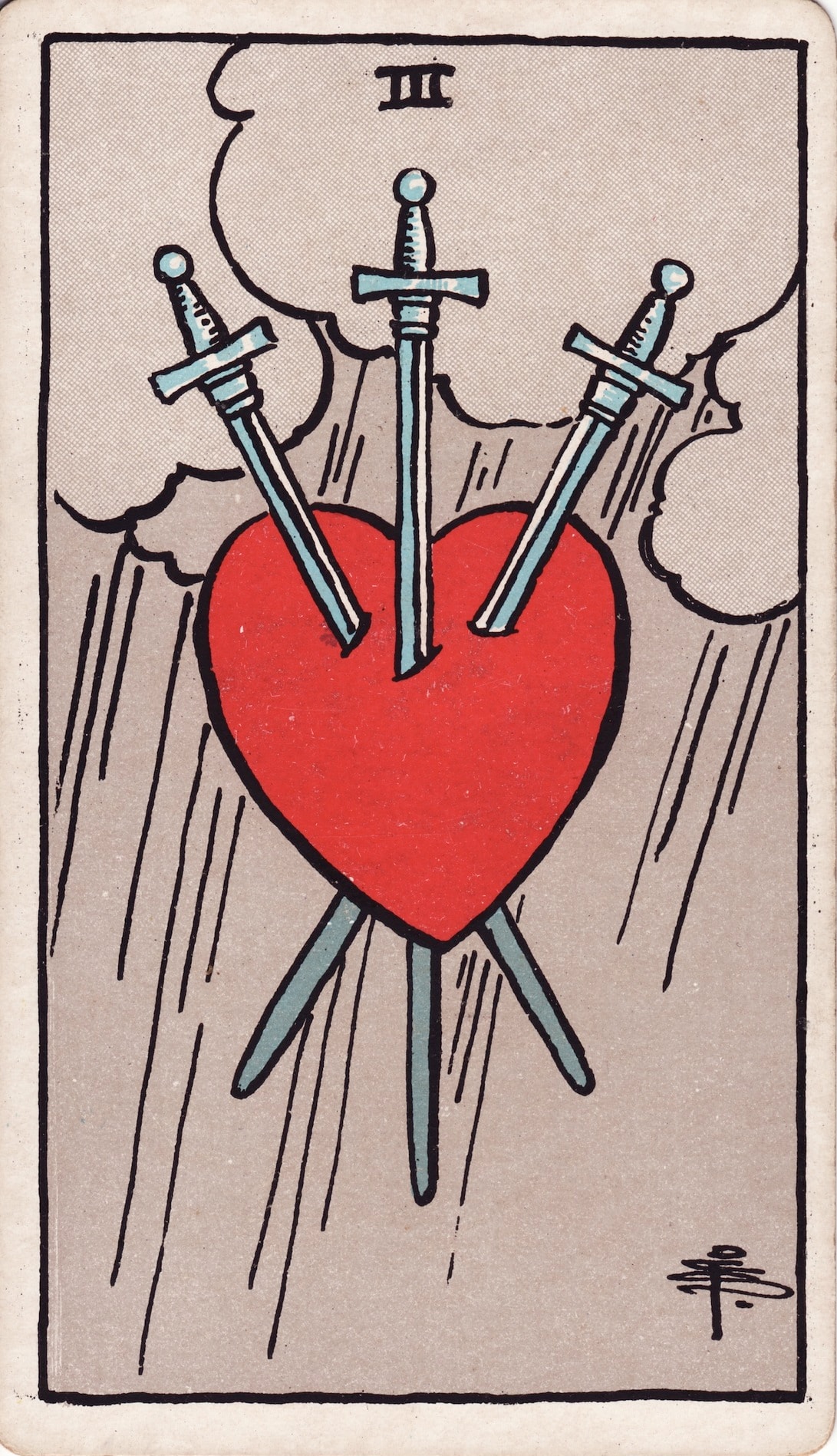
Some of the numbered cards are hard to look at. On the Three, three swords pierce a red heart in the rain. On the Two, a woman sits blindfolded by the sea, with two crossed swords held against her chest. Waite himself was wary of this suit. He wrote that "Swords generally are not symbolical of beneficent forces in human affairs". In plain words, they are not usually friendly powers. He wrote it as a warning on the Two, a card whose readings include "friendship" and "tenderness".
Across traditions
Book T, the Golden Dawn's guide to the tarot, calls the Ace "the Root of the Powers of Air". It says the force of this Ace is invoked, or called up on purpose. Raised up, the sword calls down a crown of light. Turned the other way, Book T warns, it calls up something dark. It is "very great power for good or evil". Book T also calls it "strength through trouble".
Book T names the court cards after sylphs, the spirits of the air. The Queen of Swords is "Queen of the Sylphs and Sylphides". Now look again at the butterflies on Smith's thrones. They are creatures of the air, carved in stone.
Around 550 BC, the Greek thinker Anaximenes taught that air was the stuff of everything. His one saying that survives is about breath: "Just as our soul, being air, holds us together, so do breath and air encompass the whole world." The Greek word pneuma can mean breath, wind or spirit. So can the Latin spiritus. Seen this way, a thought and a breath are close cousins. Both move through you and out into the world.
William Blake made the picture called Air at the top of this echo. A man crouches on a cloud against a sky full of stars. He clutches his head in both hands. It could be a picture of thinking too much.
Looking with air
So far you have been looking at air. You could also try looking with it. Air gets everywhere. It carries sound and smell from far away. It moves fast and doesn't stay. A blade adds one more thing. It draws a clean line between this and that.
Looking this way, you may notice what is being said and what is left unsaid. You may notice where a line has been drawn, and whether the cut frees someone or hurts them. On a clear day this way of seeing feels like fresh wind. On a bad day it can feel like the man on Blake's cloud, holding his head. You can put it down again whenever you like.
Try this
Take today's Swords card. First, look at the sky and name the weather. Then find the blades. Is each one raised, lowered, held, dropped or stuck in something? Last, think about your own day. Name one thought that keeps blowing through, and one choice that would cut something clean. You could take one slow breath before you choose, and notice what changes.
Questions to sit with
- What is the weather doing in this card?
- What is being cut apart here? Does the cut free or wound?
- Who on this card can see clearly, and who can't?
- What words are in the air around you today?
- Where would a single clean line help? Where would it hurt?