Trump 0, Major Arcana
The Fool
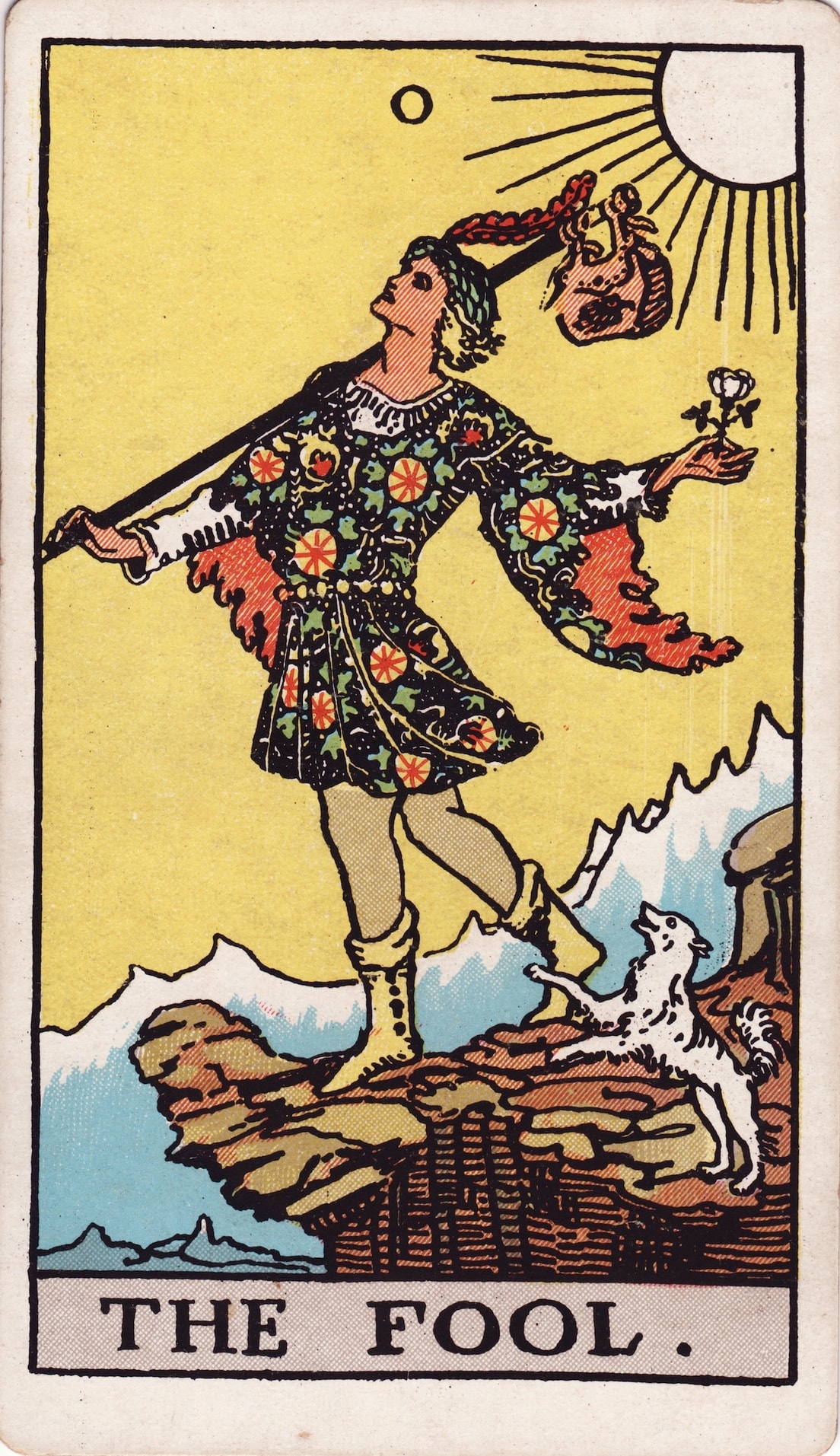
The Fool is the one trump without a Roman number, marked only 0 on the card Pamela Colman Smith drew in 1909. A young man in a flowered tunic strides along a high rock with his face turned up to a white sun, a white rose in one hand, a bag on a staff over his shoulder and a small white dog jumping up beside him.
What Waite wrote it means (1910)
- Divinatory meanings
Folly, mania, extravagance, intoxication, delirium, frenzy, bewrayment.
- Reversed
Negligence, absence, distribution, carelessness, apathy, nullity, vanity.
Arthur Edward Waite, The Pictorial Key to the Tarot (London, 1911), p. 286. Read it in the chapter
With light step, as if earth and its trammels had little power to restrain him, a young man in gorgeous vestments pauses at the brink of a precipice among the great heights of the world; he surveys the blue distance before him—its expanse of sky rather than the prospect below. His act of eager walking is still indicated, though he is stationary at the given moment; his dog is still bounding. The edge which opens on the depth has no terror; it is as if angels were waiting to uphold him, if it came about that he leaped from the height. His countenance is full of intelligence and expectant dream. He has a rose in one hand and in the other a costly wand, from which depends over his right shoulder a wallet curiously embroidered. He is a prince of the other world on his travels through this one—all amidst the morning glory, in the keen air. The sun, which shines behind him, knows whence he came, whither he is going, and how he will return by another path after many days. He is the spirit in search of experience. Many symbols of the Instituted Mysteries are summarized in this card, which reverses, under high warrants, all the confusions that have preceded it.
In his Manual of Cartomancy, Grand Orient has a curious suggestion of the office of Mystic Fool, as a part of his process in higher divination; but it might call for more than ordinary gifts to put it into operation. We shall see how the card fares according to the common arts of fortune-telling, and it will be an example, to those who can discern, of the fact, otherwise so evident, that the Trumps Major had no place originally in the arts of psychic gambling, when cards are used as the counters and pretexts. Of the circumstances under which this art arose we know, however, very little. The conventional explanations say that the Fool signifies the flesh, the sensitive life, and by a peculiar satire its subsidiary name was at one time the alchemist, as depicting folly at the most insensate stage.
What's in the picture
- The zero. Where the other trumps have a Roman number, this one has a small 0 at the top, drawn as a plain ring.
- The white sun. A white sun sits in the top right corner, half out of the frame. Long straight rays fan out from it across the yellow sky.
- The upturned face. He tips his head right back and looks up, away from the ground. A wreath of green leaves sits on his hair, and a long red feather streams back from it.
- The bag. A small patterned bag hangs from the far end of his staff, tied at the neck. Waite wrote that it is marked with dim signs.
- The staff. A long black staff rests on his shoulder. He grips it low down with one hand, near the left edge of the card.
- The white rose. In his other hand, held out and open, he carries a single white rose by its stem.
- The tunic. His dark tunic is covered in green leaves, white dots and orange circles with eight spokes, like small wheels. The wide sleeves are lined in red and fly out as he moves.
- The step. His front boot, yellow and laced, is planted on the rock. The other leg swings back behind him, in the middle of a stride.
- The white dog. A small white dog with a curled tail rears up on its back legs, front paws reaching toward him and its head thrown back.
- The peaks and the drop. White peaks rise behind the rock on the right. On the left the rock ends in open air, with small grey mountains far below.
The card in brief
- In the deck
- Card 1 of 78
- Arcana
- Major Arcana
- Number
- Trump 0
- Hebrew letter (Golden Dawn)
- Aleph
- Element (Golden Dawn)
- Air
- Title in Book T
- The Spirit of Αἰθήρ
- Drawn by
- Pamela Colman Smith
- Planned by
- Arthur Edward Waite
- Published
- London, William Rider & Son, 1909
- Scan
- Pam-A printing, c. 1910, Wikimedia Commons
In the old books
Book T (1912)
If the question refers to spiritual matters, the Fool means idea, thought, spirituality, that which endeavours to transcend Earth. But if question is material, it means folly, stupidity, eccentricity, or even mania.
Book T, “A Description of the Cards of the Tarot”, The Equinox I.8 (London, 1912), p. 203. See the source Papus (1892)
A careless-looking man, wearing a fool's cap, with torn clothes and a bundle upon his shoulder, goes quietly on his way, paying no attention to a dog which bites his leg. He does not look where he is going, so walks towards a precipice, where a crocodile is waiting to devour him.
Papus, The Tarot of the Bohemians, tr. A. P. Morton (London, 1892), p. 186. See the source
Before 1909
The older cards and pictures behind this one will be shown here once their licences are checked.
The Fool: a first step
Every other card in the Major Arcana has a number. The Fool has a zero. Arthur Edward Waite went further and called him "an unnumbered card", one that does not quite fit in the row. Now look at the young man Pamela Colman Smith drew. He stands high up on a rock, near its end. His face is turned up to the sky. He holds a white rose in one hand, a small bag hangs from a staff on his shoulder, and a white dog jumps at his side.
Since the twentieth century many readers have laid the 22 trumps out as a single road, and on that road the Fool is the one who walks. This card is his first step, and it hasn't landed yet.
The image
Look at where he stands. The rock runs out a stride or two ahead of him. Beyond it there is only air and a row of snowy peaks. A white sun shines behind him in a yellow sky. He looks up, away from the drop.
He is dressed for a party. His dark tunic is covered in green leaves and orange circles, like little wheels. He wears a red feather in a green wreath, and yellow boots. Waite called him "a prince of the other world on his travels through this one". He also called him "the spirit in search of experience".
Look at the bag on his staff. It is patterned all over. Waite wrote that it carries dim signs, "to shew that many sub-conscious memories are stored up in the soul". So the Fool seems to carry almost nothing. He may be carrying a great deal, packed where he can't see it.
Now the dog. Waite described how the Fool looked on the older cards. There a dog, "or other animal", attacks him from behind, while he looks back over his shoulder and walks toward the edge without knowing it.
Smith changed that scene. On her card the dog is "still bounding", as Waite put it, and nothing is chasing the Fool. Is the dog warning him, or cheering him on? Maybe it has only come along for the walk. You can leave that open while you look.
The inner journey
Carl Jung had a name for the long work of becoming who you are. He called it individuation. In his view it happens through meeting inner figures. One is the shadow, the part of you that you would rather not see. Another is an inner man or woman. Another is a wise old figure. At the end waits something larger than your everyday self. These figures turn up in dreams and in pictures. Jung wrote very little about the tarot. Once, though, he guessed that its pictures came down from very old images of change.
Later writers took this further. In 1980 Sallie Nichols read the Major Arcana as one long journey of individuation. In the same year Rachel Pollack laid the cards out in three rows of seven and set the Fool apart, free to walk through all of them. Read like that, the Fool is the self before it knows what it is. He can still be surprised. Everyone on the later cards is someone he meets. You could see the Magician, the Emperor, Death or the Star as powers he has to face. You could also see them as rooms in a life he grows into.
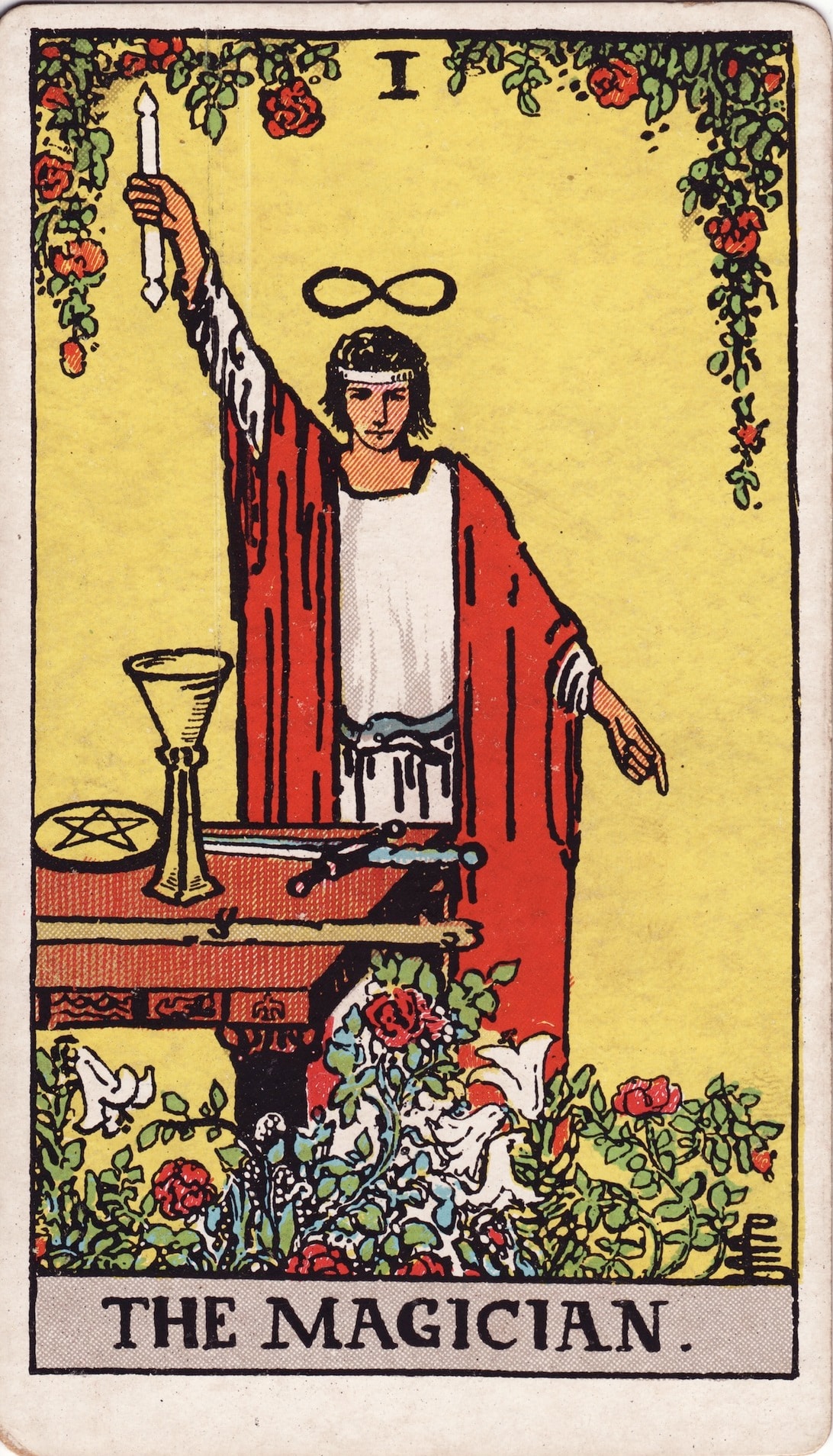
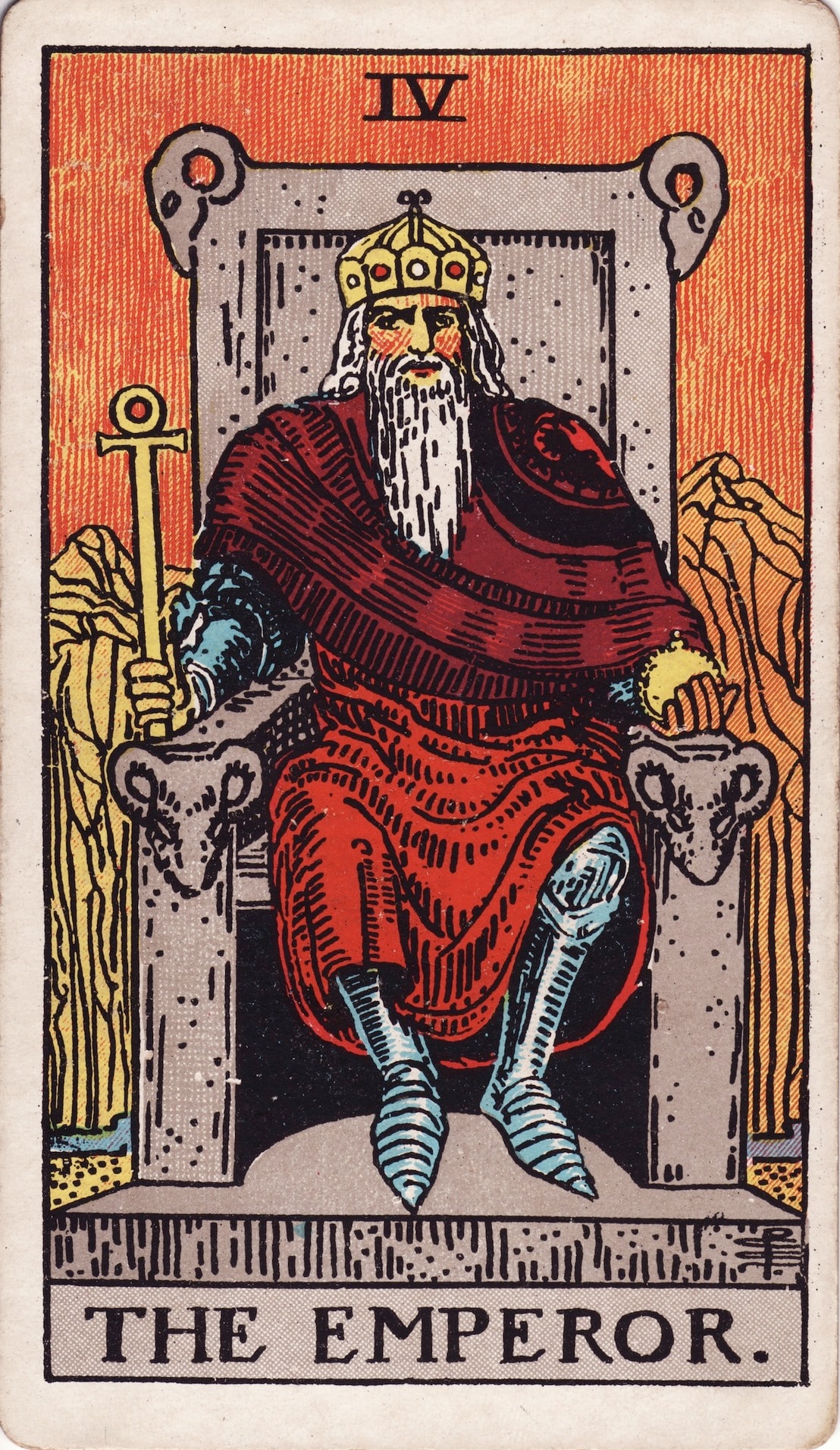
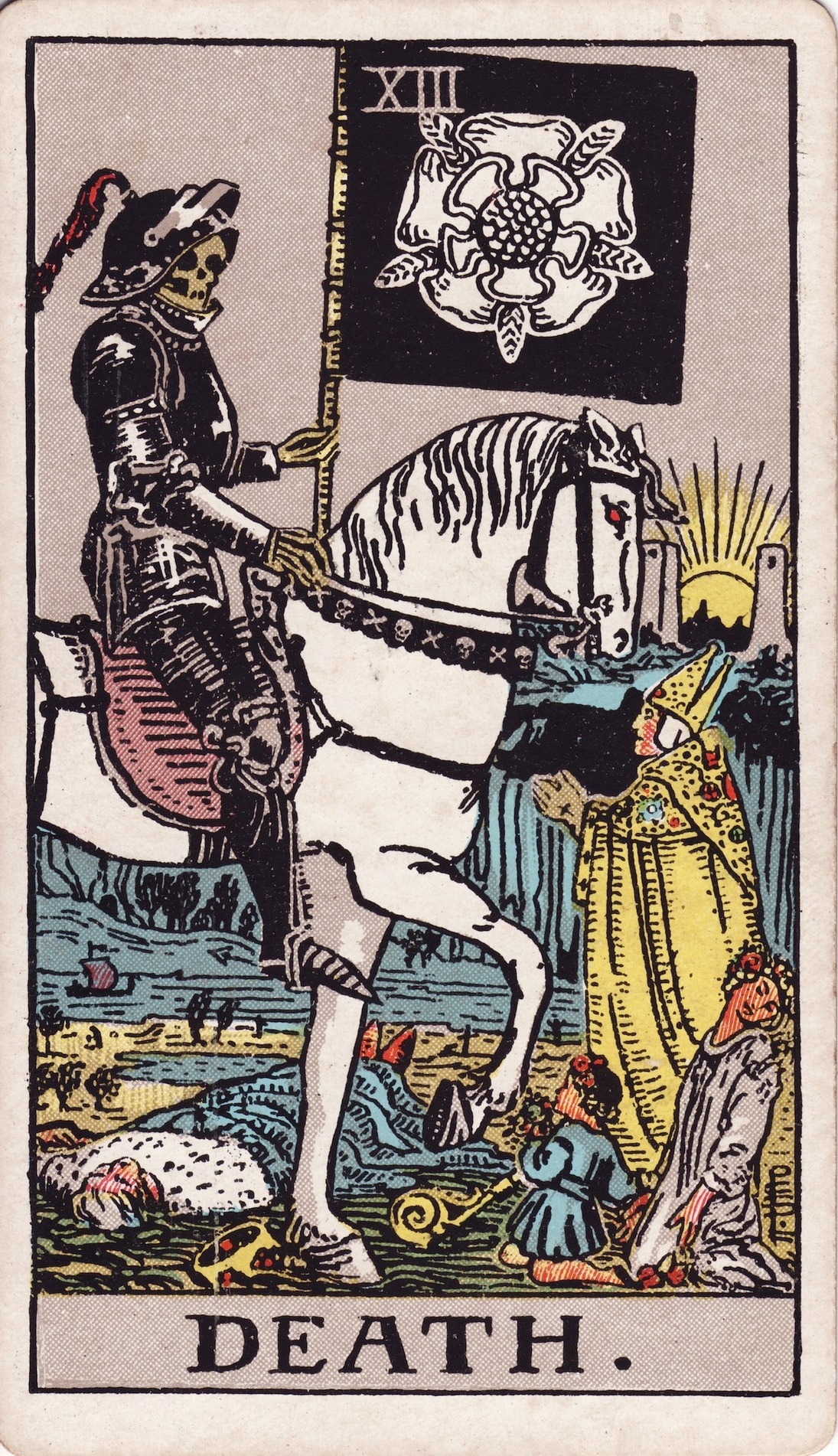
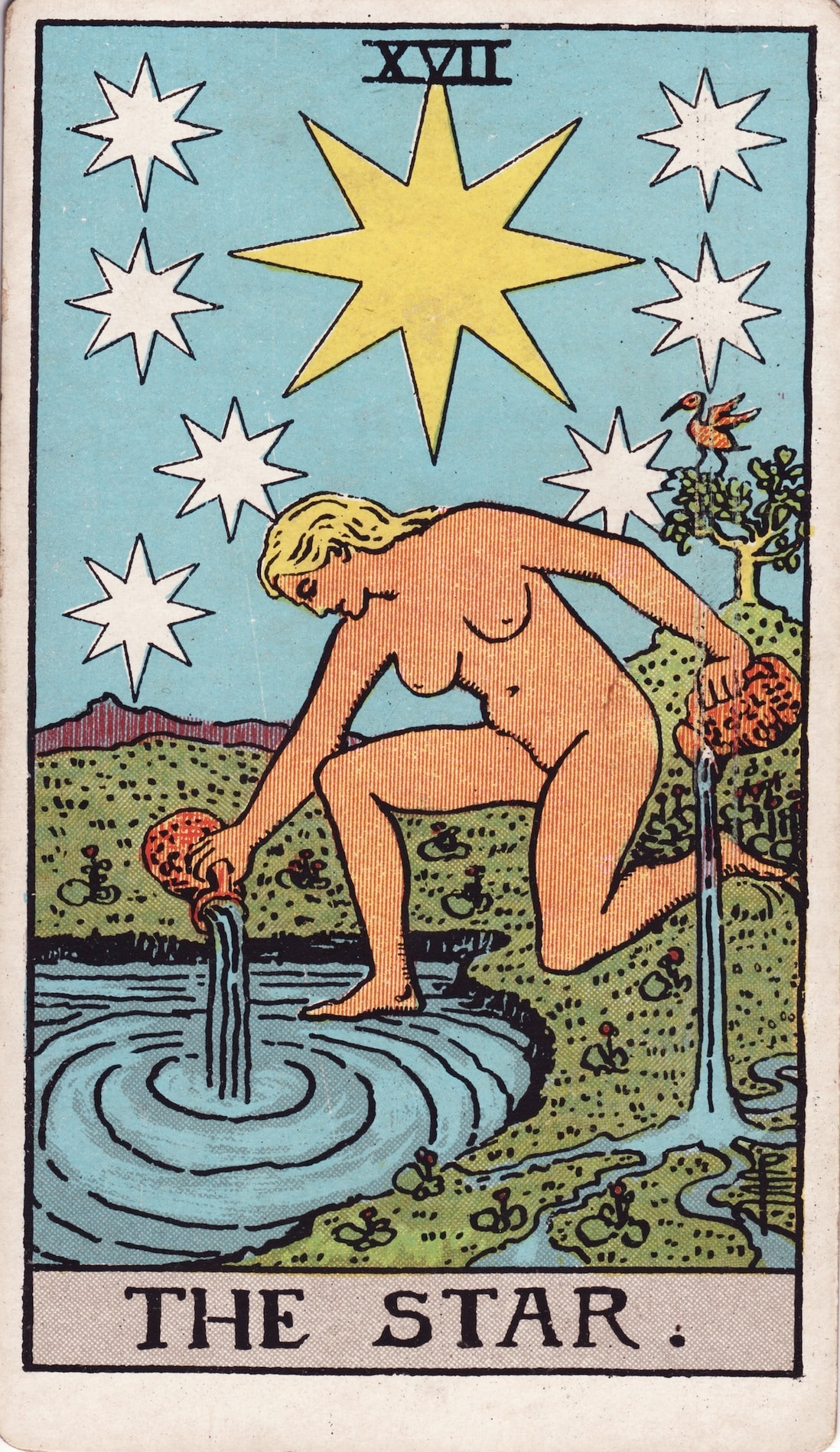

The road can bend, too. The sun at his back, Waite wrote, knows "how he will return by another path after many days". And a zero is drawn as a circle. So the Fool is where the journey starts, and he may come back whenever something new starts, at any age, in the middle of any other card.
The poet John Keats had a name for a world like this. In a letter of 1819 he asked his brother and sister-in-law to call the world "The vale of Soul-making". Much later the psychologist James Hillman borrowed the phrase, soul-making, for the slow way a soul grows as you stay with images. You could walk through the 22 cards in order, like a road. You could also treat each one as a place to stop for a while, and see what that is like.
Across traditions
Waite's deck follows the order of the trumps kept by the Golden Dawn, a magical order of his own time, with Strength straight after the Chariot. Waite then numbered Strength VIII and Justice XI. The Golden Dawn also matched each trump with one of the 22 Hebrew letters. The Fool got Aleph, the first letter. He also got the element air, and the secret title "The Spirit of Αἰθήρ", Greek for the bright upper air. Air suits him. It is the breath before a word, and the space under a lifted foot.
Waite still left the letters out of his book. He wrote that "nearly every attribution is wrong". The order's own notes on the cards, Book T, give the Fool one short line: "that which endeavours to transcend Earth". That is close to what Smith drew, a young man whose whole body tilts upward.
Many traditions have their holy fools. Saint Paul wrote to the Christians of Corinth, "We are fools for Christ's sake". Around 1200 the German poet Wolfram von Eschenbach told the story of Parzival. His mother raises him in a lonely forest, far from knights and battles. One day the boy meets a group of knights and kneels to them, thinking each one is a god. Now he wants to be a knight too. His mother dresses him in a fool's rough clothes, hoping that if people laugh at him he will come home to her. He rides out in them anyway. He knows nothing of the world. Even so, he stumbles his way to the castle of the Grail.
The tarot's Fool belongs with these figures. He walks into the story without the knowledge everyone else thinks they need.
Try this
Before you read on, try standing like the Fool for a moment. Put your weight on one foot and lift your eyes. Notice what your body does at the edge of its balance. Then open any other card and imagine the Fool walking into it. Where does he stop? Who does he meet? What does he pick up, and what does he leave behind? The game works with every card in the deck.
Questions to sit with
- What is in the bag he carries? Does he know?
- Is the dog warning him, cheering him on, or only along for the walk?
- Where in your life is a foot lifted and not yet down?
- If you could take only a rose and a small bag, what would you put in the bag?
- Which card would you like the Fool to walk into next?
The film
No film for this card yet.
Sources
- Waite planned the deck; Smith drew and coloured the cards.Arthur Edward Waite, The Pictorial Key to the Tarot (London, 1911), Part II, The Tarot and Secret Tradition, p. 67
- Waite on his Fool: the prince of the other world, the spirit in search of experience, the dog still bounding, the sun that knows how he will return by another path.Arthur Edward Waite, The Pictorial Key to the Tarot (London, 1911), Part II, The Fool, pp. 152–155
- The Zero is an unnumbered card; nearly every attribution to the Hebrew letters is wrong; the wallet's dim signs and the soul's sub-conscious memories.Arthur Edward Waite, The Pictorial Key to the Tarot (London, 1911), Part II, Conclusion as to the Greater Keys, p. 161
- On the older cards a dog or other animal attacks the Fool from behind as he walks to the edge unaware.Arthur Edward Waite, The Pictorial Key to the Tarot (London, 1911), Part I, Trumps Major, no. 21, p. 29
- Strength numbered VIII and Justice XI in Waite's deck.Arthur Edward Waite, The Pictorial Key to the Tarot (London, 1911), Part II, Strength, p. 100
- The Golden Dawn's order of the trumps, with Fortitude straight after the Chariot; the Fool's letter Aleph, the element air and the title The Spirit of Αἰθήρ; the short note on the Fool, “that which endeavours to transcend Earth”.Book T, The Equinox I.8 (1912), table of the Keys and brief meanings of the trumps
- Jung on individuation and the inner figures met along the way.C. G. Jung, Conscious, Unconscious, and Individuation (1939) and Archetypes of the Collective Unconscious (1934/1954), Collected Works 9i
- Jung's guess that the tarot's pictures descend from archetypes of transformation.C. G. Jung, Collected Works 9i, §81
- The Major Arcana read as one journey of individuation.Sallie Nichols, Jung and Tarot: An Archetypal Journey (1980)
- The trumps laid out in three rows of seven, with the Fool set apart.Rachel Pollack, Seventy-Eight Degrees of Wisdom, part one (1980), The Overview
- Keats: "Call the world if you please 'The vale of Soul-making.'"John Keats, letter to George and Georgiana Keats, spring 1819, in Letters of John Keats to His Family and Friends, edited by Sidney Colvin (1891), letter XCII
- Hillman took soul-making from Keats.James Hillman, Re-Visioning Psychology (1975), introduction
- We are fools for Christ's sake.1 Corinthians 4:10, King James Version
- Parzival raised in the forest, kneeling to the knights, dressed as a fool by his mother, and riding out in it.Wolfram von Eschenbach, Parzival (c. 1200–1210), Book III, translated by Jessie L. Weston (1894), vol. 1
Around this card
Before and after it in the deck
All the cards of the Major Arcana, or the whole deck.