The Pentacles
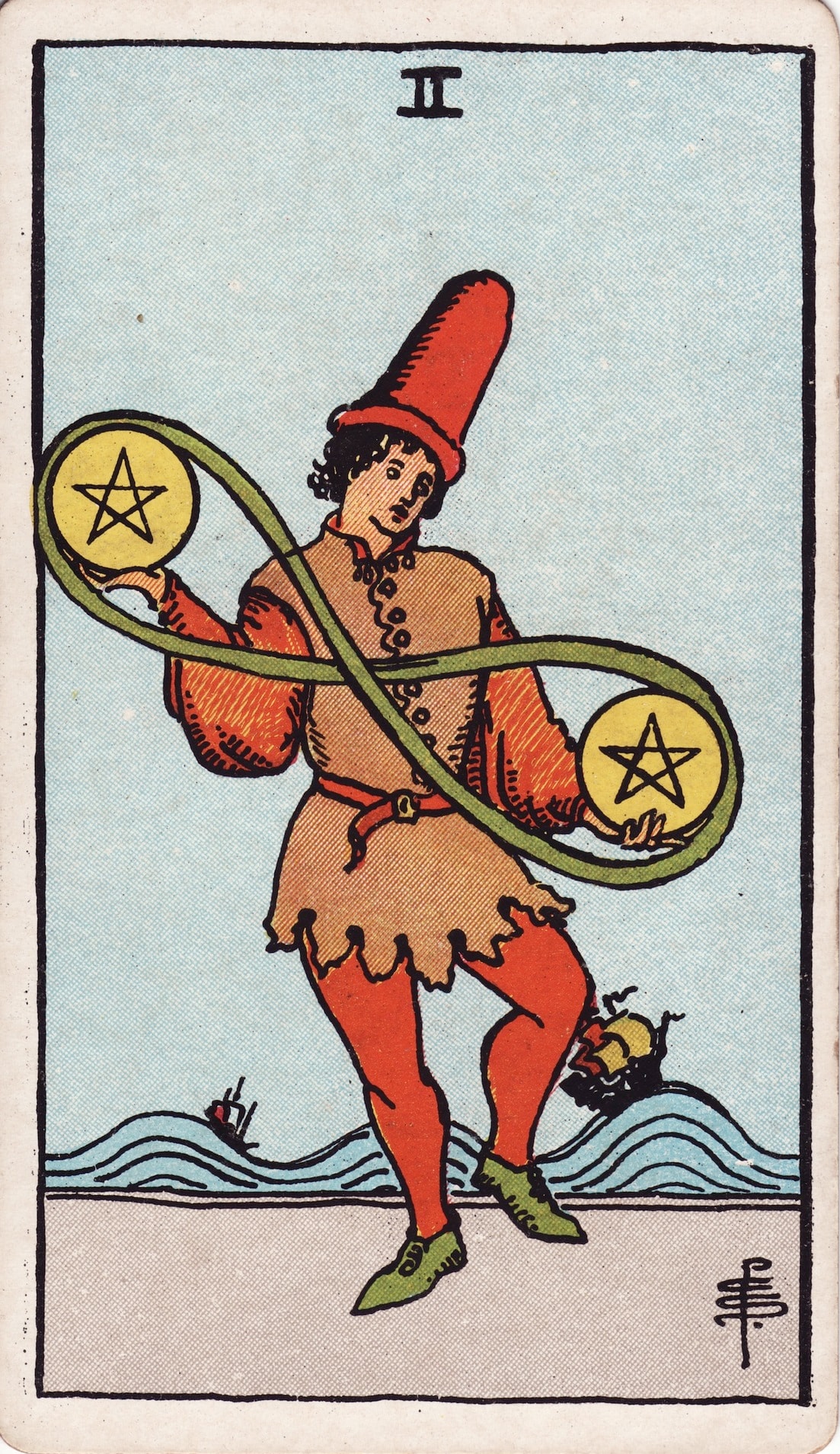
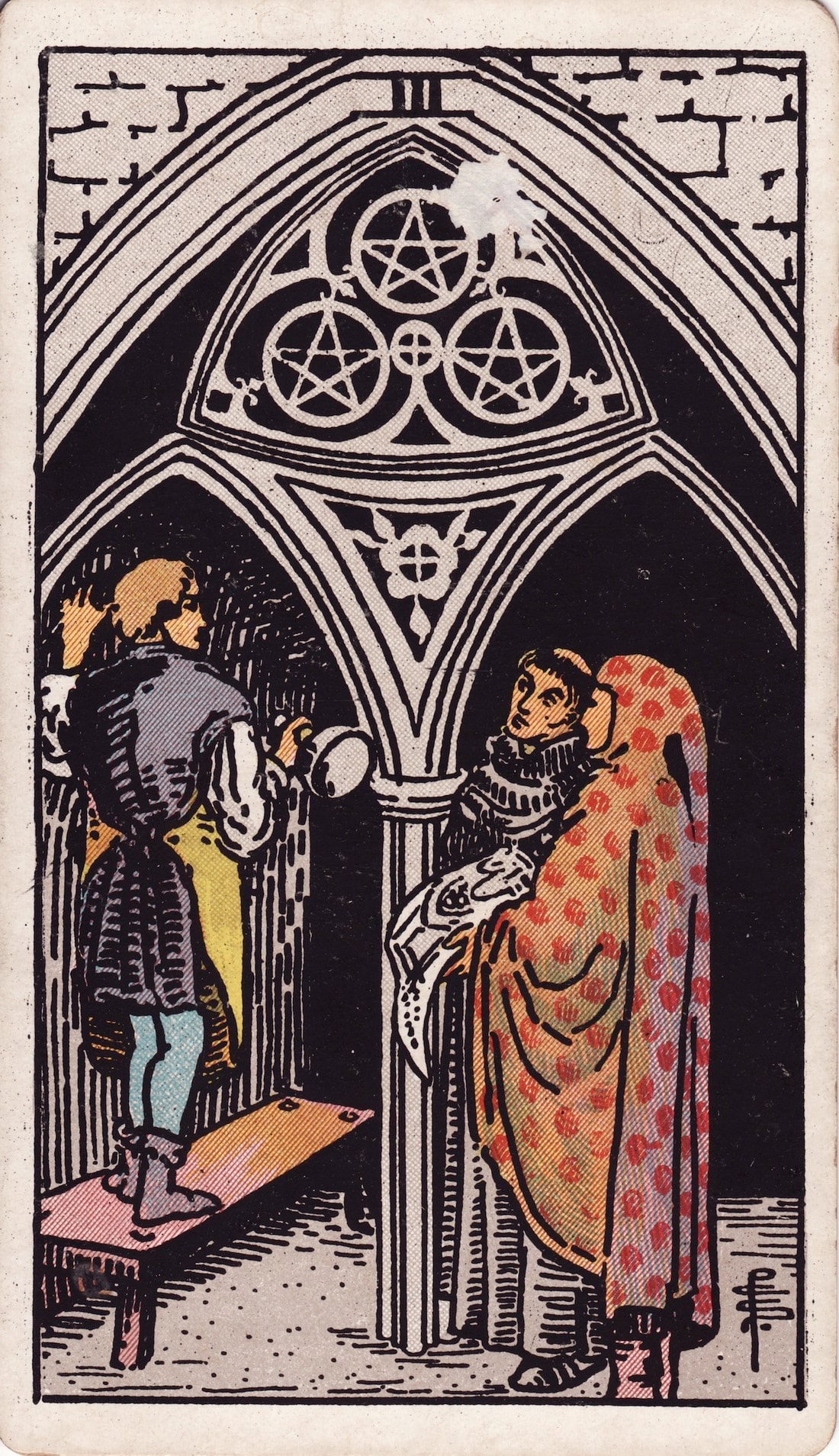
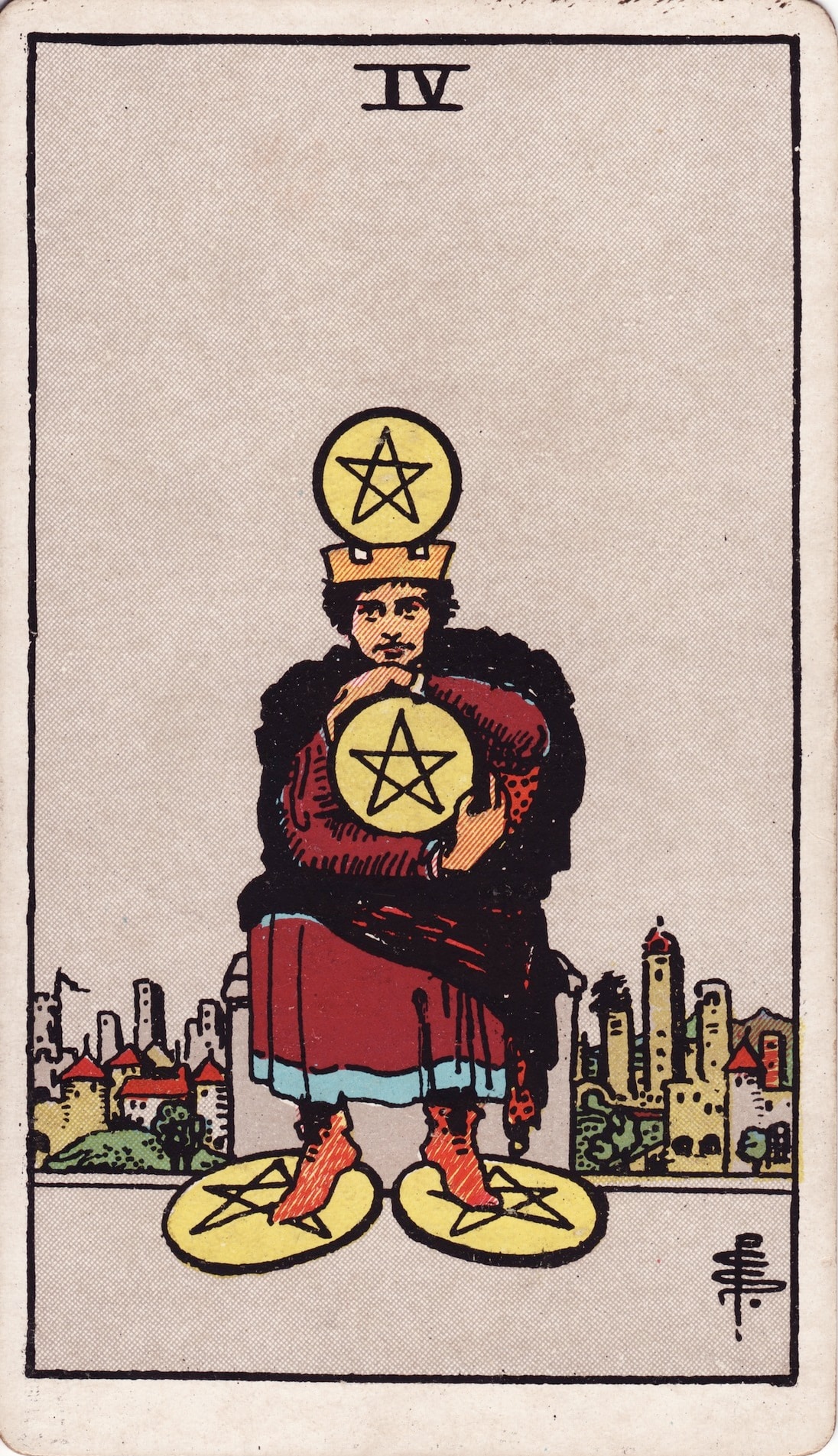
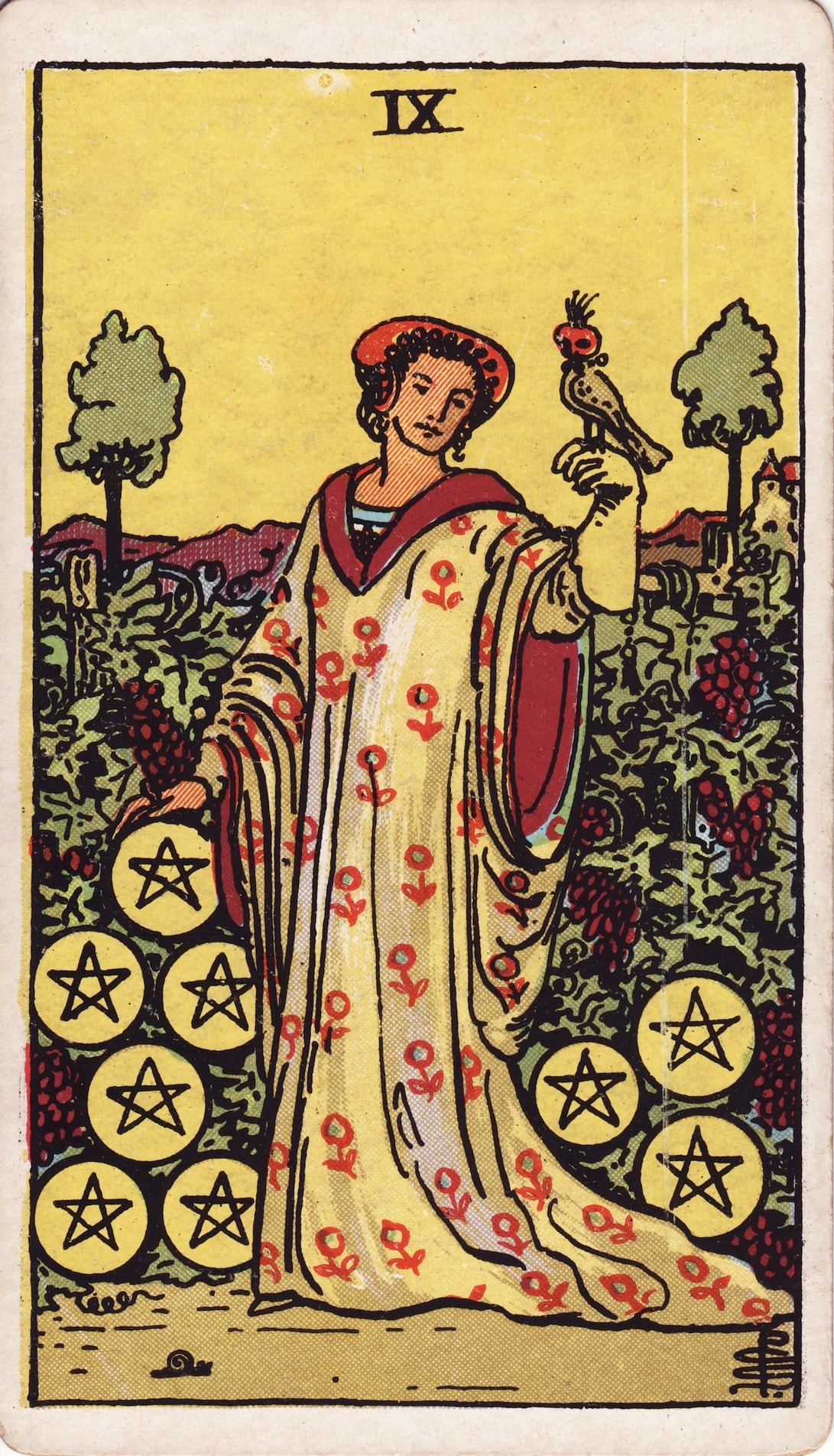
The fourteen pentacles of the 1909 deck, from the ace to the king. The Golden Dawn gave the suit to earth.
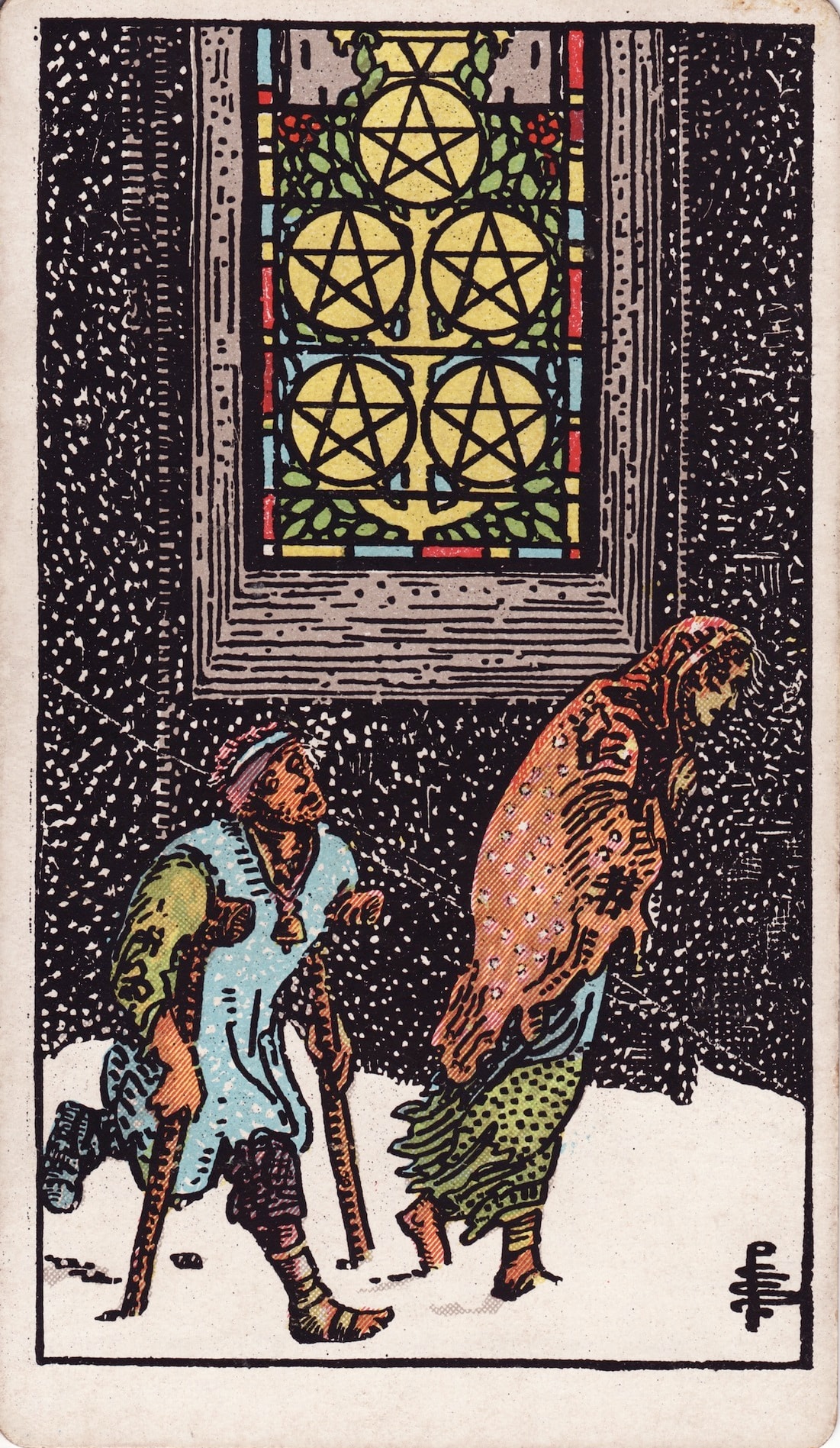
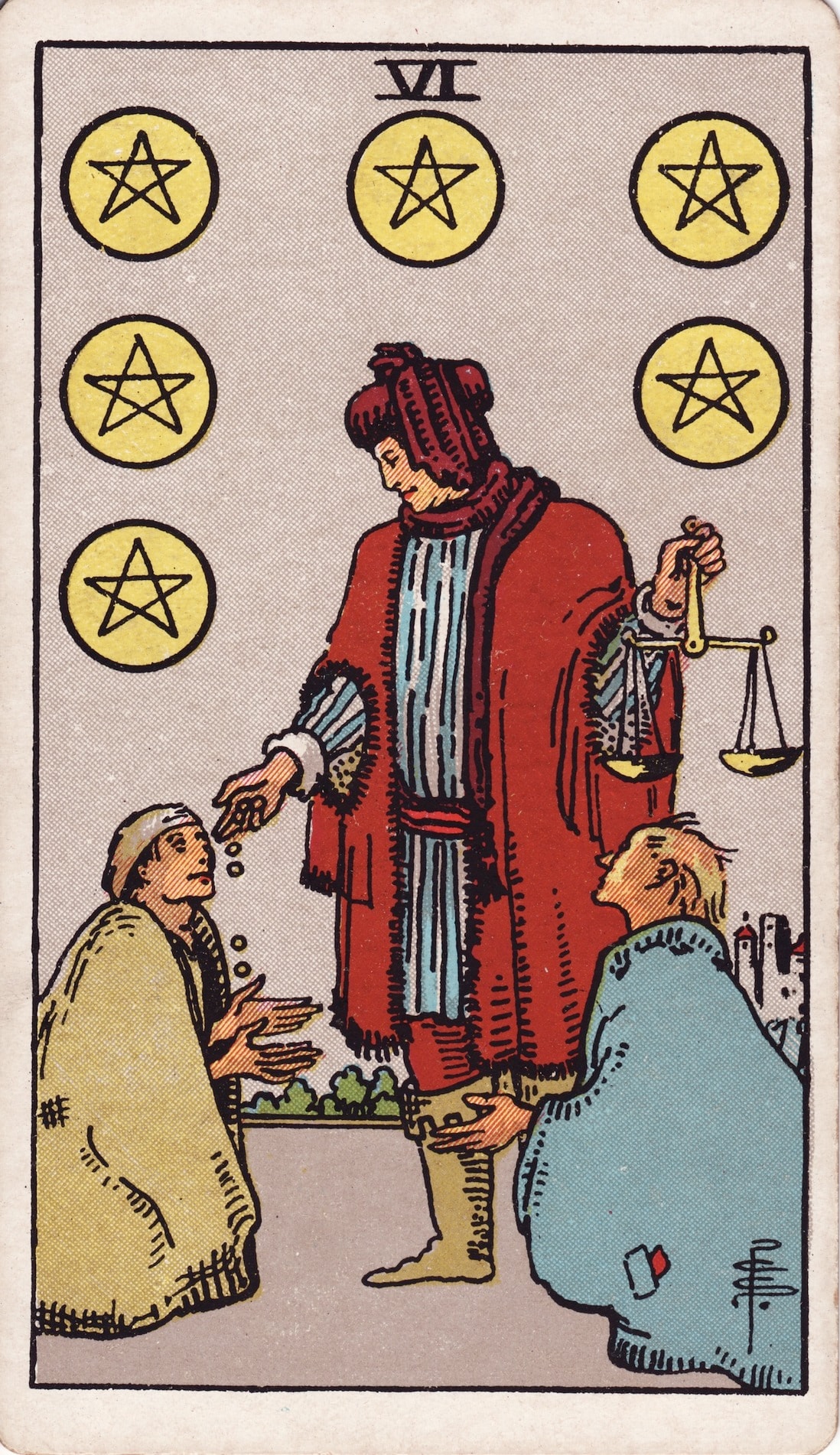
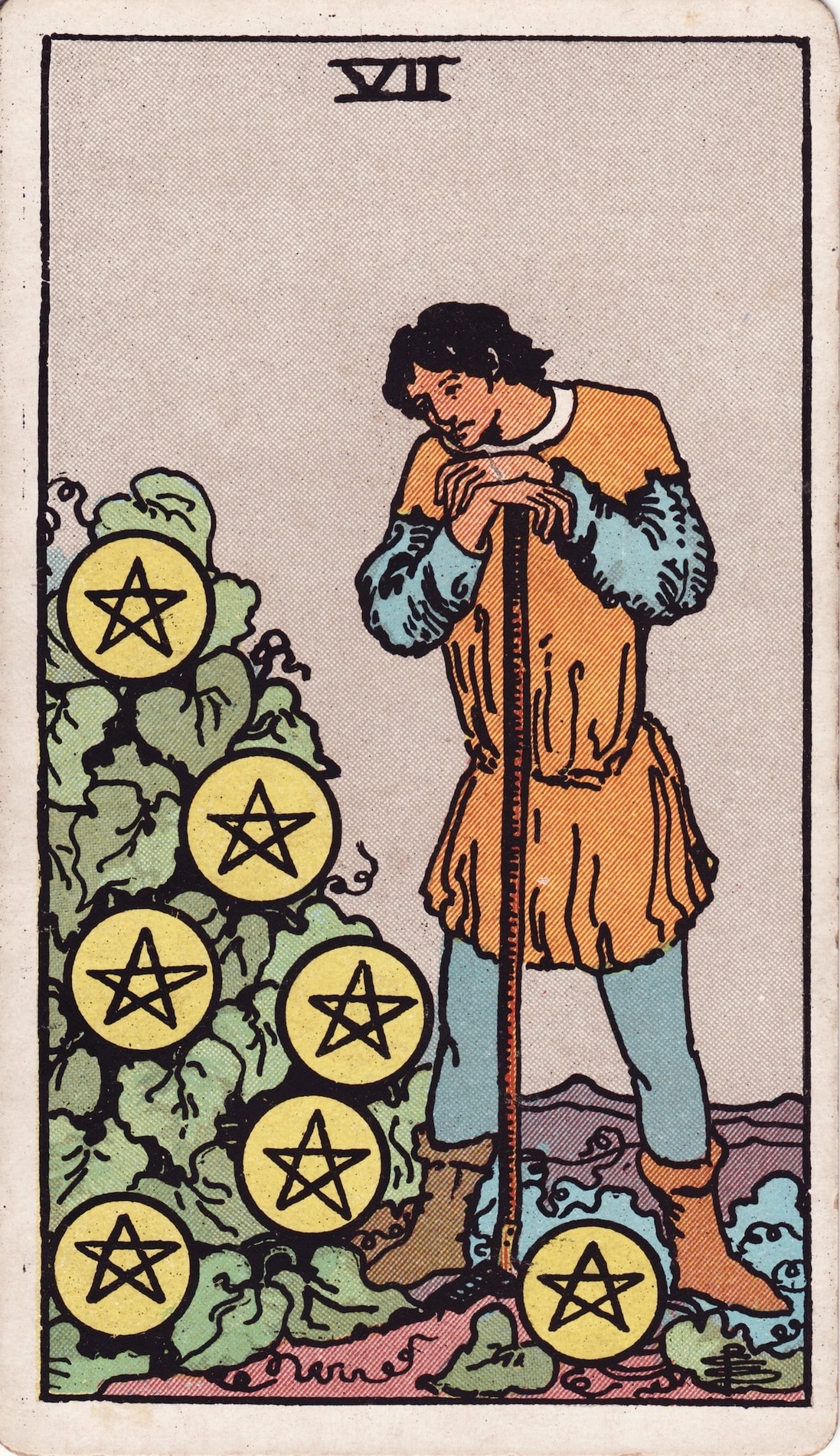
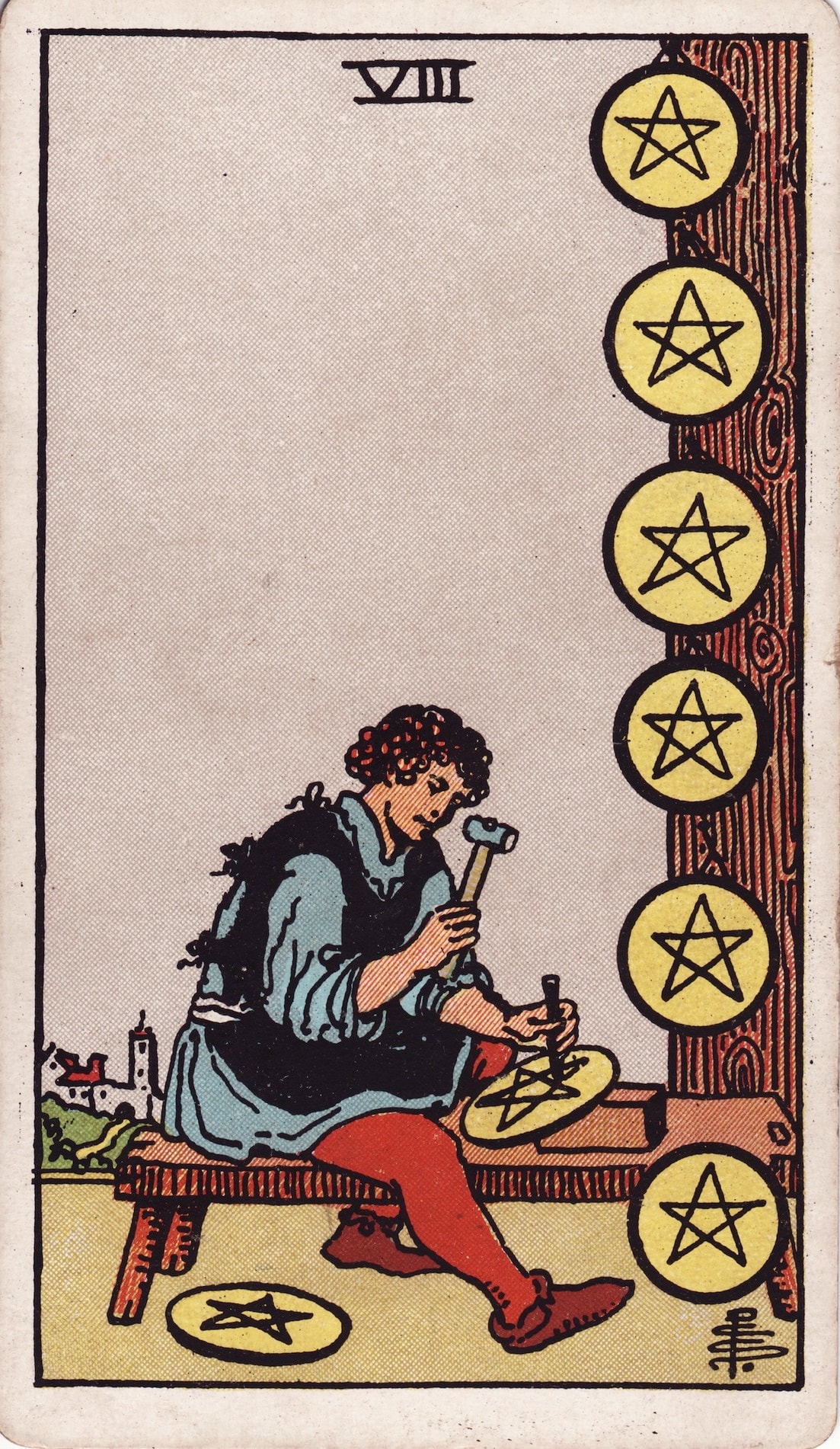
The Pentacles: a way into earth
In many old packs, this suit was coins. Arthur Waite, who planned this deck, turned each coin into a disc with a five-pointed star. He wrote that the cards "do not happen to deal especially with questions of money". So look at what surrounds the pentacles instead. There are gardens and vines, ploughed fields, a workbench and a house behind an arch. The Golden Dawn gave this suit to earth. Many readers come to it through the body, work, home and what grows slowly. Earth is the element you can touch and weigh. You could ask what on today's card is being tended, and for how long.
The image
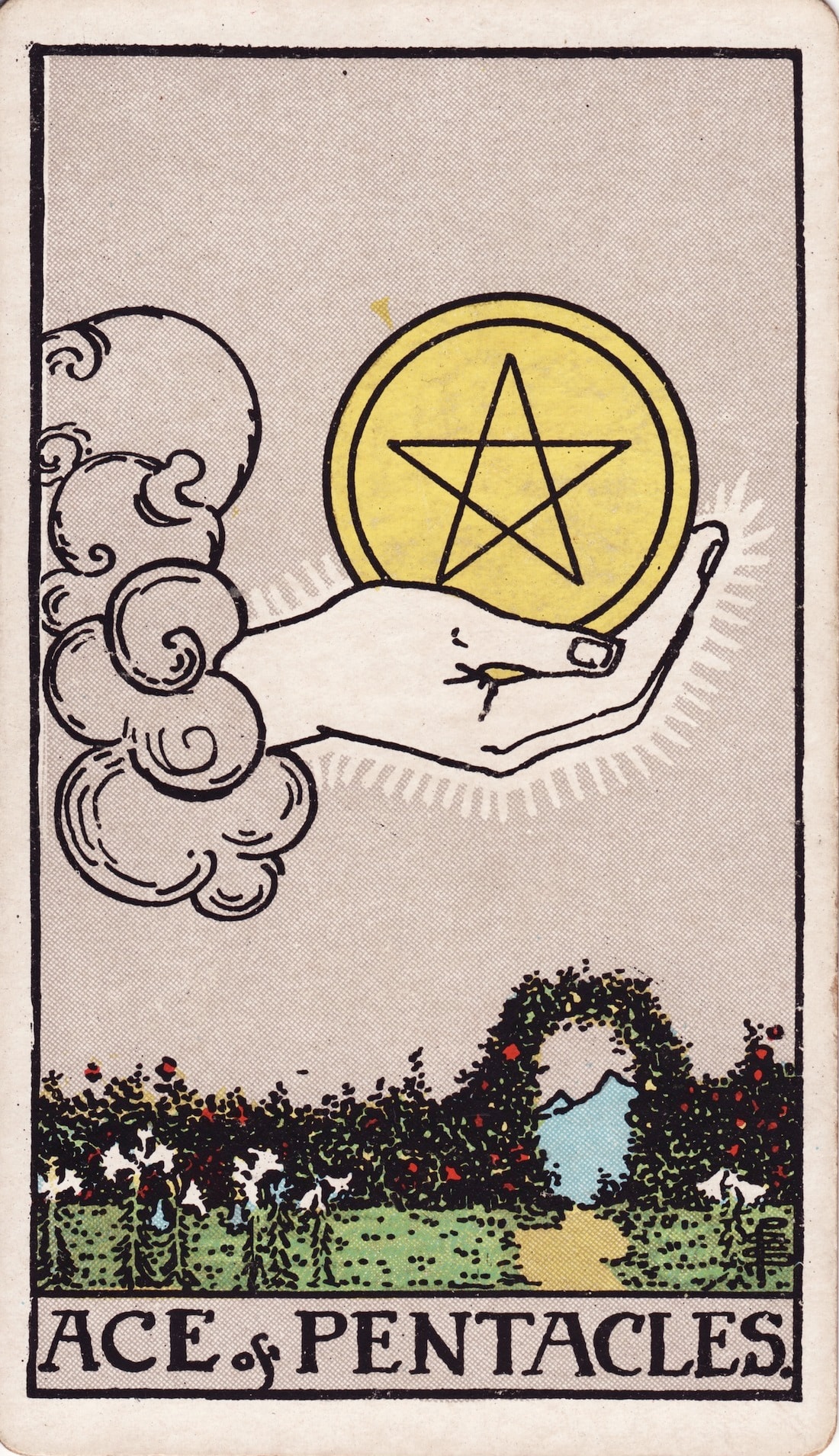
Start with the Ace. A hand comes out of a cloud, palm up, and holds a large golden pentacle. Below it is a garden. White lilies grow in the grass. A hedge of roses has an archway cut into it, and a path runs through the arch toward far blue mountains.
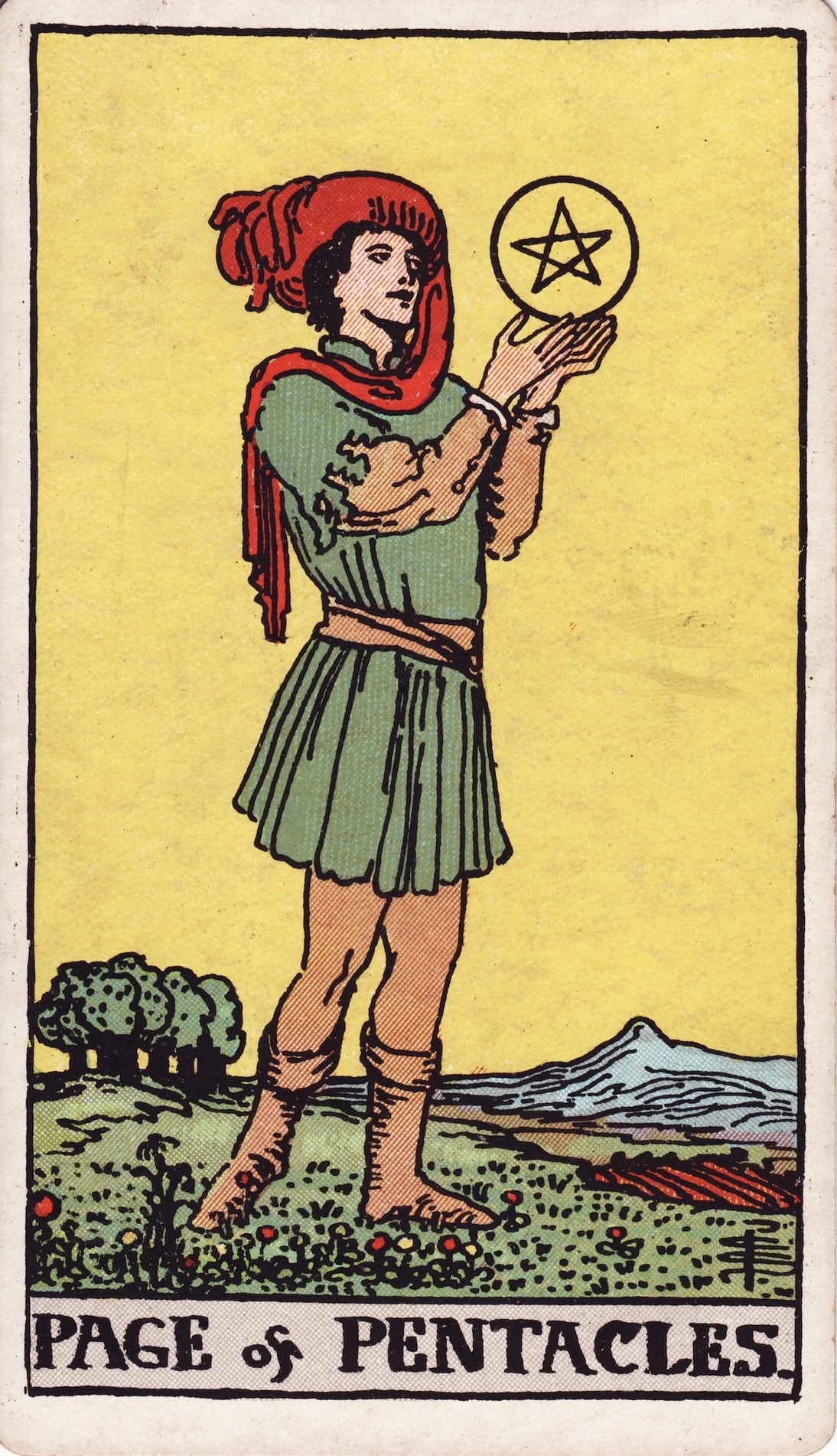
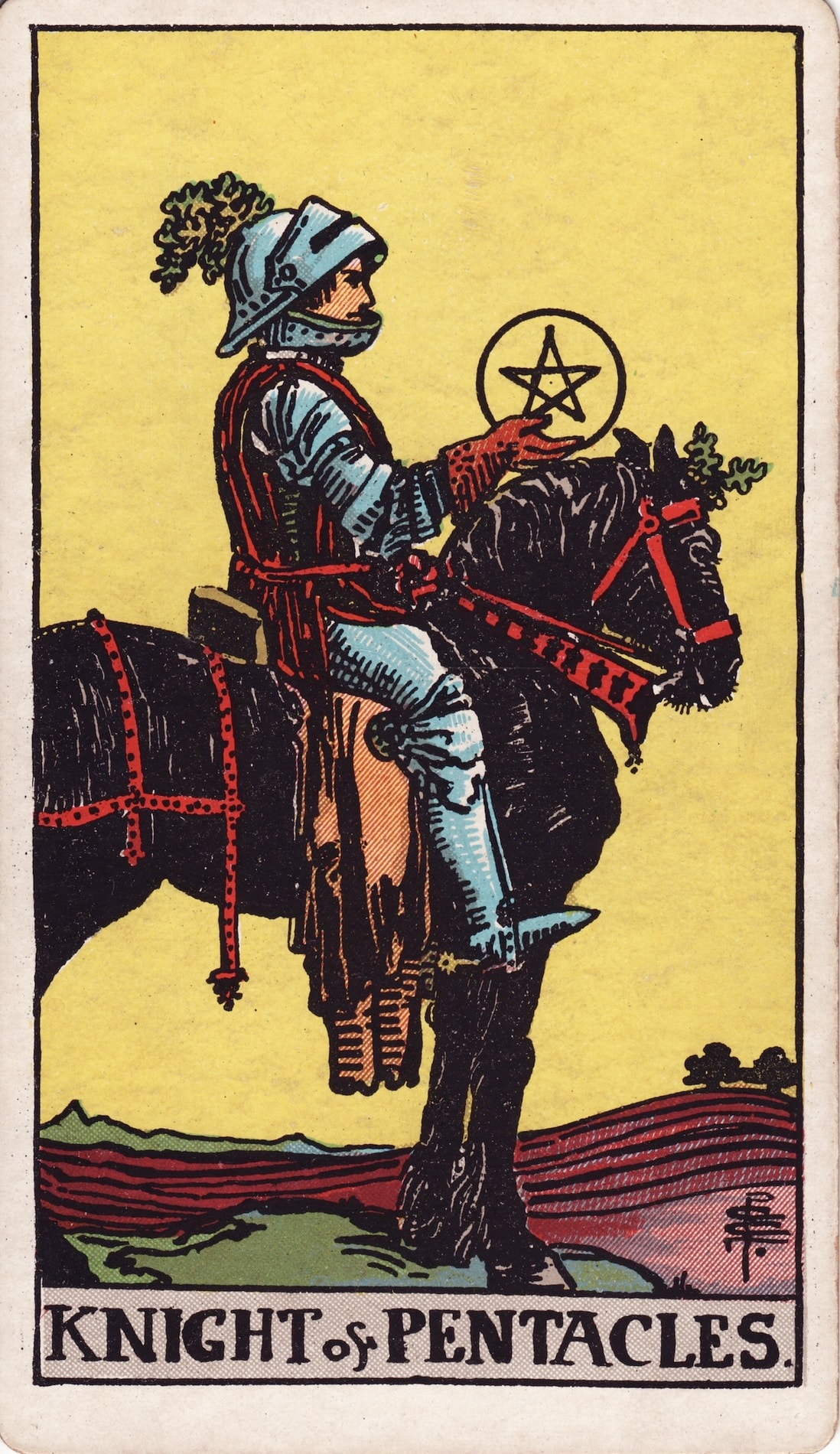
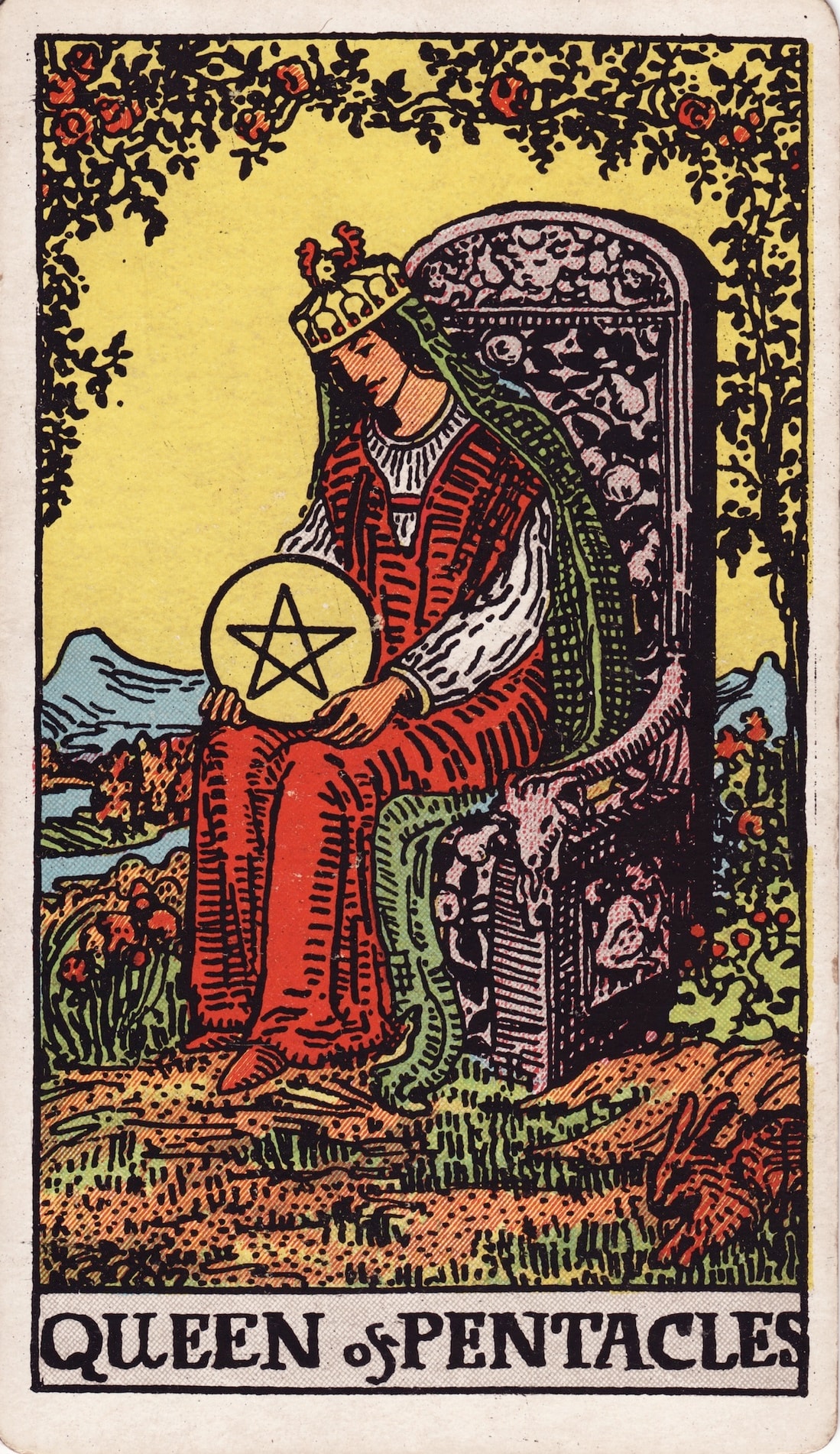
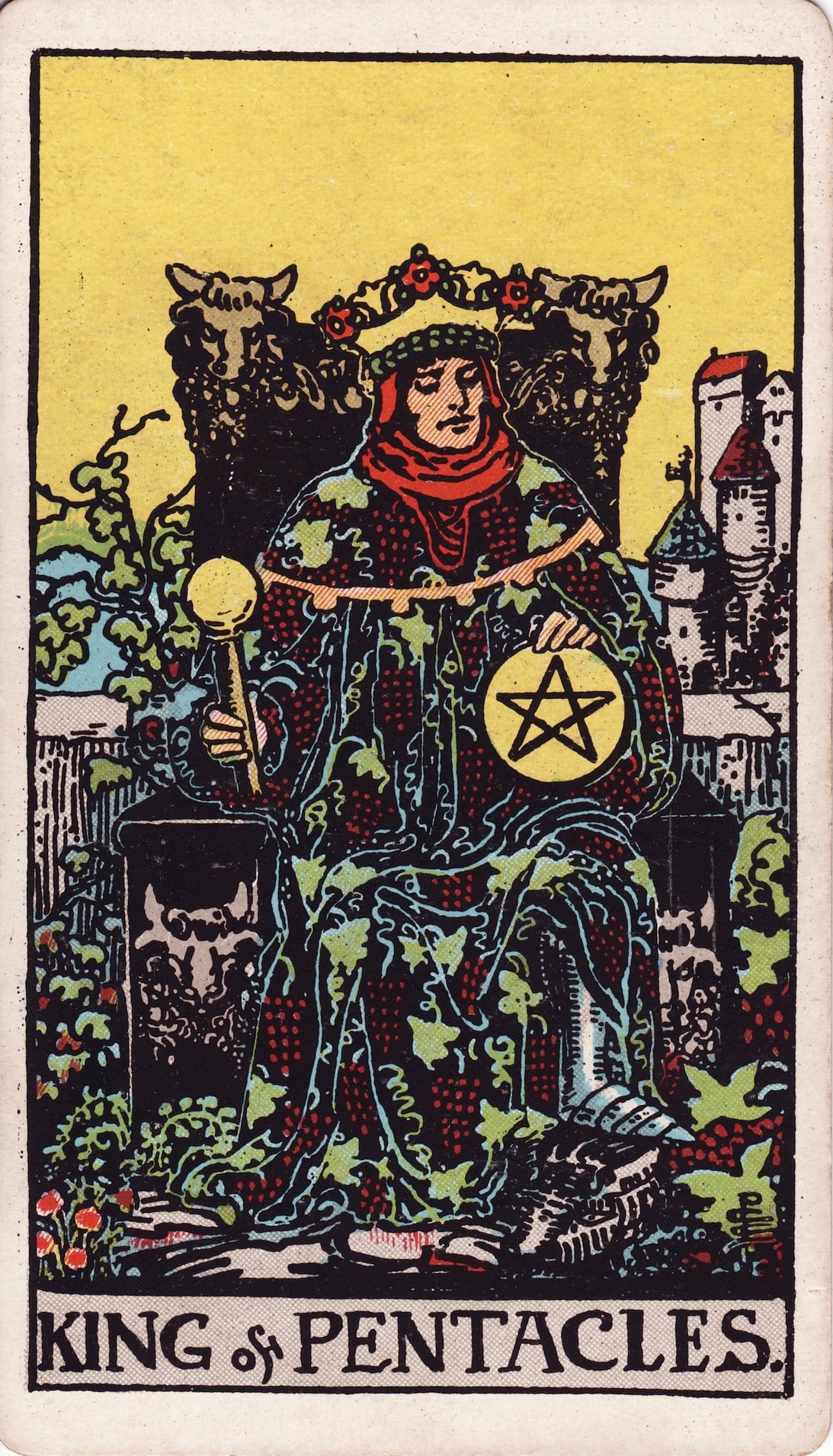
Now look at the court. The Page stands in a field full of flowers, with a strip of ploughed earth behind him. He holds the pentacle up and looks at it closely. Waite said he "moves slowly, insensible of that which is about him". The Knight sits still on a heavy black horse above ploughed fields. Waite called it "a slow, enduring, heavy horse". The Queen sits under an arch of roses with the pentacle in her lap. A small rabbit crouches in the grass at the corner. The King's robe is covered in grapes and vines. Bulls' heads are carved on his throne, and a castle stands behind him.
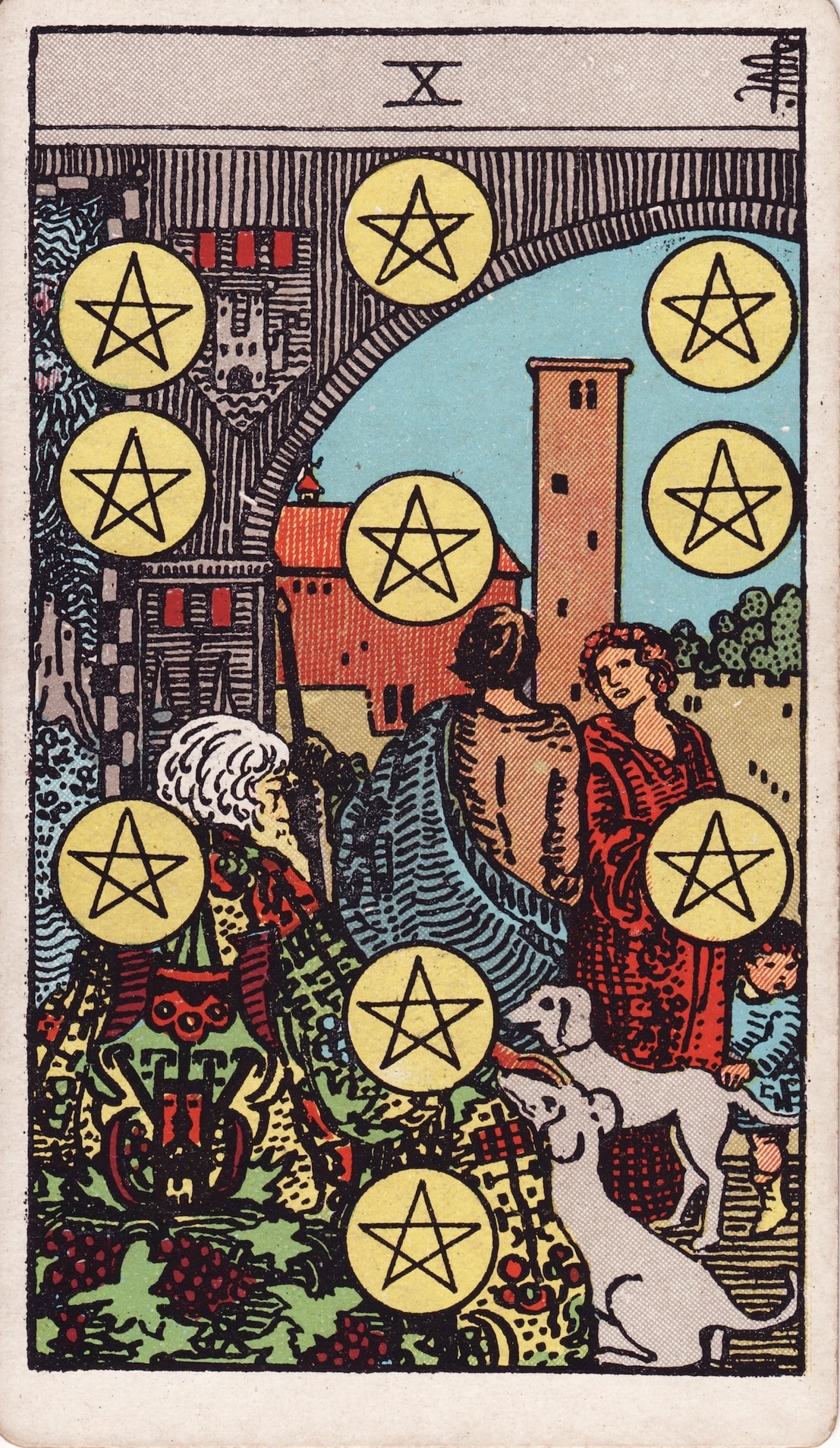
The numbered cards are full of work and time. On the Eight, a young man sits at a bench and carves pentacles, one after another. On the Ten, an old man sits by an archway with two dogs. Beyond the arch stand a man, a woman and a child.
Waite wrote that the star on each disc points to "the correspondence of the four elements in human nature". Seen this way, the coin becomes a small map of a person, with earth holding the other three.
Across traditions
Book T, the Golden Dawn's guide to the tarot, calls the Ace "the Root Powers of the Earth". Its Ace holds the pentacle on a branch of a rose tree. Smith's Ace has roses too, in the hedge below. Then Book T says something strange. This card covers "materiality in all senses, good and evil, and is therefore in a sense illusionary". So Book T reads even the most solid card in the pack as partly a dream.
Book T names the court cards after gnomes, the spirits of the earth. Its titles sound like places. The standing figure is the "Princess of the Echoing Hills". Its Queen of Pentacles has a goat by her side. Now look closely at the arm of the Queen's throne on Smith's card. An animal head is carved at its end. It is hard to make out, but some readers see a goat.
The Greek poet Xenophanes lived about 2,500 years ago. One of his lines survives: "All things come from the earth, and in earth all things end." The English word humble comes from the Latin humilis, low, and that comes from humus, the ground. To be humble, in the old sense, is to stay close to the earth.
William Blake made the picture called Earth at the top of this echo. A man crouches in a hollow in the rock and pushes against it with his arms. Earth, here, is what holds you and what you push against.
Looking with earth
So far you have been looking at earth. You could also try looking with it. Earth is slow. It measures time in seasons, not minutes. It keeps what falls into it and turns some of it into soil. It carries weight without complaint.
Looking this way, you might notice what in a room has been there longest. You might notice what is growing, even if you can't see it grow. You might notice your own weight on the chair, and the floor under the chair. On some days this way of seeing feels like being held. On others it may feel like Blake's man in the rock, pushing against the weight.
Try this
Take today's Pentacles card. First, find the ground. Is it grass, stone, a floor or a field? Then find the pentacles, and see who is looking at them and who isn't. Last, think about your own day. Name one thing you are building, and one thing you are only waiting for. You could rest your hand flat on a table while you think, and feel how still it is.
Questions to sit with
- What is growing, built or kept on this card?
- Who is looking at the pentacle, and who is looking past it?
- How long has this scene been going on? How long will it last?
- What in your life needs a season, not a day?
- If this card were a garden, what would you plant in it?