Trump VIII, Major Arcana
Strength
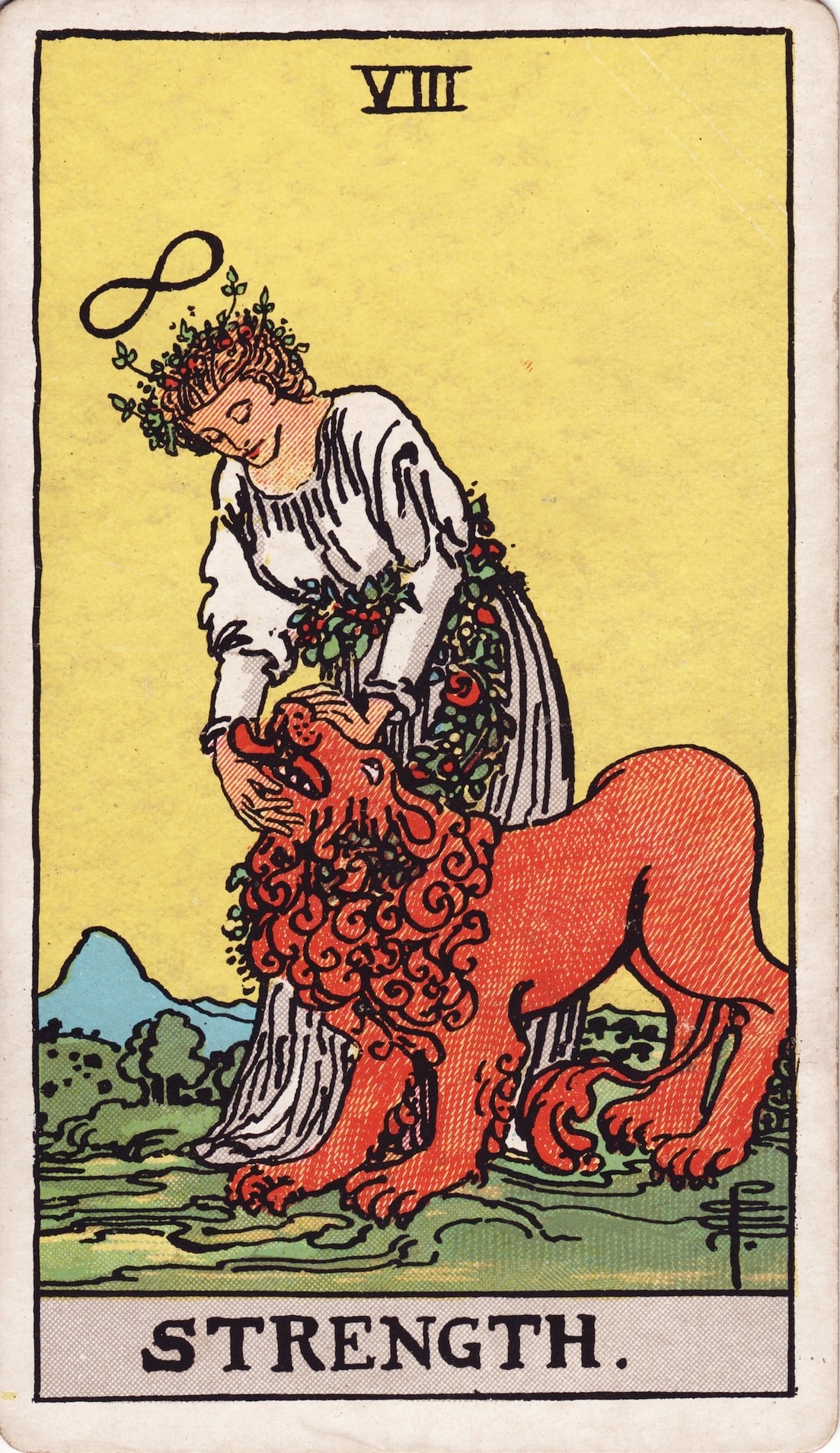
Strength is trump VIII in Arthur Edward Waite's deck, which Pamela Colman Smith drew in 1909. A woman in a white dress, with flowers in her hair and a sideways figure eight over her head, bends over a red lion and holds its open jaws.
What Waite wrote it means (1910)
- Divinatory meanings
Power, energy, action, courage, magnanimity; also complete success and honours.
- Reversed
Despotism, abuse of power, weakness, discord, sometimes even disgrace.
Arthur Edward Waite, The Pictorial Key to the Tarot (London, 1911), p. 284. Read it in the chapter
A woman, over whose head there broods the same symbol of life which we have seen in the card of the Hierophant, is closing the jaws of a lion. The only point in which this design differs from the conventional presentations is that her beneficent fortitude has already subdued the lion, which is being led by a chain of flowers. For reasons which satisfy myself, this card has been interchanged with that of Justice, which is usually numbered eight. As the variation carries nothing with it which will signify to the reader, there is no cause for explanation. Fortitude, in one of its most exalted aspects, is connected with the Divine Mystery of Union; the virtue, of course, operates in all planes, and hence draws on all in its symbolism. It connects also with innocentia inviolata, and with the strength which resides in contemplation.
These higher meanings are, however, matters of inference, and I do not suggest that they are transparent on the surface of the card. They are intimated in a concealed manner by the chain of flowers, which signifies, among many other things, the sweet yoke and the light burden of Divine Law, when it has been taken into the heart of hearts. The card has nothing to do with self-confidence in the ordinary sense, though this has been suggested—but it concerns the confidence of those whose strength is God, who have found their refuge in Him. There is one aspect in which the lion signifies the passions, and she who is called Strength is the higher nature in its liberation. It has walked upon the asp and the basilisk and has trodden down the lion and the dragon.
What's in the picture
- The figure eight. A loop lying on its side floats above her head, drawn in one black line. The same sign hangs over the Magician on trump I.
- The wreath. Leaves and small red flowers are woven into her hair, with sprigs standing up all round like a crown.
- Her face. She looks down at the lion with her eyes almost closed and the start of a smile.
- The chain of flowers. A garland of green leaves and red roses hangs from her waist and runs down the front of her white skirt toward the lion's neck.
- The open jaws. Her hands are on the lion's jaws. Its mouth is open, with white teeth showing and a red tongue hanging out.
- The lion's eye. The lion's head is tipped back, and its eye turns up toward her face.
- The mane. The mane is drawn as rows of tight black curls on red, thick around the head and chest.
- The tail. The lion's tail is tucked down between its back legs, the way a dog tucks its tail, and its tip curls round near the back paws.
- The mountain. Far behind them, on the left, a single blue mountain rises over green trees and a field.
- Smith's monogram. In the lower right corner, in the grass, is Pamela Colman Smith's small mark, like a knot of lines.
The card in brief
- In the deck
- Card 9 of 78
- Arcana
- Major Arcana
- Number
- Trump VIII
- Hebrew letter (Golden Dawn)
- Teth
- Astrology (Golden Dawn)
- Leo
- Title in Book T
- The Daughter of the Flaming Sword
- Drawn by
- Pamela Colman Smith
- Planned by
- Arthur Edward Waite
- Published
- London, William Rider & Son, 1909
- Scan
- Pam-A printing, c. 1910, Wikimedia Commons
In the old books
Book T (1912)
Courage, strength, fortitude, power passing on to action. Obstinacy.
Book T, “A Description of the Cards of the Tarot”, The Equinox I.8 (London, 1912), p. 203. See the source Papus (1892)
A young girl calmly closing a lion's mouth without any visible effort.
(First idea.)
This young girl wears the vital sign ∞ upon her head.
(Second idea.)
Papus, The Tarot of the Bohemians, tr. A. P. Morton (London, 1892), p. 149. See the source
Before 1909
The older cards and pictures behind this one will be shown here once their licences are checked.
Strength: a chain of flowers
A woman in a white dress bends over a lion. Her hands rest on its jaws, one above and one below. She wears a wreath of flowers in her hair, and a chain of flowers runs from her waist to the lion's neck. Over her head floats an eight on its side, the same sign that hung over the Magician. The lion's tongue is out, and its tail is tucked low. Nobody is fighting on this card.
Lay the trumps out in order and the Fool has just ridden out as a hero on the Chariot. On the next card he meets something wild, and the way to meet it looks gentle. You could look at this card for the kind of strength it shows.
The image
In Waite's own description of the card, the woman "is closing the jaws of a lion". He said his card differs from the older ones in only one way. Here "her beneficent fortitude has already subdued the lion, which is being led by a chain of flowers". So the struggle is over before the picture begins.
Look at her face. Her eyes are lowered, and she seems calm, even fond. The lion looks up at her.
A chain of flowers wouldn't hold a real lion for a second. It holds this one. Waite said the chain hints at "the sweet yoke and the light burden of Divine Law". The words recall the Gospel of Matthew: "my yoke is easy, and my burden is light". Waite also wrote that the card "has nothing to do with self-confidence in the ordinary sense". He linked it with "the strength which resides in contemplation".
Older cards showed this more roughly. Waite wrote that the woman is "usually represented as closing the mouth of a lion". On an early design printed by Court de Gébelin, a French scholar writing just before the Revolution, "she is obviously opening it". Either way, Waite said, those cards showed strength as plain mastery.
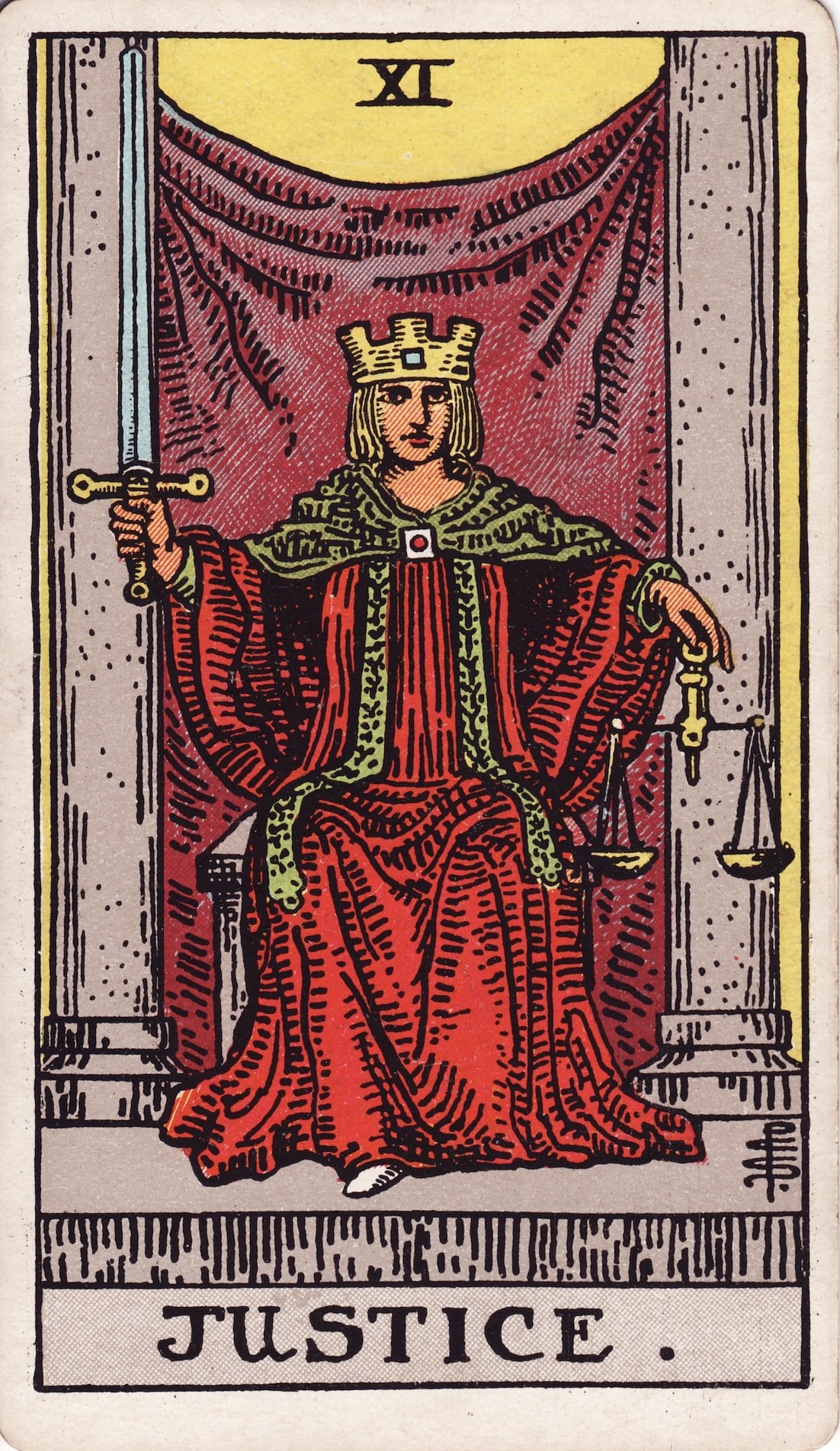
The number is new too. On most older decks this card was eleven, and Justice was eight. Waite swapped them. All he wrote was, "For reasons which satisfy myself."
The inner journey
The Chariot was the ego at its strongest, winning in the world. Strength opens a new part of the road. Many readers see the cards from here on as turning inward. The Fool now meets what lives inside him.
Jung had a name for the parts of ourselves we would rather not see: the shadow. Some of it is dark. Some of it is only wild: anger, hunger, desire, the animal body. Jung thought the shadow doesn't go away if you lock it up. In the dark it grows stronger and breaks out sideways. He suggested meeting it instead and getting to know it.
That is one way to look at this woman and her lion. She hasn't killed it or caged it. Its mouth is in her hands. Its strength is still there, and so is hers. They seem to have reached an agreement.
You could stay with this card when something wild in you is loud. You could try sitting beside it, the way she bends over the lion, before you try to make it stop. Ask what it wants. See whether it quiets down once somebody listens.
Across traditions
Waite never explained the swap in his book. The Golden Dawn, a magical order of his day, gives a clue. In its text on the cards, Book T, Fortitude still carries the number 11 and Justice the number 8, but its table of the trumps lists Fortitude eighth, straight after the Chariot, and Justice eleventh. In that table Strength gets Teth, the ninth of the Hebrew letters, and Leo, the lion. Justice gets Libra, the scales. With Strength in the eighth place, the signs follow the zodiac in order: Cancer on the Chariot, Leo on Strength, Virgo on the Hermit. Waite made the numbers match the order. Book T calls this card "The Daughter of the Flaming Sword".
The English poet Edmund Spenser told a story that fits this card. In The Faerie Queene, from 1590, a young woman named Una rests alone in a wood. She has laid her veil aside. A lion rushes out of the trees to eat her. As it comes near, it stops, amazed. Instead of attacking, it "kist her wearie feet, / And lickt her lilly hands". From then on it walks beside her as her guard. Spenser asks: "O how can beautie maister the most strong?"
Around 1860 the Scottish painter William Bell Scott painted the scene as Una and the Lion, now in the National Galleries of Scotland. His Una stands under autumn oaks with one hand resting in the lion's mane. Waite linked Strength with innocentia inviolata, Latin for innocence unharmed. Una's name is Latin for "one". You could lay her story over the card, and look again at the woman's lowered eyes.
Try this
Think of something in you that feels wild today: a temper, a craving, a restless fear. Picture it as an animal. What kind? How big? Now imagine resting your hands on it the way the woman does, without squeezing. Stay with that picture for a minute. Then look back at the card. See how she treats her lion, and how the lion treats her.
Questions to sit with
- Is she closing the lion's mouth, or opening it?
- Who is leading whom on this chain of flowers?
- What wild thing in you would like to be listened to?
- When have you been strong by being gentle?
- What does the lion get from her?
The film
No film for this card yet.
Sources
- Waite on the woman closing the lion's jaws, the lion already subdued and led by a chain of flowers, the sweet yoke, self-confidence, contemplation, innocentia inviolata, and the swap with Justice.Arthur Edward Waite, The Pictorial Key to the Tarot (London, 1911), Part II, Strength, p. 100
- On older cards she usually closes the lion's mouth; in the form printed by Court de Gébelin she opens it; either way, strength as mastery.Arthur Edward Waite, The Pictorial Key to the Tarot (London, 1911), Part I, Trumps Major, no. 8, p. 16
- Court de Gébelin wrote just before the French Revolution.Arthur Edward Waite, The Pictorial Key to the Tarot (London, 1911), Part I, The Tarot in History, p. 43
- My yoke is easy, and my burden is light.Matthew 11:30, King James Version
- Many readers see the cards from Strength on as turning inward.Rachel Pollack, Seventy-Eight Degrees of Wisdom (1980), Part One, ch. 5, Turning Inwards
- Jung's shadow: what we would rather not see in ourselves; locked away it grows stronger and breaks out; better met and known.C. G. Jung, Aion (1951), ch. 2, The Shadow (Collected Works 9ii, §§14–19); Psychology and Religion (1938), Collected Works 11, §131
- Book T keeps the numbers Fortitude 11 and Justice 8 but lists Fortitude eighth, after the Chariot, and Justice eleventh; Teth and Leo for Strength, Libra for Justice, Cancer for the Chariot and Virgo for the Hermit; its title for the card.Book T, The Equinox I.8 (1912), table of the Keys and brief meanings of the trumps
- Una, the lion that kisses her feet instead of attacking, and becomes her guard.Edmund Spenser, The Faerie Queene (1590), Book I, canto iii, stanzas 4–9
- William Bell Scott's Una and the Lion.William Bell Scott, Una and the Lion (c. 1860), National Galleries of Scotland, NG 2367; Wikimedia Commons
- Una is Latin for one.Lewis and Short, A Latin Dictionary (1879), unus
Around this card
Before and after it in the deck
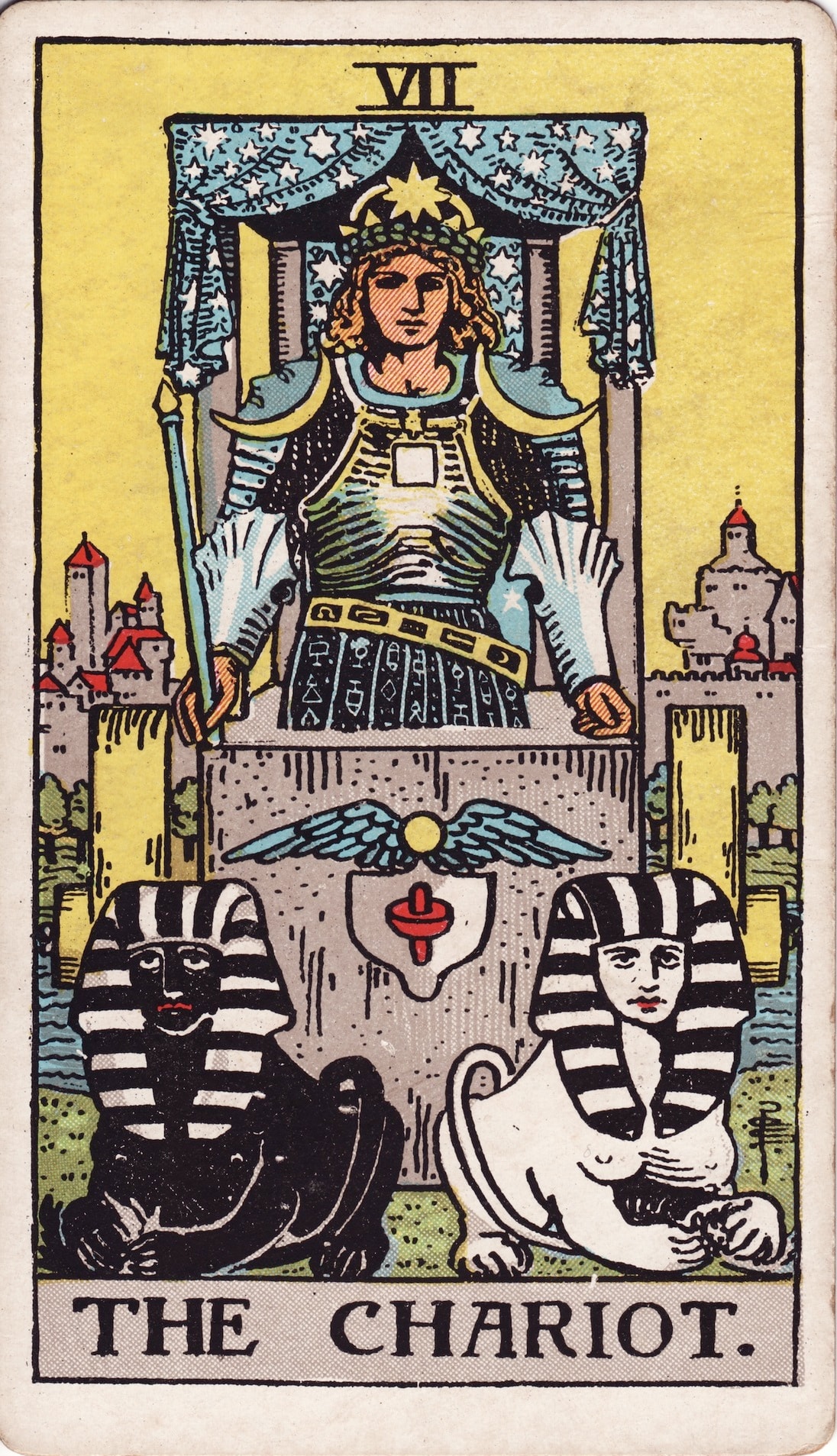
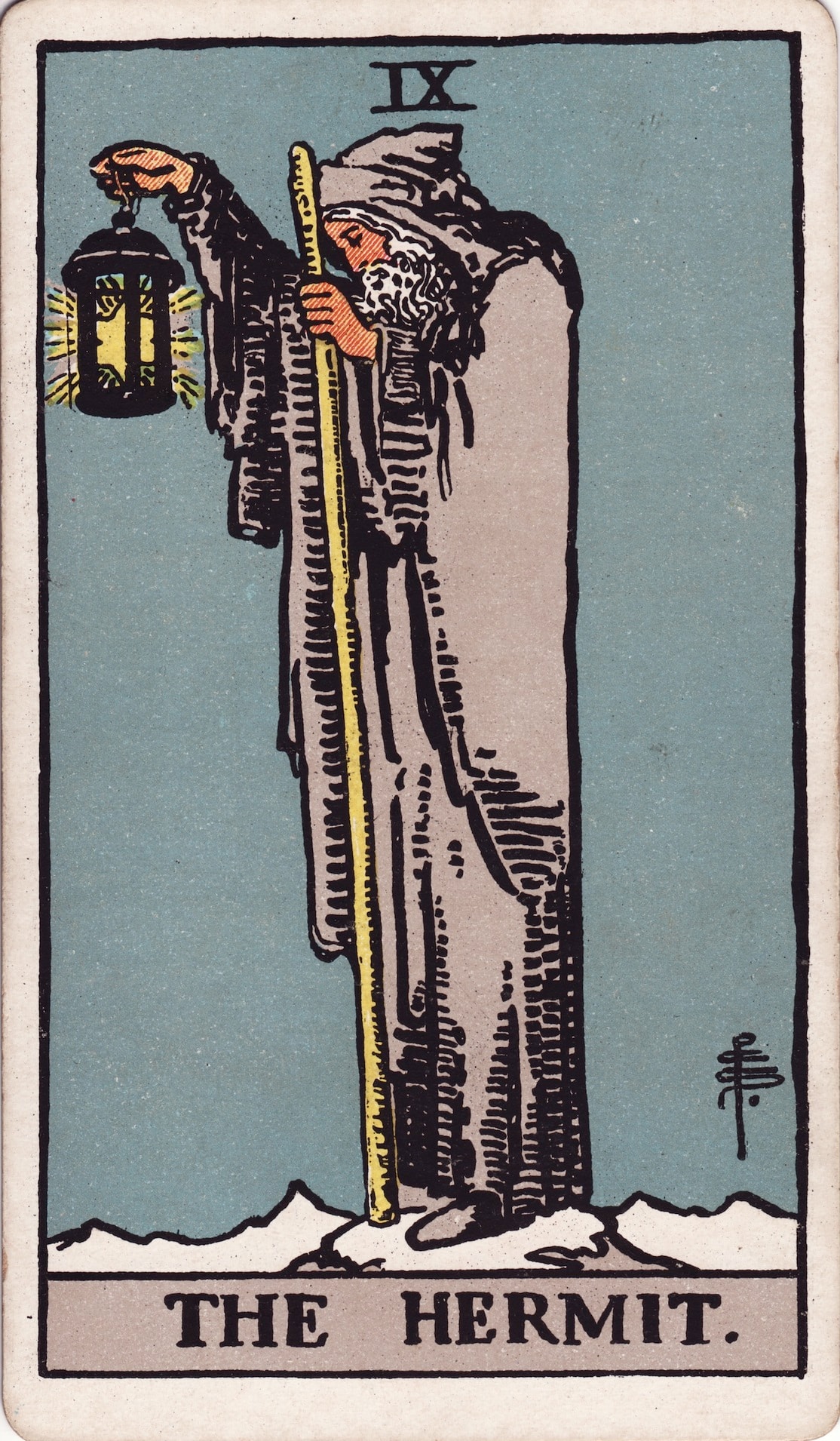
The second row of the Fool's journey
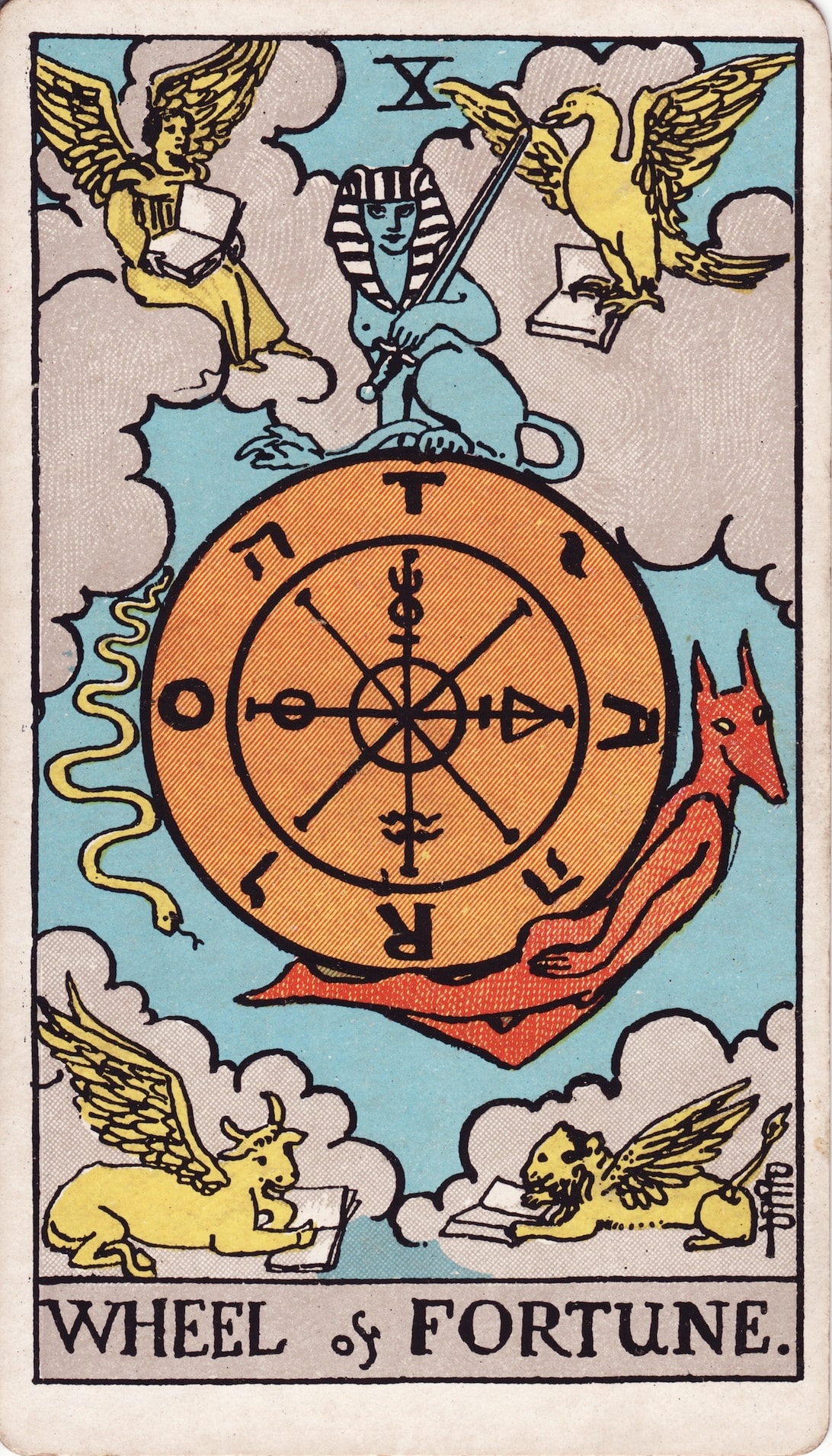


All the cards of the Major Arcana, or the whole deck.