Trump X, Major Arcana
Wheel of Fortune
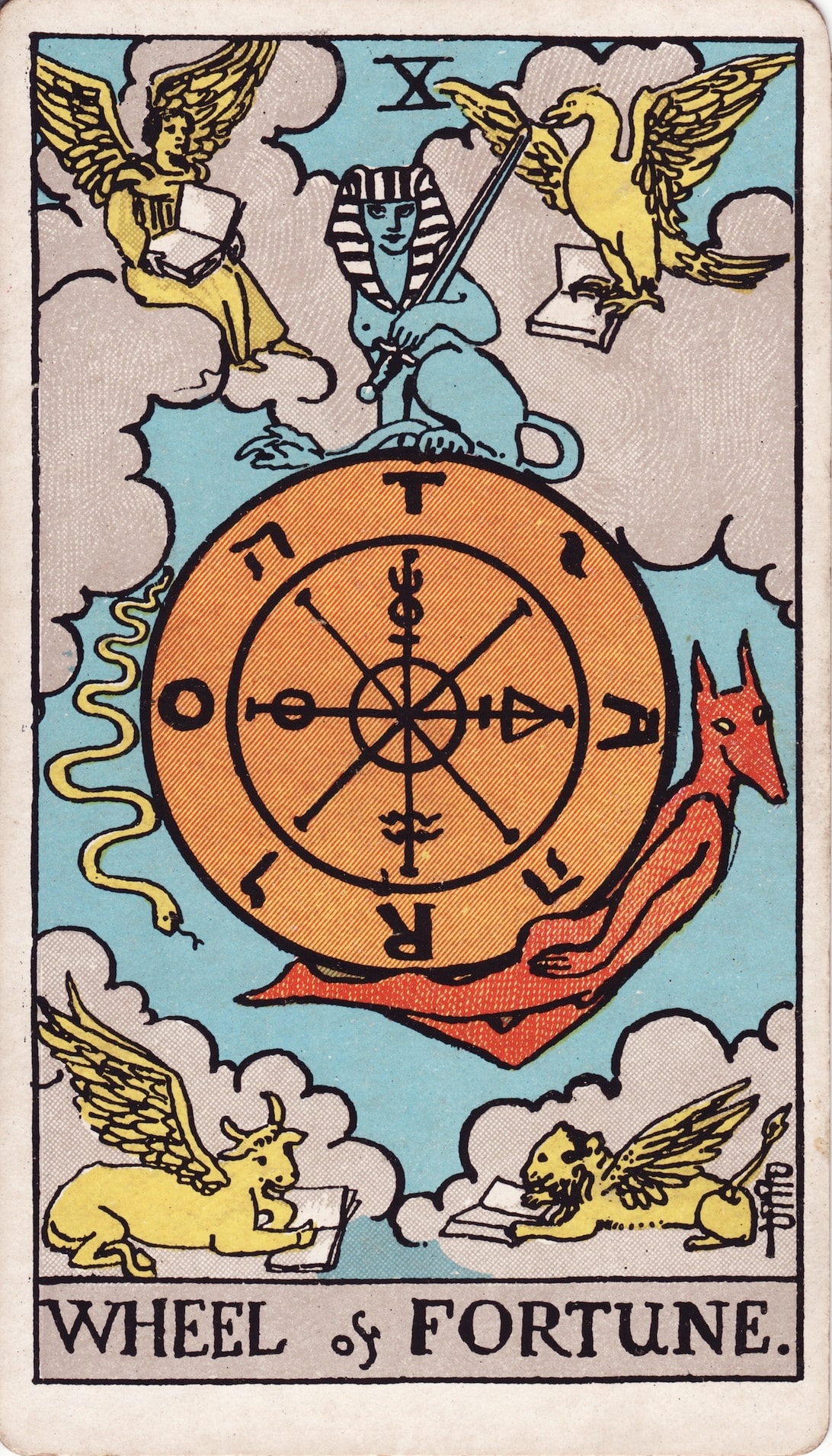
Wheel of Fortune is trump X, and Pamela Colman Smith's 1909 card has no people and no ground on it, only a great orange wheel among the clouds. A blue sphinx with a sword sits on top, a snake slides down one side, a red jackal-headed figure rises on the other, and a winged angel, eagle, bull and lion sit in the four corners, each with a book.
What Waite wrote it means (1910)
- Divinatory meanings
Destiny, fortune, success, elevation, luck, felicity.
- Reversed
Increase, abundance, superfluity.
Arthur Edward Waite, The Pictorial Key to the Tarot (London, 1911), p. 284. Read it in the chapter
In this symbol I have again followed the reconstruction of Éliphas Lévi, who has furnished several variants. It is legitimate—as I have intimated—to use Egyptian symbolism when this serves our purpose, provided that no theory of origin is implied therein. I have, however, presented Typhon in his serpent form. The symbolism is, of course, not exclusively Egyptian, as the four Living Creatures of Ezekiel occupy the angles of the card, and the wheel itself follows other indications of Lévi in respect of Ezekiel's vision, as illustrative of the particular Tarot Key. With the French occultist, and in the design itself, the symbolic picture stands for the perpetual motion of a fluidic universe and for the flux of human life. The Sphinx is the equilibrium therein. The transliteration of Taro as Rota is inscribed on the wheel, counterchanged with the letters of the Divine Name—to shew that Providence is implied through all. But this is the Divine intention within, and the similar intention without is exemplified by the four Living Creatures. Sometimes the sphinx is represented couchant on a pedestal above, which defrauds the symbolism by stultifying the essential idea of stability amidst movement.
Behind the general notion expressed in the symbol there lies the denial of chance and the fatality which is implied therein. It may be added that, from the days of Lévi onward, the occult explanations of this card are—even for occultism itself—of a singularly fatuous kind. It has been said to mean principle, fecundity, virile honour, ruling authority, etc. The findings of common fortune-telling are better than this on their own plane.
What's in the picture
- The sphinx. A blue sphinx in a striped headcloth sits on top of the wheel. It holds a sword upright against its shoulder, and its tail curls behind it.
- The letters on the rim. Four Roman letters stand round the outer ring: T at the top, then A, R and O going clockwise. Between them sit four Hebrew letters, Yod, He, Vau and He.
- The signs on the spokes. Eight spokes meet at the hub. Four of them carry small signs on the inner ring, and the one at the top is the sign of the planet Mercury.
- The snake. A thin yellow snake slides head first down the left side of the wheel, its body bending in waves.
- The jackal-headed figure. On the right a red figure with a jackal's head and long ears rides up the wheel, its back bent along the rim.
- The angel. In the top left corner a winged figure with yellow hair sits on a cloud and holds an open book.
- The eagle. In the top right corner a yellow eagle spreads its wings on a cloud, with a book beside its feet.
- The bull. Bottom left, a winged bull lies on the clouds with an open book under its front hooves.
- The lion. Bottom right, a winged lion lies on the clouds and rests its paws on an open book.
- Smith's monogram. Just beside the lion's tail, at the right edge of the card, is Pamela Colman Smith's small knotted mark.
The card in brief
- In the deck
- Card 11 of 78
- Arcana
- Major Arcana
- Number
- Trump X
- Hebrew letter (Golden Dawn)
- Kaph
- Astrology (Golden Dawn)
- Jupiter
- Title in Book T
- The Lord of the Forces of Life
- Drawn by
- Pamela Colman Smith
- Planned by
- Arthur Edward Waite
- Published
- London, William Rider & Son, 1909
- Scan
- Pam-A printing, c. 1910, Wikimedia Commons
In the old books
Book T (1912)
Good fortune, happiness (within bounds). Intoxication of success.
Book T, “A Description of the Cards of the Tarot”, The Equinox I.8 (London, 1912), p. 203. See the source Papus (1892)
The wheel of fortune suspended upon its axis. To the right Anubis, the genius of good ascending; to the left Typhon, the genius of evil descending, the Sphinx is balanced upon the centre of the wheel, holding a sword in its lion claws.
The first idea is expressed by the ternary, Anubis or positive, Typhon or negative, the balanced Sphinx the ruler.
Papus, The Tarot of the Bohemians, tr. A. P. Morton (London, 1892), p. 146. See the source
Before 1909
The older cards and pictures behind this one will be shown here once their licences are checked.
The Wheel turns, the sphinx stays
A great orange wheel hangs among the clouds. On top sits a blue sphinx holding a sword. A yellow snake slides down the wheel's left side. A red figure with a jackal's head rides up its right side. In the four corners, four winged creatures sit on clouds, reading books: an angel, an eagle, a bull and a lion. There are no people on this card, and no ground at all.
This is trump X, the halfway mark of the Major Arcana. You could look at it as a picture of time: everything moving, and one thing holding still.
The image
Read the letters on the wheel's outer ring. Going clockwise from the top, they spell T, A, R, O. Between them stand four Hebrew letters, Yod, He, Vau and He, the name of God in the Hebrew Bible. In Waite's words, "the transliteration of Taro as Rota is inscribed on the wheel". Start at the bottom and TARO becomes ROTA, the Latin word for a wheel. Now read the ring the other way round, from the top. You get TORA, the word on the High Priestess's scroll.
Inside, on the spokes, sit four small signs from alchemy. The one at the top is the sign of Mercury, which the Golden Dawn gave to the Magician.
Waite said he followed "the reconstruction of Éliphas Lévi", a French writer on magic. The snake is Typhon, a monster of Greek myth. The jackal-headed figure is Hermanubis, a god who mixes the Greek Hermes and the Egyptian Anubis. One goes down while the other comes up. The sphinx sits on top and doesn't move. Waite called the sphinx "the equilibrium therein", the balance in the middle of the movement. He also said the whole design shows "the perpetual motion of a fluidic universe" and "the flux of human life".
The four creatures in the corners come from the Bible. The prophet Ezekiel saw four living creatures with the faces of a man, a lion, an ox and an eagle. They return in the Book of Revelation, around the throne of God. Christians later linked them with the four writers of the Gospels. Pamela Colman Smith gave each of them a book. They sit calmly reading while the wheel turns.
The inner journey
The Fool has come a long way, from the first cliff to the Hermit's peak. Now the ground drops away. Nobody stands on this card, and there is only a turning wheel.
Jung was drawn to pictures like this one. Round pictures with a centre kept turning up in the dreams and drawings of his patients, he found, often at times of inner turmoil. He called them mandalas, from a Sanskrit word for circle. He took them as pictures of the Self: the whole person, known and unknown together, turning around a still centre.
Seen this way, the Wheel is the first time the Fool glimpses the whole. Everything he has met turns on one axle. The sphinx at the top holds still while the rest goes round.
Jung also compared a life to the course of the sun. There is a morning that climbs, a noon, and an afternoon that turns toward the inner world. The Wheel stands in the middle of the Major Arcana. Counting the Fool, eleven cards lie behind it and eleven ahead. Many readers split the cards in two right here, as the Fool's noon. From here the road bends inward.
You don't have to ride the wheel to its next stop. You could stay with the turning itself. Watch something that goes round today: a season, a mood, a washing machine. See whether you can find the sphinx in yourself, the part that watches and stays still.
Across traditions
The Golden Dawn set the Wheel beside Kaph, the eleventh of the Hebrew letters, and the planet Jupiter. Book T names the card "The Lord of the Forces of Life" and gives it "Good fortune, happiness (within bounds)".
The wheel of Fortune is much older than the tarot. Around the year 524, the Roman writer Boethius sat in prison, waiting to be put to death. There he wrote The Consolation of Philosophy. In it, Lady Philosophy speaks in the voice of Fortune herself: "I turn the wheel that spins. I delight to see the high come down and the low ascend." If the wheel ever stops, Philosophy adds, "it ceases to be the wheel of Fortune." Medieval artists often drew Fortune's wheel with kings climbing up one side and falling off the other.
One of these wheels opens a book of songs copied around 1230, now called the Carmina Burana and kept in the Bavarian State Library in Munich. Fortune sits crowned at the hub. Around her, four small figures carry Latin words: "I shall reign", "I reign", "I have reigned" and "I am without a kingdom".
Smith's wheel carries no kings. It carries a snake, a jackal-god and a sphinx. Waite wrote that behind the card lies "the denial of chance", and of blind fate along with it. You could look at the wheel either way: as luck, or as a pattern too big to see from any one spoke.
Try this
Draw a circle on a piece of paper and put a dot in the centre. Around the edge, write a few things that have gone up and down for you this year. Then rest your finger on the centre dot for a minute. Notice how the edge looks from the middle. Then look back at the Wheel. What on it is moving, and what stays still?
Questions to sit with
- Where on the wheel are you today: rising, on top or going down?
- What does the sphinx see from up there?
- What in your life keeps coming round again?
- What are the four creatures reading in their books?
- What does the Fool see when he reaches the middle of the road?
The film
No film for this card yet.
Sources
- Smith drew and coloured the cards.Arthur Edward Waite, The Pictorial Key to the Tarot (London, 1911), Part II, The Tarot and Secret Tradition, p. 67
- Waite on Taro as Rota with the Divine Name, Lévi's reconstruction, Typhon as a serpent, the four Living Creatures of Ezekiel in the corners, the sphinx as the equilibrium, the perpetual motion of a fluidic universe and the flux of human life, and the denial of chance.Arthur Edward Waite, The Pictorial Key to the Tarot (London, 1911), Part II, Wheel of Fortune, p. 108
- In the reconstruction, Hermanubis rises with the wheel, a sphinx sits at the top and Typhon goes down.Arthur Edward Waite, The Pictorial Key to the Tarot (London, 1911), Part I, Trumps Major, no. 10, p. 21
- Rota is Latin for wheel.Lewis and Short, A Latin Dictionary (1879), rota
- Yod, He, Vau, He: the four-letter name of God in the Hebrew Bible.The Jewish Encyclopedia (1906), Names of God
- Typhon, a monster of Greek myth; Hermanubis, a god made of Hermes and Anubis.William Smith, Dictionary of Greek and Roman Biography and Mythology (1849), Typhoeus and Hermanubis
- Ezekiel's four living creatures, and the four beasts round the throne in Revelation.Ezekiel 1:10 and Revelation 4:7, King James Version
- The four creatures as signs of the four Gospel writers.The Catholic Encyclopedia (1913), Evangelist
- Jung on mandalas in his patients' dreams and drawings, at times of turmoil, as pictures of the Self.C. G. Jung, Concerning Mandala Symbolism (1950) and A Study in the Process of Individuation (1934/1950), Collected Works 9i; Monier Monier-Williams, A Sanskrit-English Dictionary (1899), maṇḍala
- Jung compared a life to the course of the sun.C. G. Jung, The Stages of Life (1930/31), Collected Works 8
- Many readers split the trumps in two at the Wheel, eleven cards on each side.Rachel Pollack, Seventy-Eight Degrees of Wisdom (1980), Part One, The Overview
- The Golden Dawn gave the Wheel Kaph and Jupiter; Book T's title and brief meaning for it.Book T, The Equinox I.8 (1912), table of the Keys and brief meanings of the trumps
- Boethius in prison; Fortune's wheel, which brings the high down and stops being hers if it stands still.Boethius, The Consolation of Philosophy, Book II, prose 1 and 2, translated by H. R. James (1897); The Catholic Encyclopedia (1913), Boethius
- The wheel at the start of the Carmina Burana, with Fortune at the hub and its four Latin labels.Codex Buranus (c. 1230), Bayerische Staatsbibliothek, Munich, Clm 4660, fol. 1r; Wikimedia Commons
Around this card
Before and after it in the deck
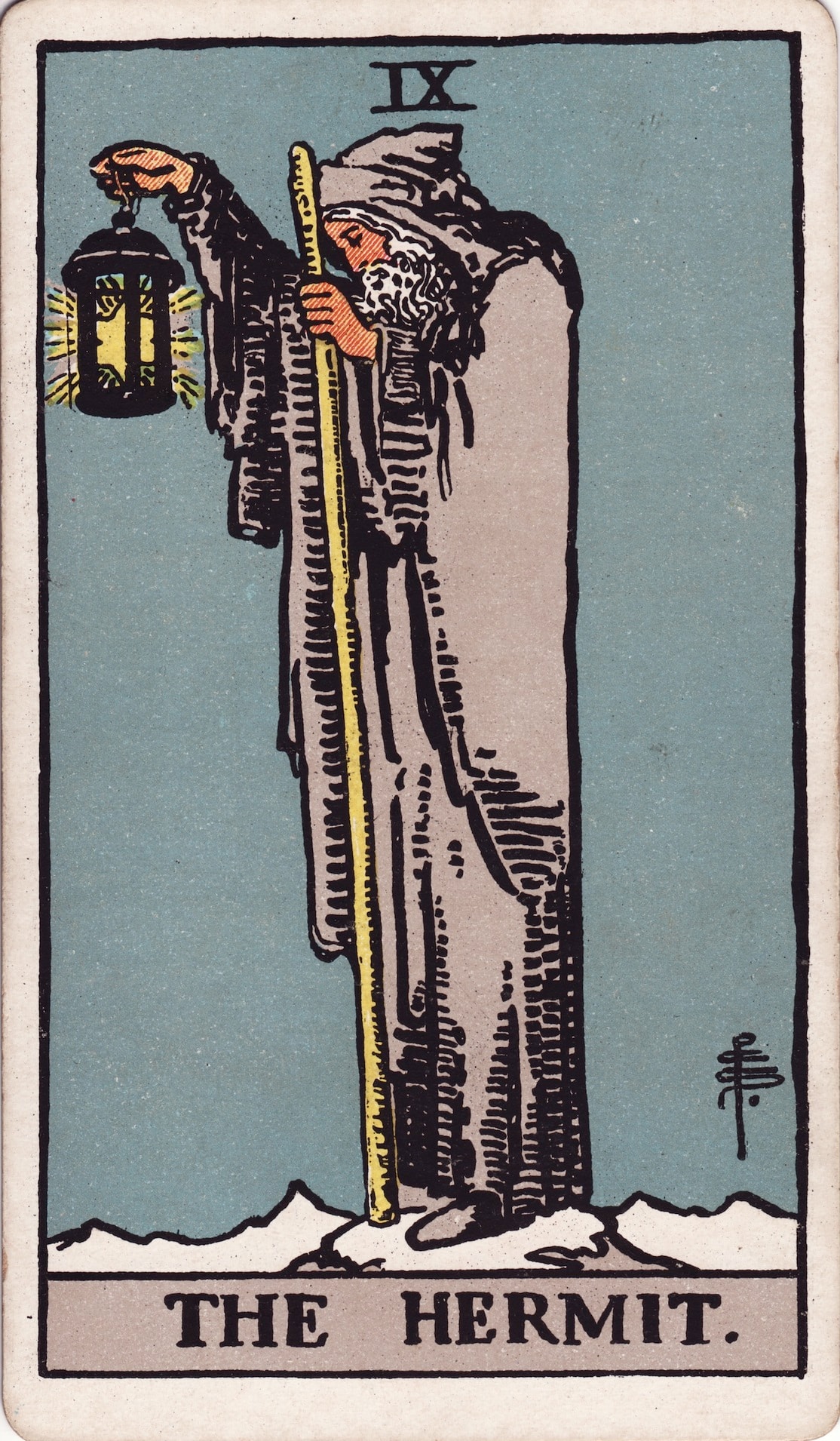
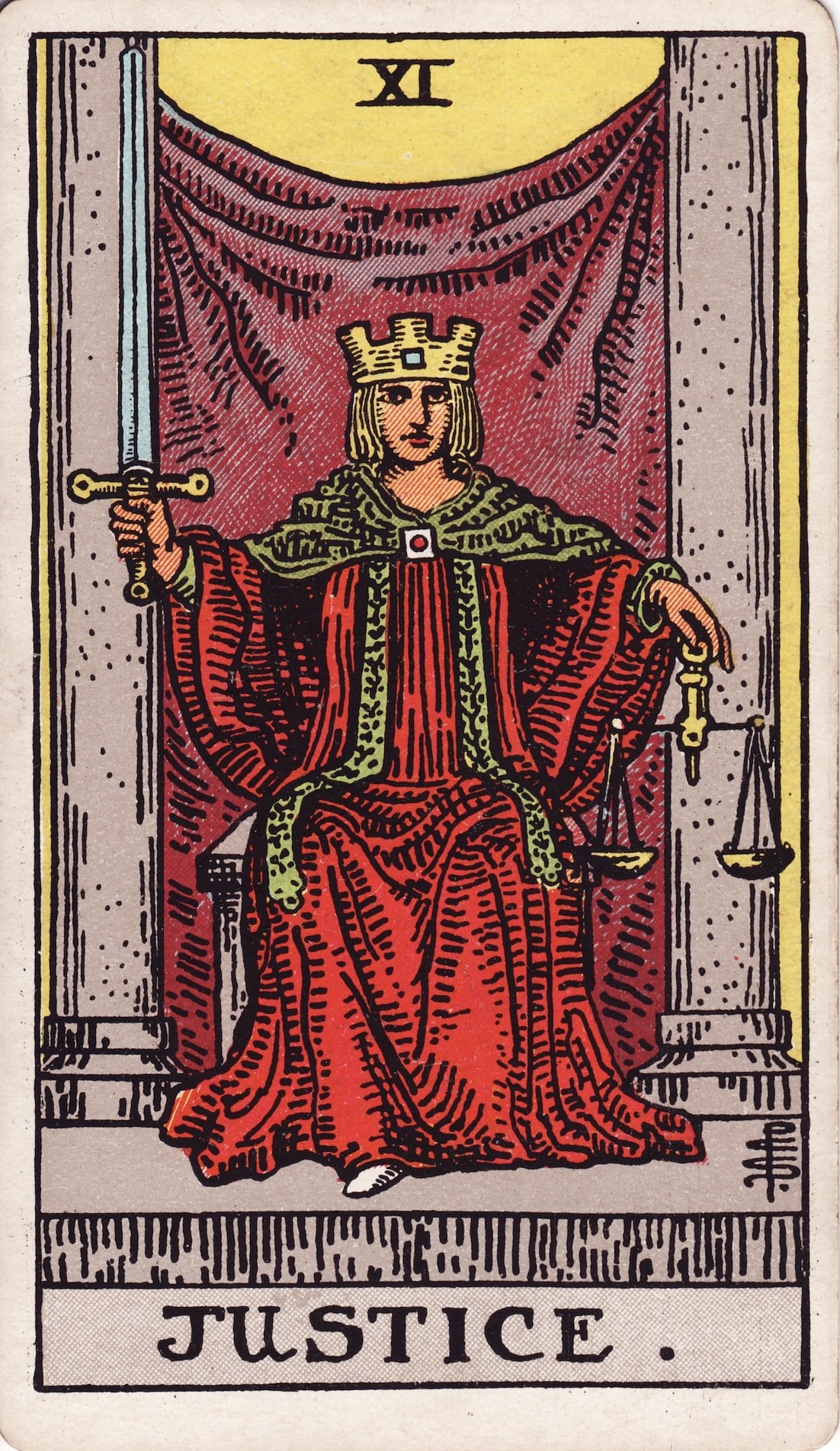
The second row of the Fool's journey
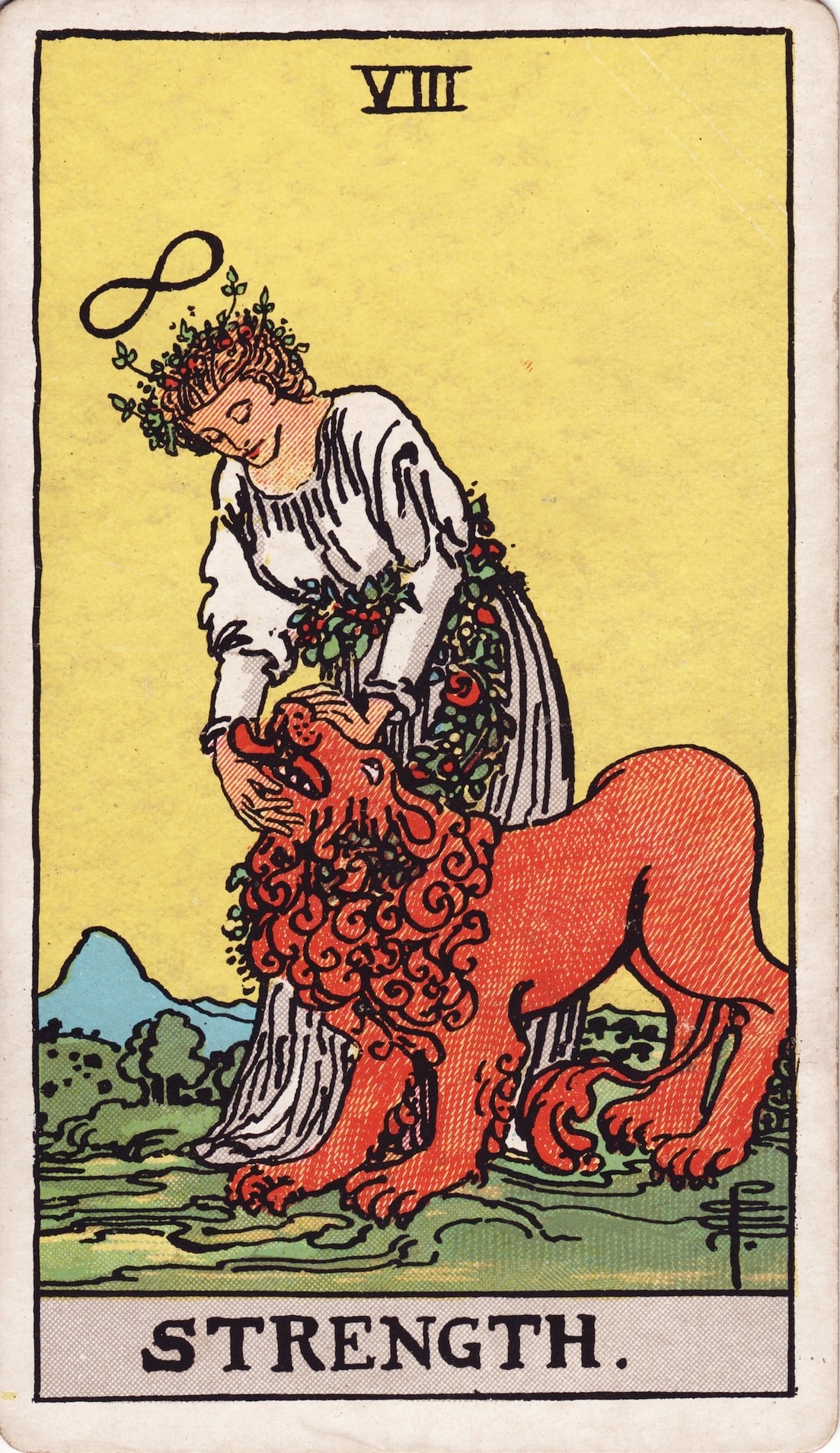


All the cards of the Major Arcana, or the whole deck.